

Proxy use cases help you control how your data moves across the internet while improving privacy and performance. From global brands tracking prices to researchers accessing restricted data, proxies act as a “digital middleman” between your device and the web. We can think of them as a bridge, a safe path that connects you to online services while protecting your identity.
No matter the goal, most proxy use cases focus on three things: better control, stronger privacy, and optimized performance for both personal users and businesses.
Understand What Proxies Are Used For
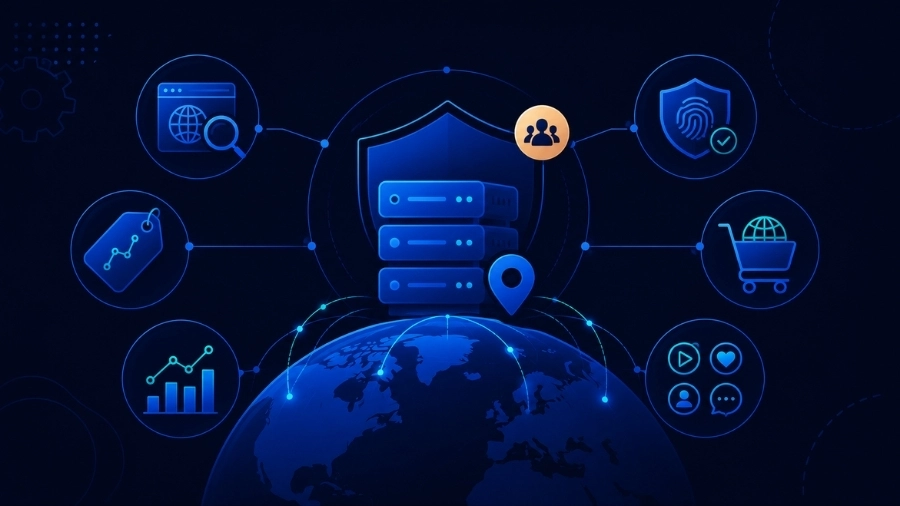
Before going into details, it’s important to understand how a proxy works. We place a proxy server between your device and the website you want to access. Instead of connecting directly, your request goes through the proxy first, and it retrieves the data for you.
This middle role is important because it allows us to manage data flow and hide identity when needed. Most proxy use cases fall into two main groups: user-side (forward) use and server-side (reverse) use. Knowing these two types helps you choose the right setup for your daily tasks.
Common Use Cases by Proxy Type
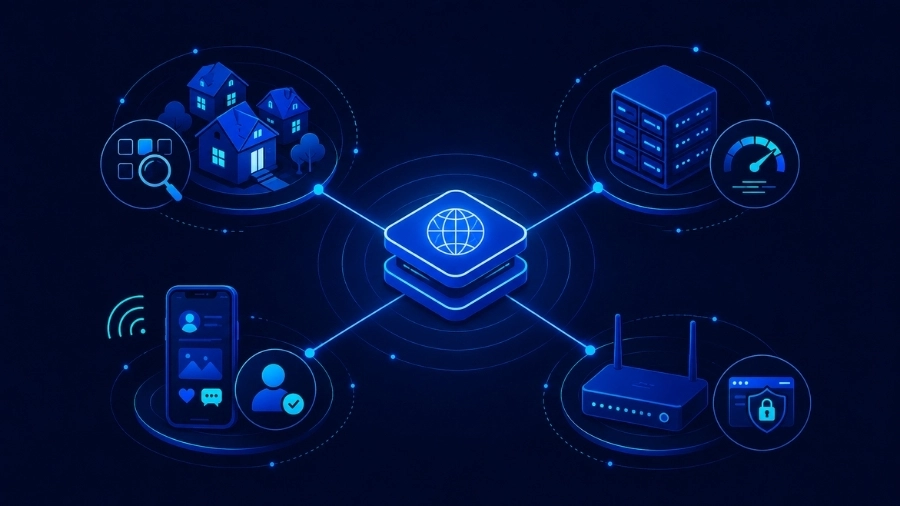
How well your setup works often depends on the type of proxy you choose. We group these proxies based on where their IP comes from and how they operate, so you can easily pick the right tool for your specific goal.
Different Types of Proxy: Which One Fits Your Goal?
Proxy use cases vary depending on the source of the IP and how the proxy behaves. The table below compares common proxy types, their strengths, and limitations so you can choose the right option.
| Type of Proxy | Source | Pros | Cons |
| Residential Proxy | Real user devices | High trust, low detection | Higher cost |
| Datacenter Proxy | Data centers | Fast, affordable | Easier to detect |
| Mobile Proxy | Mobile networks | Very high trust | Limited availability |
| Transparent Proxy | Network-level | No setup needed | No anonymity |
| Anonymous/Elite Proxy | Masking level | Strong privacy | May affect speed |
| Forward Proxy | User-side | Control & privacy | Limited server protection |
| Reverse Proxy | Server-side | Load balancing & security | Complex setup |
This comparison shows that choosing the right proxy depends on what you need to achieve, not just how much it costs or how fast it is.
Residential Proxy
Residential proxy use cases are very common when you need traffic to look like it comes from real users. These proxies use IP addresses assigned by internet service providers (ISPs), so websites see them as normal users instead of automated systems. We often use them for:
- Checking localized content in different countries
- Viewing search results based on real locations and studying the impact of proxy servers on seo across markets
- Reducing detection risk when accessing websites
Because of this, residential proxies are ideal for tasks that require high authenticity, trust, and natural browsing behavior. They also work well as proxies for seo when teams need cleaner location signals for rank checks, SERP reviews, or competitor research. This is especially important for professionals using a freelancer proxy to manage multiple clients or accounts securely.
Datacenter Proxy
Datacenter proxy use cases are focused on speed, scale, and efficiency. These proxies come from cloud servers, not real devices, which makes them fast and easy to deploy. They are useful for:
- Collecting large amounts of public data through a web scraping proxy setup
- Running automation or bulk tasks
- Handling fast and repeated connections
However, since they do not come from real users, they may appear less natural. This can increase the chance of being detected or blocked by strict websites. Still, they are often used alongside an ecommerce proxy setup to support large-scale product monitoring and pricing analysis.
Mobile Proxy
Mobile proxy use cases are important when traffic needs to appear as if it comes from mobile carriers like 4G or 5G networks. These proxies use real mobile IPs, which are highly trusted by most platforms. We use them for:
- Testing mobile applications
- Verifying mobile ads
- Managing social media accounts with a social media proxy when platform trust and location consistency matter
Because mobile IPs are shared and dynamic, they are harder to block and offer a higher level of reliability.
Transparent Proxy
Transparent proxies do not hide your IP address, but they are very useful for control and monitoring. We commonly see them in schools, offices, or public networks where they help filter content, enforce usage policies, and track network activity for security purposes.
Anonymous and Elite Proxy
The main difference here is the level of identity protection. An anonymous proxy hides your IP but still shows that a proxy is being used. An elite proxy hides both your IP and the fact that you are using one. We recommend elite proxies when strong privacy and full anonymity are required. These proxy use cases focus on different levels of privacy and identity protection. The main difference is how much information is hidden from the destination website.
- Anonymous proxy: Hides your IP address but shows that a proxy is being used
- Elite proxy: Hides both your IP address and the fact that you are using a proxy
We usually recommend elite proxies when privacy is critical, such as in sensitive research or secure browsing scenarios.
Forward Proxy
Forward proxy use cases are mainly on the user side. These proxies act on behalf of the user when connecting to the internet, giving more control over outgoing traffic. We commonly use them for:
- Hiding IP addresses and improving privacy
- Accessing geo-restricted websites or content using a proxy for blocked sites
- Controlling and filtering browsing activity
They are useful for both individuals and organizations that want to manage how users interact with the internet. In many cases, companies also deploy a business proxy server to enforce security rules and monitor employee traffic.
Reverse Proxy
Reverse proxy use cases focus on protecting servers and improving system performance. If you are asking what are some use cases for reverse proxies, the answer includes several important backend functions. We use them for:
- Protecting origin servers from direct exposure
- Managing SSL/TLS encryption securely
- Caching content to improve loading speed
- Routing traffic to the correct backend servers
Unlike forward proxies, they act on behalf of the server. This helps keep websites stable, secure, and responsive, even under heavy traffic.
Uncommon Use Cases of Proxies
Beyond common tasks like privacy or data collection, proxy use cases also support many specialized and high-value activities in today’s digital economy:
- Global Ad Verification: We use proxies to check if ads are displayed correctly in different countries and ensure they are not placed on fake or low-quality websites. Teams may also use a proxy for google ads when they need to review campaign visibility, placement quality, and regional delivery.
- Travel Fare Aggregation: Companies rely on proxies to collect real-time prices from airlines and hotels across multiple regions. This allows them to compare options and offer better deals to travelers.
- Intellectual Property Protection: Brands use proxies to scan the internet for counterfeit products or trademark misuse. Since the search is done anonymously, it prevents alerting those who may be violating the rules.
- Stock Market Data Analysis: Financial teams use proxies to gather large amounts of market data from different sources at the same time. This helps them avoid request limits and access more accurate, real-time insights.
Practical Mistakes to Avoid When Planning Proxy Use
Planning your network strategy needs careful thinking. We often share practical proxy lessons on Blog9Proxy because small setup choices can affect speed, privacy, and compliance. Here are a few common mistakes that can lead to poor performance or even security problems:
- Choosing a Proxy Only by Price: Cheap proxies may seem attractive, but they often fail more often or use shared IPs that are already blocked. This can affect both reliability and results.
- Assuming All Proxies Offer the Same Privacy: Not all proxies protect you equally. Transparent proxies provide no privacy, while elite proxies offer the highest level. You should always match the proxy type to your security needs.
- Using a Reverse Proxy Without Proper Origin Protection: If your real server IP is still visible, the reverse proxy cannot fully protect your system. This makes it much less effective against attacks.
- Forgetting Performance Testing: Slow connections or high latency can break automation and reduce efficiency. It is important to test and monitor speed regularly.
- Ignoring Compliance: Always make sure your data collection follows local laws and the rules of the websites you access. This helps avoid legal risks and ensures responsible use.
FAQs
Is a proxy the same as a VPN?
No. While both hide your IP, a VPN encrypts your entire device’s traffic. A proxy usually works at the application level (like your browser) and is often faster for specific tasks.
Will using a proxy server slow down my internet connection?
It depends on the type and quality of the proxy you use. If you are still learning what is a proxy server, the key point is that speed depends on where traffic is routed and how stable the provider is. High-quality datacenter proxies are usually very fast and stable. In contrast, residential or mobile proxies may have slightly higher latency because they rely on real user networks.
Why are Residential Proxies more expensive than Datacenter Proxies?
Residential proxies use IP addresses from real users, which makes them harder to obtain and maintain. Because they look more natural, they offer higher trust and are much less likely to be blocked by websites. This added reliability is the reason for their higher cost.
Conclusion
Proxy use cases show how flexible and powerful this technology is, from protecting personal privacy to supporting large-scale business systems. By choosing the right type of proxy and avoiding common mistakes, you can get better results and a more stable connection.
If you need high trust and realistic location access, 9Proxy‘s residential proxies are a strong choice to help you achieve a safer and more efficient online experience.