

Residential proxies for price monitoring are the most reliable way to collect real-time pricing data without getting blocked. Many businesses struggle with price tracking because websites use anti-bot systems, IP bans, and even fake data to block scraping. This makes it difficult to get accurate competitor prices, especially at scale.
Residential proxies solve this by using real home IP addresses, so your requests look like normal users. This helps avoid detection and ensures high success rates when collecting localized and accurate pricing data. In this article, you will learn how they work and how to use them to track competitors effectively and make better pricing decisions.
Why Price Monitoring Needs Residential Proxies
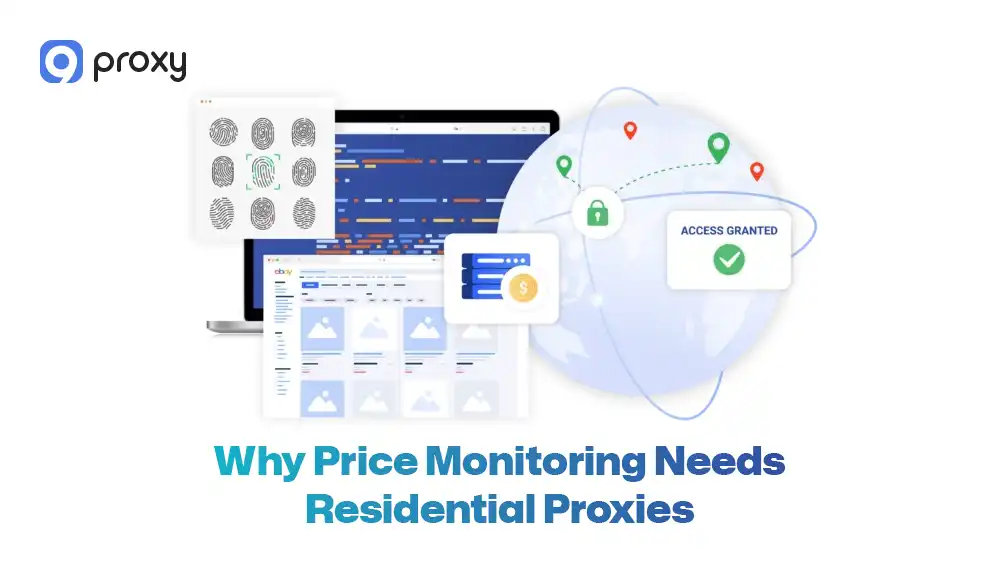
Price tracking today is a constant challenge. Many e-commerce websites use advanced systems to detect bots. When they detect scraping from data center IPs, they may return “ghost prices” such as fake, higher, or outdated data. This can lead to wrong pricing decisions.
Residential proxies for price monitoring solve this problem by using real IP addresses provided by Internet Service Providers (ISPs). To the website, your request looks like a normal user browsing from home, not a bot.
Here’s how they help:
- Avoid “Ghost” Pricing: You see the same real prices that actual customers see
- Scale Without Bans: High-trust residential IPs allow more requests without being blocked
- Bypass Anti-Bots: They handle advanced protections like JavaScript checks and browser fingerprinting better than datacenter proxies
What Results Can You Expect from Using Residential Proxies for Price Monitoring
Using high-quality residential IPs turns data collection from an unreliable task into a stable and consistent process. You can monitor thousands of products across different regions at the same time. This stability helps ensure your pricing strategies always use accurate and up-to-date data.
The table below shows the key improvements you can expect when using residential proxies for price monitoring.
| Result | Without Residential Proxies | With Residential Proxies |
| Data Accuracy | Often incorrect or blocked | High accuracy with real-user data |
| Success Rate | Low due to bans | High success rate |
| Stability | Frequent interruptions | Consistent monitoring |
| Scalability | Limited requests | Easy to scale globally |
| Geo Accuracy | Poor or missing | Accurate location-based data |
In short, residential proxies improve reliability and help you scale price monitoring while keeping data accurate and maintaining stable access. For businesses operating in the online retail space, deploying residential proxy for Ecommerce enables seamless product catalog scraping, inventory monitoring, and competitive intelligence gathering across multiple marketplaces without triggering security measures or account flags.
Choosing the Right Set Up Based on Your Monitoring Task
Not every monitoring project uses the same setup. When working with residential proxies for price monitoring, your configuration should match how often you collect data and which websites you target. We recommend adjusting your setup based on each specific scenario for better accuracy and stability.
Set Up for Daily Competitor Price Tracking
For daily price checks, stability is more important than speed. When using residential proxies for price monitoring, we recommend using sticky sessions. This lets you keep the same IP for a set time, usually between 10 and 30 minutes.
Keeping the same IP during a session makes your activity look like a real user browsing normally. It also helps you track actual price changes over time, instead of differences caused by changing IP locations or sessions.
For organizations tracking rival offerings systematically, understanding how competitor analysis proxy systems work reveals best practices for monitoring competitor websites, extracting pricing data, and analyzing market positioning without detection or IP blocks.
Set Up for Real-time or Frequent Price Updates
If you need to track flash sales or frequent price changes, speed and rotation are important. When using residential proxies for price monitoring, rotating proxies are the best choice for this scenario.
This setup changes your IP automatically for each request or after a short time. By spreading requests across many IPs, you reduce the risk of being detected or blocked. This helps you collect data quickly while staying under the limits of anti-bot systems.
Set Up for Multi-country Price Monitoring
Global brands need to see prices exactly as customers do in different locations like London, Tokyo, or New York. This means location accuracy is very important when collecting data.
You should choose a provider that supports detailed geo-targeting at the country or even city level. This helps you capture real local pricing, including taxes, shipping costs, currency differences, and regional promotions. Without this, your data may not reflect the actual market conditions.
Retailers operating across multiple online channels often rely on Ecommerce proxy infrastructure to verify product availability, monitor stock levels, and ensure consistent pricing across different geographic regions and marketplace platforms.
Set Up for login-based or dynamic pricing websites
Some websites only show prices after login, or change prices based on cookies and user behavior. In these cases, residential proxies work best when you use long-session persistence.
Keeping the same IP during the full session, including login and checkout, makes your activity look more natural. This reduces the risk of account flags and helps you capture dynamic pricing changes more accurately.
Beyond pricing, companies also leverage this capability through proxies for brand protection to detect counterfeit listings, monitor unauthorized sellers, and track trademark violations across e-commerce platforms while maintaining anonymity and avoiding detection.
How to Build an Efficient Price Tracking Workflow
Building a workflow for residential proxies for price monitoring is not just about rotating IPs. You need a clear and step-by-step process to make sure your data is accurate, stable, and useful for decision-making.
To build an effective workflow, follow these steps:
- Define what “price” includes: Decide exactly what you will collect. For example, include base price, discounts, taxes, shipping fees, or bundle pricing. Make sure all competitors are measured using the same rules.
- Match proxy settings to each website: Check how strict each website is. For simple sites, use basic rotation. For high-security sites, use stable residential IPs or sticky sessions to reduce detection.
- Use realistic request behavior: Do not send requests too quickly. Add random delays between requests, change user agents if needed, and simulate normal browsing patterns.
- Normalize and store pricing data properly: Convert all collected prices into the same currency and format. Store the data in a structured way, so it is easy to compare across different sources.
- Validate data before using it: Check for errors such as missing values, zero prices, or unusual spikes. Remove or fix incorrect data before using it for analysis.
A structured workflow helps you avoid errors and ensures your price monitoring data is consistent, accurate, and reliable.
Checklist: What to Look for in a Residential Proxy Provider
Selecting a provider for residential proxies for price monitoring is an important decision. You need more than just a large number of IPs. What really matters is how reliable, accurate, and compliant those IPs are.
Factors like IP quality, session control, and pricing model directly affect your data and overall ROI. Here are the key factors to evaluate:
- Geo-Accuracy: Check if the provider supports country and city-level targeting. This ensures you can collect real local prices, including taxes, shipping, and regional offers.
- IP Quality Scoring: High-quality residential proxies should have a success rate around 92–97% on high-security websites, while ISP proxies often reach only 78–85%. Always ask providers for real benchmark data based on your target domains to verify performance.
- Pool Diversity: Make sure IPs come from many different ISPs and locations. A diverse pool helps reduce the risk of subnet bans and improves long-term stability.
- Session Management: You should be able to switch easily between rotating IPs and sticky sessions. This flexibility helps you adapt to different website protections and monitoring needs.
- Ethical Sourcing & Compliance: Choose providers that use opt-in consent from IP owners, like models used by IPRoyal or Oxylabs. Without clear consent, you may face legal risks related to GDPR or CCPA.
- Pricing Model: Prefer providers that charge per successful request instead of per GB. If the success rate is low, pay-per-GB can waste budget. A success-based model improves cost efficiency and ROI.
- Integration Ease: The proxy should work smoothly with your scraping tools or custom systems. Easy integration saves time and reduces technical issues.
Choosing the right provider ensures your data is accurate, your system runs smoothly, and your price monitoring strategy remains sustainable.
Top Pick Residential Proxies for Price Monitoring in 2026
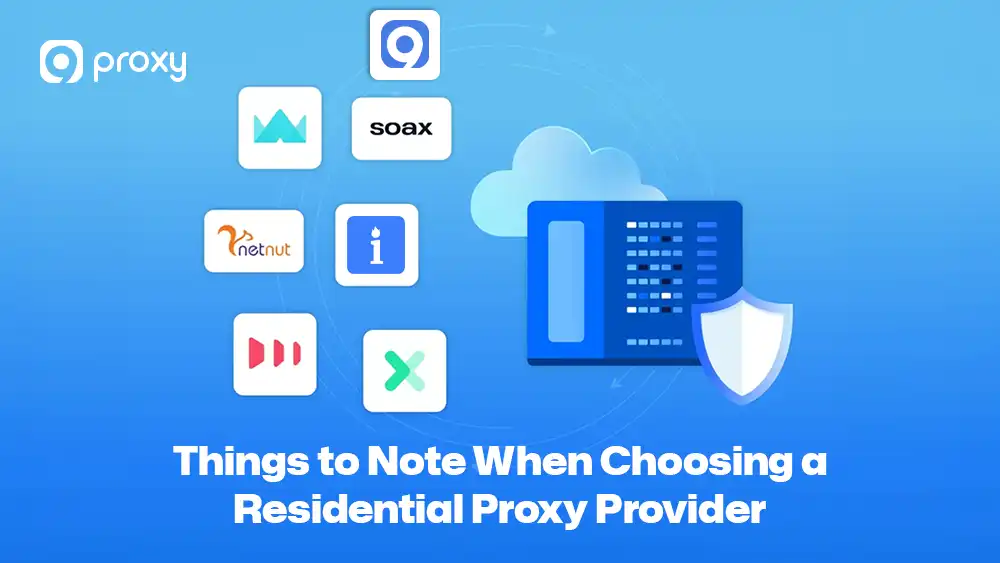
Residential proxies for price monitoring providers below are evaluated based on accuracy, reliability, and real-world usability. This table helps you compare options based on your specific needs and choose the right provider for your workload.
| Provider | Best For | Strength | Weakness | Pricing |
| 9Proxy | Cost-predictable operations | Per-IP pricing with unlimited bandwidth, stable sessions | Smaller pool, lower brand visibility | Per-IP pricing |
| Bright Data | Enterprise & precision targeting | Very large IP pool, high uptime, advanced geo targeting (ASN/ZIP) | High cost, complex setup | Pay-as-you-go + Subscription |
| Oxylabs | Large-scale scraping | Extremely high success rate, fast response time | Expensive | Pay-as-you-go + Subscription |
| SOAX | Geo & ASN targeting | Detailed targeting by ISP, ASN, and location | Slower speed compared to top providers | Usage-based |
| Smartproxy | Small to mid teams | Easy setup, ethically sourced IPs | Fewer advanced features | Subscription |
| NetNut | High-speed scraping | Direct ISP routing, low latency, stable uptime | Less IP diversity than full residential pools | Pay-as-you-go + Subscription |
| IPRoyal | Budget users | Low-cost, non-expiring traffic | Smaller pool, possible IP reuse | Pay-as-you-go |
9Proxy stands out for its balance of cost, stability, and geo accuracy. It is a practical choice for businesses that want reliable price monitoring without paying high enterprise costs.
FAQs
How many residential proxies do I need for price monitoring?
The number depends on how large your project is. For small tasks, a few IPs may be enough. For larger operations that track many products or websites, you may need hundreds of IPs to avoid blocks and keep data stable.
Why am I still getting blocked even with residential proxies?
This usually happens if your setup is not optimized. You may be sending too many requests in a short time, not rotating IPs correctly, or targeting websites with strong anti-bot systems.
How do I avoid CAPTCHA when monitoring prices?
To reduce CAPTCHA, make your requests look like real users. Add delays between requests, use proper rotation, and combine residential proxies with well-configured scraping logic.
Why is my collected price data incorrect?
Incorrect data can come from several issues during collection. For example, using the wrong geo-location can show prices from a different region. Session instability may cause inconsistent results, especially on dynamic websites. Some sites also return fake or misleading data when they detect automated behavior.
Conclusion
Residential proxies for price monitoring help you collect accurate data, avoid blocks, and scale your tracking more easily. They help solve common problems like anti-bot systems, fake prices, and limited access.
To get the best results, you need the right setup, a clear workflow, and a reliable provider. If you want stable and high-quality data, you can use 9Proxy solutions to improve your strategy with our premium residential proxies for price monitoring. For more detailed guides, tutorials, and expert insights on proxy configurations and e-commerce monitoring strategies, visit Blog9Proxy.