

Is it legal to use proxies? Many users are not sure, especially when using proxies for scraping, automation, or managing multiple accounts. Some think proxies are always risky, while others believe they provide complete anonymity.
In reality, proxies are usually legal, but the way you use them decides the level of risk. In this blog, we will clearly explain where legal issues can arise, highlight key factors to consider, and share simple tips to help you stay safe, compliant, and confident online.
Quick Answer: Are Proxies Legal or Not?
Is it legal to use proxies? The short answer is yes; proxies are generally legal in most countries. Proxies are legal tools used for privacy, security, and data access. However, legality depends on how, where, and why you use them.
The key factors include your purpose (privacy vs abuse), the type of data accessed (public or restricted), permission or authorization, local laws, and platform rules. In simple terms, proxies themselves are not illegal, but misuse, such as fraud or accessing restricted content, can create legal and compliance risks.
The 5 Factors That Usually Decide Whether Proxy Use Is Lawful or Risky
Instead of only asking “is it legal to use proxies?”, we recommend evaluating five core factors: purpose, target, data, permission, and location. These define whether your proxy usage is safe, compliant, or risky.
The Purpose Behind the Proxy Use
The same IP address can be low risk in one situation but high risk in another. Using a proxy for software testing or personal privacy is normal and safe. However, if it is used for harmful activities or pretending to be someone else, the risk becomes much higher.
In many cases, users compare tools like proxies and VPNs when deciding how to protect their identity. Understanding the difference between proxy vs VPN can help you choose the right solution based on your purpose and risk level. Purpose and intent remain key factors in any legal or compliance evaluation.
Some users also wonder whether websites can identify proxy traffic. Learning more about can proxy servers be detected helps clarify how detection methods work and why responsible usage remains important.
The Type of Site, System, or Data Being Accessed
Not all targets carry the same level of risk. The type of data you access is a key factor in determining how safe or risky your actions are. Here’s a simple breakdown:
- Public websites with open data → low risk
- Login-protected platforms → medium to high risk
- Personal or sensitive data → high risk
- Copyrighted or restricted content → high risk
- Private systems or APIs → very high risk
In general, the more restricted or sensitive the data is, the more careful you need to be.
Permission, Authorization, and Consent
Using a proxy is much safer when you have clear permission. This often applies in cases like cybersecurity testing or official data partnerships. Without consent, even a simple technical task can quickly become a compliance issue. Always make sure the system owner allows the type of access you are trying to perform.
Country, Region, and Local Rules
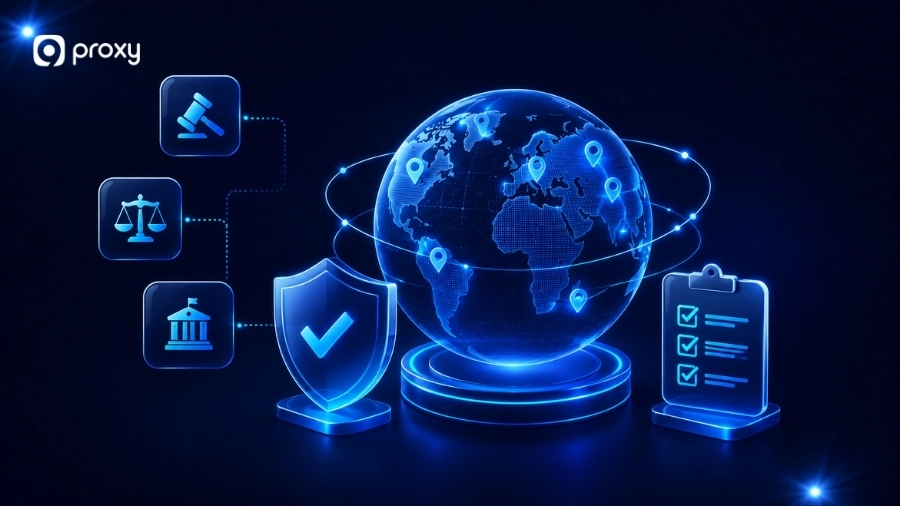
Laws can be very different from one country to another. Some regions have strict rules about how data is handled, transferred, or how encryption is used, which can directly affect how proxies are used.
Even if something is legal in your country, you still need to follow the laws of the country where the server or website is located, since those rules also apply to your connection and activities. It is important to always check local laws and regulations before using proxies, especially for business or large-scale operations.
Platform Rules and Contract Terms Still Matter
You can run into problems even if you are not breaking a criminal law. Violating a website’s Terms of Service (ToS) can still lead to account bans, restrictions, or even legal complaints. That’s why it’s important to understand the difference between legal risk from government laws and contract risk from private platforms.
Is it legal to use proxies depends not only on laws but also on how your actions align with platform rules. The table below helps you quickly compare safe and risky behaviors so you can make better decisions.
|
Factor |
Low Risk |
High Risk |
|
User Intent |
Privacy, Security, Testing |
Fraud, Abuse, Deception |
|
Data Type |
Public Information |
Personal Data, Login-only |
|
Site Policy |
Allows Proxies/Crawlers |
Explicitly Prohibits Bots |
|
Authorization |
Explicit Consent |
Unauthorized Access |
This table breaks down the is it legal to use proxies question into clear risk levels based on behavior. By comparing your use case with these factors, you can better understand what is safe and what may cause issues in your personal or business activities.
Legal Use Cases for Different Users
To understand what “safe and legal” looks like, we should look at real-life examples. We have broken these down by user type so you can easily find the category that fits your current situation.
For Individuals (Privacy & Safe Browsing)
For personal users, proxies are mainly used to protect privacy. These use cases are generally legal as long as they do not involve harmful or misleading activities.
Here are some common and safe examples:
- Public Wi-Fi: Protect your personal data from being exposed on unsecured networks.
- IP Privacy: Hide your real IP address to reduce basic tracking from advertisers. Many users rely on tools like an anonymous proxy to improve privacy without exposing their real identity online. When evaluating privacy tools, it can also help to compare anonymous proxy vs anonymous VPN to understand the differences in protection, speed, and usability.
- Content Access: View content that is legally available but limited to certain regions.
For Developers and Data Teams (Testing & Public Data Collection)
We see developers using proxies for technical tasks every day. These uses are generally legal when they focus on public data and system performance.
Is it legal to use a proxy scraper? In most cases, yes, as long as you follow the website’s rules, including respecting the robots.txt file and rate limits. Here are some common and safe use cases:
- App Testing: Check how your application works and displays in different locations around the world.
- Uptime Monitoring: Make sure your services are accessible and running properly from various regions.
- SEO Checks: Verify search rankings without being affected by location-based results. Teams that manage large-scale search monitoring often use proxies for SEO to collect accurate location-based results and performance data.

For Businesses (Market Research & Web Operations)
Businesses use proxies for competitive analysis and quality assurance. These practices are generally accepted when they stay within legal boundaries and avoid accessing sensitive or restricted data.
- Price Monitoring: Check competitor pricing on publicly available e-commerce pages.
- Ad Verification: Ensure your ads appear correctly across regions and are not misused for fraud.
- User Experience: Test how localized content looks for users in different cities or countries.
- Multiple accounts management: Operate multiple accounts in a controlled and compliant way without triggering platform restrictions.
For Enterprises (Security, Compliance & Infrastructure Management)
Businesses use proxies for competitive analysis and quality assurance. These practices are generally accepted when they stay within legal boundaries and avoid accessing sensitive or restricted data.
- Price Monitoring: Check competitor pricing on publicly available e-commerce pages.
- Ad Verification: Ensure your ads appear correctly across regions and are not misused for fraud. Many advertisers rely on a proxy for Google Ads to review campaign visibility and regional ad delivery from different locations.
- User Experience: Test how localized content looks for users in different cities or countries.
- Multiple accounts management: Operate multiple accounts in a controlled and compliant way without triggering platform restrictions.
Not All Proxies Are Equal: Choosing 9Proxy As Your Trusted Provider
The legality of your work also depends on where you get your IPs. Ethical sourcing and transparency are vital. This is why we recommend choosing a provider that prioritizes clean, high-quality residential networks.
9Proxy offers a professional solution for those who need reliable and ethical connections. We provide over 20 million clean residential proxies across 90+ countries. Whether you need to target a specific city or an ISP, our system is designed for high performance and anonymity.
Key Advantages of 9Proxy:
- 100% Real Residential IPs: Our pool comes from real devices, reducing the chance of being flagged.
- 99.95% Uptime: We ensure your tasks run smoothly without constant interruptions.
- Flexible Pricing: Start from $0.015/IP or $0.68/GB. If you choose IP-based packages, you get unlimited bandwidth.
- Full Protocol Support: Works with SOCKS5, HTTP, and HTTPS for maximum compatibility.
- Crypto Bonus: Get 5% bonus on IPs when you pay with cryptocurrency.
Choosing a trusted provider like 9Proxy helps you reduce both legal and operational risks.
FAQs
Can a website block or ban me for using a proxy?
Yes, a website can block or ban you even if it is legal to use proxies in general. Most platforms have their own Terms of Service (ToS), and if you break those rules, they can restrict your access. For example, using proxies to bypass limits, automate actions without permission, or scrape restricted data may trigger bans. So, even when the law allows it, platform rules still apply.
Which countries ban or restrict the use of proxies?
In most countries, proxies are legal and commonly used. However, some regions have stricter rules on internet access and data control, which can limit or monitor proxy usage.
For example, China has strong internet restrictions, while Russia requires some proxy services to follow government rules. Countries like Iran and North Korea also heavily control internet access, making the use of proxies more restricted. In the United Arab Emirates (UAE), proxies are allowed, but using them to bypass restrictions can lead to penalties.
Even when not fully banned, proxy use in these regions comes with more risks. Always check local laws before using proxies.
Can I get in trouble for using proxies incorrectly?
Yes, using proxies the wrong way can lead to serious problems. If you use proxies to access restricted systems, collect sensitive data without permission, or break laws, you may face legal consequences. In addition, you could get your accounts banned, lose access to services, or even face financial penalties. To stay safe, always use proxies for legal purposes and follow both laws and platform rules.
Conclusion
Understanding how to use digital tools correctly is key to building a safe online strategy. Is it legal to use proxies? In most cases, yes, but your purpose and the website’s rules matter most. By focusing on public data, following platform limits, and using trusted providers, you can reduce risks.
If you want to learn more about proxy technology, legal use cases, and industry best practices, Blog9Proxy provides detailed guides for both beginners and experienced users.
9Proxy recommends choosing reliable services to keep your connection clean, fast, and secure. In short, is it legal to use proxy technology as long as you use it ethically and follow the rules.