

Residential Proxy For Ecommerce has become a key tool for online sellers, brands, and data teams that need reliable market insights in 2026. Accurate pricing, product availability, and regional offers depend on seeing the web the same way real customers do. Residential proxies do not bypass platform rules or access private systems. They help you collect public data safely, reduce IP blocking, and improve data accuracy.
In this blog, we will explain when ecommerce teams should use residential proxies, how they work, and where they add the most value. You can also learn practical setup tips and how to avoid common mistakes that cause CAPTCHA or unreliable results, so you can scale your e-commerce research with confidence.
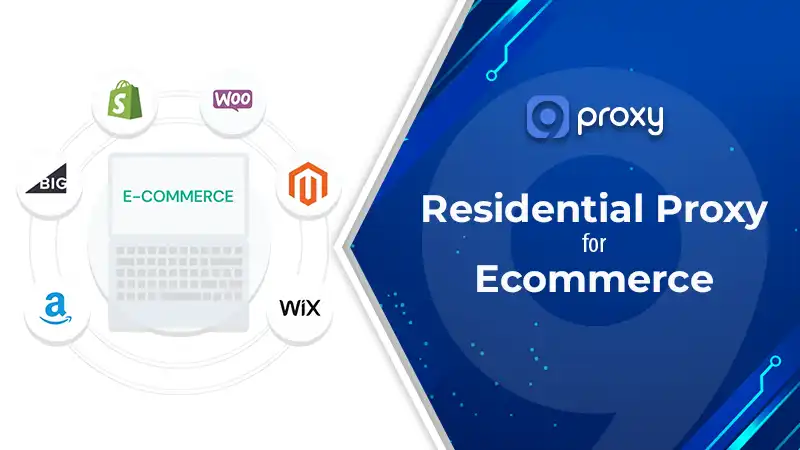
What Is a Residential Proxy for Ecommerce?
A Residential Proxy For Ecommerce uses IP addresses assigned by Internet service providers to real households. When you send requests through a residential proxy, the traffic looks like normal user activity instead of automated bot traffic. Because these IPs come from real devices and real locations, websites are more likely to trust the connection.
Compared to datacenter IPs, this results in fewer blocks and more accurate ecommerce data. With a residential proxy, you can view product listings, prices, and availability exactly as a real shopper would in a specific country or city. This makes a Residential Proxy For Ecommerce a reliable solution for collecting public data responsibly while reducing detection risks and maintaining data quality.
How Residential Proxies Help Avoid Bans and Blocks
The main reason businesses use residential IPs is their strong trust level. These IPs are provided by real internet service providers, so websites see the traffic as coming from normal users. Because the activity looks natural, it is much harder for a site to detect or block it. When you use a pool of residential IPs, your requests are shared across many addresses instead of coming from one place.
Rotating IPs plays a key role in reducing detection. By changing to a different IP for separate requests, you avoid clear patterns that security systems often use to identify automated activity.
Unlike datacenter alternatives, residential proxies maintain higher trust scores with platforms, which is why understanding the differences through resources like datacenter proxies vs residential comparisons helps you choose the right solution for your needs.
Top E-commerce Use Cases for Residential Proxies
The flexibility of a Residential Proxy For Ecommerce helps businesses complete many important tasks without running into access limits. We see our customers use these tools to collect better data, protect their operations, and stay competitive across global markets.
If your goal is brand growth, these are the most valuable ways residential proxies are used:
- Dynamic pricing tracking: Monitor real-time price changes that vary by country, city, or user location.
- Geo-targeted ad testing: Confirm that international ads are shown correctly to local audiences in each market.
- Marketplace monitoring: Check your product listings on Amazon, Walmart, or eBay from different regions to ensure consistency and compliance. For brands concerned with unauthorized sellers or counterfeit products, combining marketplace monitoring with proxies for brand protection creates a comprehensive defense strategy.
- MAP enforcement: Verify that resellers follow your Minimum Advertised Price policies across markets.
- Automated product data collection: Gather product descriptions, customer reviews, ratings, and stock availability for deeper market analysis.
- Avoiding IP bans: Maintain stable access to public ecommerce data without risking blocks on your main office IP.
Together, these use cases help ecommerce teams operate more safely, efficiently, and competitively at scale.
How to Use Residential Proxies for E-commerce Tasks: Step-by-Step
Setting up your workflow correctly is just as important as choosing the right proxy. A proper setup helps prevent errors, reduces detection risks, and ensures your data stays accurate over time. Below, we outline the essential steps to help you integrate residential proxies into your daily e-commerce operations in a clear and effective way.
How Residential Proxies Help Avoid Bans and Blocks
To keep your connection safe and stable, your setup should act like a real shopper browsing a website. Many websites use smart systems to detect automated activity, so looking natural is very important. Using a residential IP is the first step because it makes your traffic look like it comes from real people, not bots.
Step-by-step approach:
- Start with a residential IP: This helps your activity blend in with normal user traffic.
- Rotate IPs over time: Change IP addresses so one address is not used too much, just like different shoppers visiting from different homes.
- Add natural delays: Place small, random pauses between actions to avoid moving too fast.
- Use realistic User-Agent strings: Match your browser details to the proxy so everything looks consistent and trustworthy.
How to Use Residential Proxies for Product Scraping at Scale
Scraping thousands of pages puts heavy pressure on your system, so having a strong and well-organized setup is essential. The right tools help manage connections smoothly and prevent errors as your workload grows. Starting with a reliable scraping library or platform makes scaling much easier and safer.
Step-by-step guide to scale data collection:
- Select your tool: Choose Python with Scrapy for flexibility, or simple tools like Octoparse if you prefer a visual setup.
- Configure the proxy: Enter your 9Proxy credentials into the tool’s proxy settings.
- Enable rotation: Set the system to switch to a new IP after every few requests to avoid overusing one address.
- Add human elements: If using a browser-based scraper, include light scrolling or mouse movements to appear more natural.
- Monitor results: Regularly review success rates and slow down if you start seeing errors or blocks.
Price Monitoring with Proxies – Track Global Markets in Real Time
Retailers often display different prices to users in New York than they do in London. To understand the real market, you need to appear as if you are browsing from those locations. Residential proxies make this possible by letting you set your connection to specific countries or cities, so you can view prices exactly as local shoppers see them.
Step-by-step use for price tracking:
- Pin your location: Choose the city or region you want to monitor using residential proxies.
- Collect local prices: Access product pages to see real prices, discounts, and promotions for that area.
- Compare regions: Review price differences across locations to identify patterns and opportunities.
- Support price matching: Use this data for algorithmic price matching, adjusting your prices based on what competitors offer in each region.
With this setup, you can clearly spot regional price drops, such as discounts that appear only in certain areas, and respond with confidence.

Testing Ads and UX in Other Countries – Without Leaving Your Office
Your website may work perfectly from your own office, but customers in other countries might see something very different. Residential proxies allow you to view your site exactly as users do in other regions, such as Germany, so you can confirm that key elements like the checkout button work properly everywhere.
Step-by-step testing process:
- Choose a target country: Select the country you want to test using a residential proxy.
- Switch locations easily: Use proxy browser extensions to move between countries in seconds.
- Check local details: Review currency symbols, language translations, and shipping calculations.
- Verify promotions: If you launch a campaign in Canada, select a Canadian residential IP to confirm the offer appears correctly and functions as expected.
This approach helps you find and fix issues before they affect real customers.

Best Residential Proxy Providers for eCommerce Businesses
Choosing the right partner is essential for data accuracy and reliability. We have compared the top options to help you find the best fit for your specific e-commerce needs.
The following table compares the leading providers based on their performance in the e-commerce sector:
| Provider | IP Pool Size | Strengths | Best For | Compliance | Trial |
| 9Proxy | 20M | Clean IPs, affordable | Scraping, monitoring, SMBs | Ethically -sourced | Yes |
| Decodo (formerly Smartproxy) | 115M+ | User-friendly, affordable | SMB ecommerce, value-seekers | Ethically -sourced | Yes |
| Oxylabs | 100-175M | Largest pool, AI rotation, strong compliance | Enterprise scraping, brand protection | ISO/IEC 27001 certified | Yes (free) |
| Bright Data | 72M | Massive scale, precise targeting | Enterprise scraping, obscure locations | Enterprise -grade | Yes (7-day) |
| SOAX | 155M+ | Flexible filtering, 99.95% success rate | Large-scale scraping, global markets | Ethically -sourced | Yes |
| NetNut | Not disclosed | Direct ISP sourcing, high performance | Price tracking, price comparison | ISP-direct verified | Yes (7-day) |
While there are many choices, 9Proxy offers a unique balance of high-quality, residential IPs and a pricing model that favors growing businesses. For those needing massive scale, Bright Data or Oxylabs are strong contenders, while Smartproxy is great for beginners.
If you’re looking for comprehensive guidance on selecting the right Ecommerce proxy solution, understanding your specific business requirements and traffic patterns will help you make the most informed decision.
Mistakes to Avoid When Using Proxies for E-commerce
Even with the best tools, small errors can lead to your data collection being interrupted. We want to ensure your project stays on track by highlighting what to avoid.
Keep these points in mind during your setup:
- Using free proxies: These are often slow, unsafe, and already on every “block list.”
- Ignoring headers: If your IP says you are in Paris, but your browser language is set to English (US), it looks suspicious.
- Scraping too fast: Even residential IPs will get flagged if they request 100 pages per second.
- Time zone mismatches: Ensure your system clock matches the proxy location for sensitive sites.
- No IP rotation: Using one “sticky” IP for too long on a protected marketplace like Amazon is a recipe for a CAPTCHA. For operations requiring more stable connections with higher performance, exploring alternatives like ISP vs residential proxies can help you determine which proxy type best matches your technical requirements and budget constraints.
FAQs
Are residential proxies always superior to data center proxies for e-commerce?
Not in every case, but most of the time they are. Datacenter proxies are faster and cheaper, but websites can easily recognize them as non-human traffic. They may work for simple checks, but when scraping large marketplaces or sensitive pages, residential IPs are much safer and more reliable.
How many requests can one residential IP handle safely?
It depends on the site. Light usage with delays is safer than high-frequency scraping. This depends on how strict the website is. As a general guideline, sending around 10 to 20 requests per IP before rotating helps your activity look like normal human browsing. Adding small delays between requests further reduces detection risk.
Do I need sticky sessions for checkout or login flows?
Yes, sticky sessions are important. When you log into an account or add items to a cart, staying on the same IP throughout the process helps prevent errors, verification prompts, or unexpected logouts.
Are residential proxies legal for e-commerce scraping?
Yes. Residential proxies are legal when used to collect publicly available data and when you follow local data privacy laws. They are widely used for market research, price tracking, and competitive analysis.
Conclusion
A residential proxy for e-commerce is an essential tool for brands that want accurate data and stable access in 2026. By choosing high-quality IPs, rotating them carefully, and keeping your behavior natural, you can gather valuable insights with fewer blocks. Avoid free proxy lists, align your technical settings with your proxy location, and invest in a reliable residential proxy for e-commerce to keep your data accurate and your business ahead of competitors.
If you’re ready to get started, 9Proxy offers clean residential IPs with wide geo coverage and flexible plans built for e-commerce needs. For more insights on proxy applications and strategies, visit Blog9Proxy to explore comprehensive guides and industry best practices. Buy residential proxies at 9Proxy today and start collecting reliable market data with confidence.