


When you run SEO, manage campaigns, or track keyword performance, you’ve probably always dealt with inconsistent ranking data. These problems grow when checking thousands of keywords, and your IP gets flagged, leading to biased or blocked results.
For high-volume, reliable data, a specialised Rank Tracking Proxy is not just helpful but essential. It’s the tool that allows you to collect accurate, location-specific SERP data at scale, ensuring your SEO efforts are based on verifiable facts. This article from 9Proxy will cover the best proxy types, provide a step-by-step setup workflow to help you configure your tools for smooth, scalable rank tracking.
What Is a Rank Tracking Proxy?
A Rank Tracking Proxy is a specialised proxy server that helps you check keyword rankings safely and accurately by hiding your real IP and location. Instead of sending repeated queries from one IP, the proxy routes each request through rotating, trusted IPs.
This prevents blocks, avoids CAPTCHA, and delivers clean, unbiased, location-specific SERP data. Proxy ensures your rank monitoring tools collect accurate results from any city or country without triggering search engine restrictions.
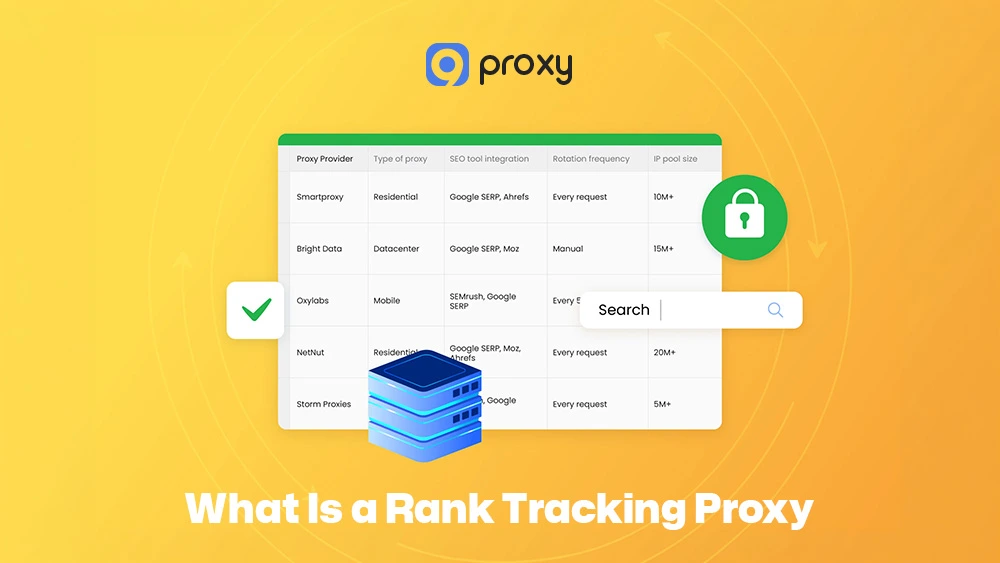
How Rank Tracking Proxies Work
Rank tracking proxies work by using large, diverse pools of IP addresses, usually from residential or mobile networks. When your SEO tool sends a query such as “What is the ranking for keyword X in London?”, the request is routed through one of these proxy IPs instead of your real address.
The key is the rotation process. After each request, whether it succeeds or fails, the system switches to a new IP in the pool. This constant rotation ensures no single IP sends too many queries in a short time. This helps your activity appear natural to search engines, prevents IP bans, and keeps your data collection stable and reliable.
Why Use Rank Tracking Proxies
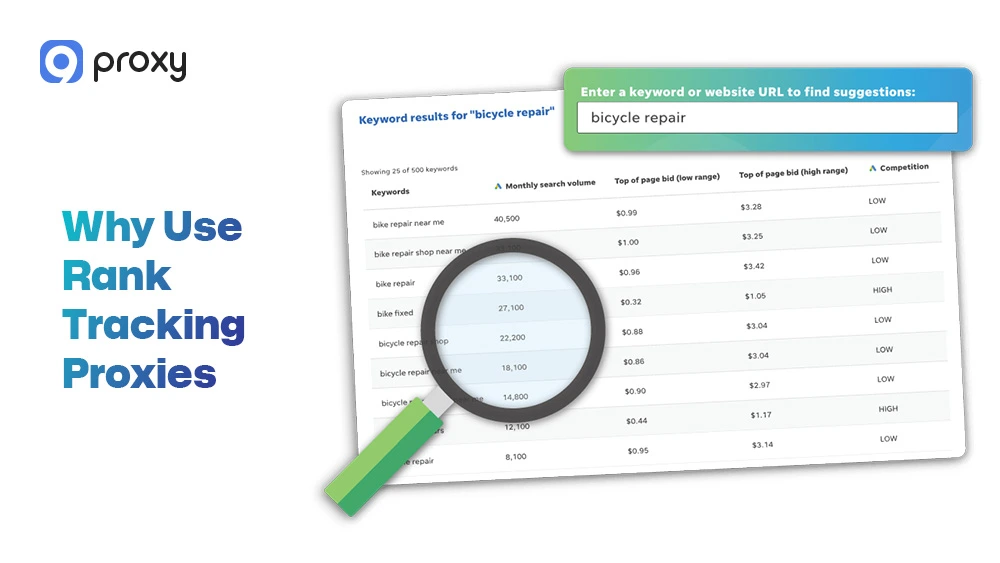
Using dedicated rank tracker proxies is important for any SEO work that needs accurate, large-scale keyword data. In practice, many systems also rely on a SERP scraping proxy to collect broader search data across different locations and queries.
Bypassing Rate Limits and IP Blocks: Proxies spread your searches across many IPs, so you don’t hit limits or get blocked. This keeps your tools running without bans or constant CAPTCHA.
Achieving Geo-Accurate SERP Data: Search results change by location. Proxies let you choose IPs from the exact city or country you want, so the ranking data matches what real users in that area see.
Scaling Keyword Checks: Without proxies, you can only check a few keywords safely. Proxies make it possible to track thousands of keywords across many regions and search engines at the same time.
Ensuring Unbiased Results: Search engines personalise results. Using clean proxy IPs removes this bias, giving you a clear and accurate picture of your real rankings.
Types of Proxies for Rank Tracking
The type of proxy you use has a major impact on the accuracy, cost, and safety of your rank tracking setup. Below is a clear summary of the main proxy options, along with their strengths and weaknesses.
Choosing the right proxy type helps you balance anonymity, speed, and budget so you can collect accurate, location-based ranking data without worrying about blocks or interruptions.
| Proxy Type | Pros | Cons | Best Use Cases |
| Residential Proxies | Real household IPs, high trust, strong geo-targeting | Higher cost, slightly slower | Accurate local rank tracking, city-level SEO, and long-term monitoring |
| Datacenter Proxies | Fastest speeds, low cost | Higher block rate, low anonymity | Bulk rank checks, low-risk tasks |
| Rotating Proxies | Automatic IP rotation, great for scale | Harder to maintain session consistency | Large keyword volumes, automation tools |
| ISP Proxies | Static IPs with ISP legitimacy | High ban rate, limited geo diversity | Short-term stable sessions, light monitoring |
Residential and Mobile IPs are the preferred choice for reliable, large-scale rank monitoring because they look like real user traffic and have much lower ban rates compared to Data Centre proxies.
Setting Up Rank Tracking with Proxies
Implementing a stable rank tracking system requires good planning, smart proxy selection, and a clear setup process. Here’s a simple guide to help you choose the right provider before you buy rank tracker proxies. For a deeper understanding of proxy architectures and use cases, you can refer to Blog 9Proxy.
Choosing the Right Proxy Provider
Your results depend heavily on the quality of the proxies you use. Before you buy rank tracker proxies, evaluate providers based on the criteria below:
- IP Pool Diversity: Pick a provider with a large and varied IP pool across many countries and cities. This helps you get accurate local ranking data and smooth rotation.
- Reliability and Uptime: Your provider should offer high uptime and automatically remove blocked or dead IPs so your tracking stays consistent.
- Cost and Scalability: Make sure the pricing fits your budget and that the service can handle sudden increases in keyword volume without extra charges.
- Ease of Integration: Choose proxies that are easy to plug into your scripts or SEO tools with simple endpoints and clear setup instructions.
- Support and Documentation: Good customer support and helpful documentation make it easier to fix proxy issues quickly, especially during busy tracking periods.
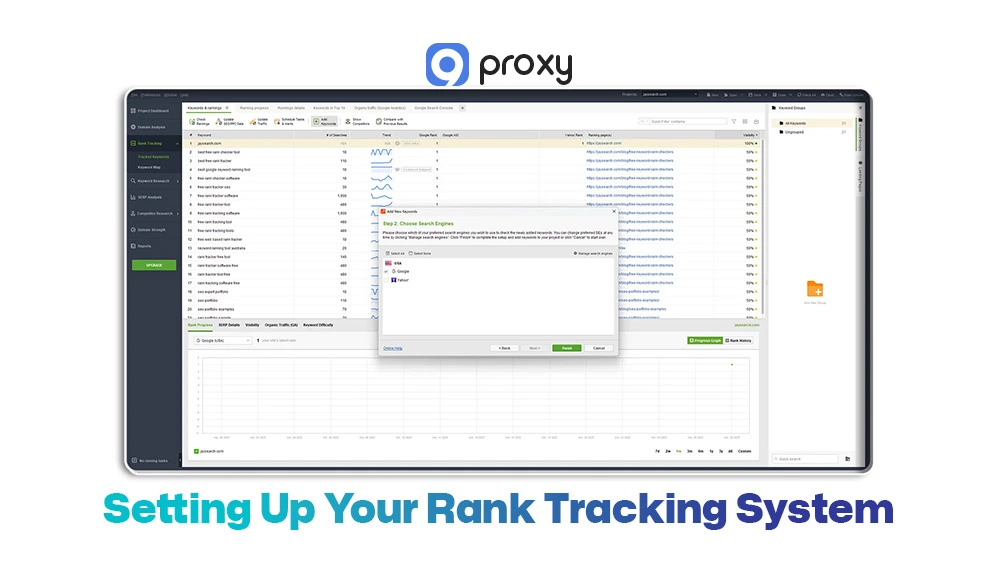
Setting Up Your Rank Tracking System
Follow this practical workflow to integrate your Rank Tracking Proxy and collect accurate SERP data efficiently:
- Define Keyword Lists & GEO Goals: Group your keywords by country, language, and device (desktop or mobile). Each group should use a matching geo-targeted proxy IP to keep your data accurate.
- Configure Proxies in Tools/Scripts: Add your proxy details including Host, Port, Username, and Password into your rank tracking tool, such as Ahrefs or SEMrush, or into your custom script. If you are building automation pipelines, using Python web scraping frameworks can help you handle large-scale data collection more efficiently.
- Implement IP Rotation Strategy: Set your system to rotate IPs every 3 – 5 queries. For large jobs, rotating after every query is the safest way to avoid detection.
- Deal with CAPTCHA & Blocks: Use retry logic. If a CAPTCHA or block appears, log the failed IP, stop using it, and switch instantly to a clean Rank Tracking Proxy before retrying.
- Scrape and Parse SERPs: Fetch the SERP HTML with your scraper. Then use a parser like BeautifulSoup to extract ranking data such as URLs, positions, and snippets. In some browser-based environments, routing requests through a CORS proxy can help bypass cross-origin limitations and ensure smoother data retrieval.
- Clean/Store Ranking Data: Normalise the data and save it in your database. Always record the date, time, and proxy geo-location to keep your results clear and relevant.
- Monitor Errors and Retry Logic: Track the success rate and proxy speed. If errors rise above 5 – 10%, slow your queries down and check the health of your proxy pool.
Advanced Techniques for Rank Tracking
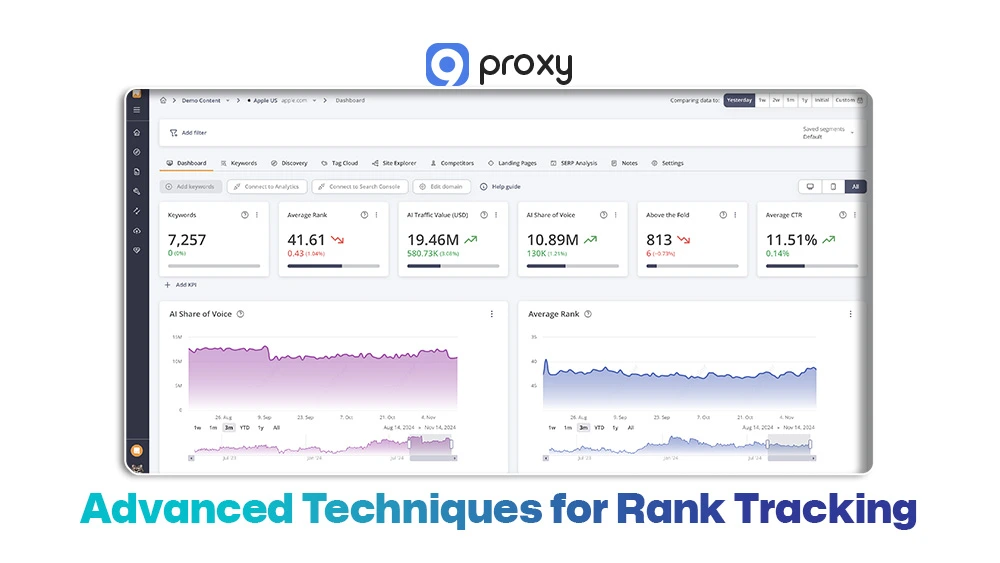
For users already familiar with using rank tracking proxies, the techniques below will help you improve efficiency and data quality in more complex setups.
Tracking Multiple Keywords and Locations Efficiently:
Use a distributed queue system such as RabbitMQ to manage large numbers of queries. Instead of checking each location one by one, group keywords by the same geo-location. This lets you fully use one geo-targeted proxy before rotating to the next, similar to how systems scale in a web scraping proxy environment.
Integrating Rank Tracking with SEO Tools:
Most major SEO platforms offer API access. You can connect your custom rank tracking data directly to these tools to enhance their dashboards and reports, giving you a complete and unified view of performance.
Advanced Proxy Management and Fingerprinting:
Go beyond basic IP rotation. Adjust browser fingerprints such as User-Agent, screen size, and time zone for each proxy connection. Make sure these fingerprint details match the geo-location of the Rank Tracking Proxy to lower the risk of detection by advanced anti-bot systems.
Time-Based Query Spacing:
Schedule your queries in a way that looks more natural, such as heavier checks during the daytime and fewer checks at night. This consistency helps your automated traffic appear more human-like and reduces detection risks.
Deal with Common Problems
Even with the best setup, problems can still happen. Below are the most common issues when using a rank tracking proxy and how to fix them.
IP Blocks and Bans: This usually happens when too many queries come from the same IP.
Fix: Rotate aggressively (one IP per query) and upgrade to a better IP pool, such as Residential or Mobile.
Quality of Proxies: Low-quality or free IPs cause slow responses, unstable data, and frequent bans.
Fix: Only buy rank tracker proxies from trusted providers that offer clean, non-blacklisted Residential IPs.
Handling Large-Scale Rank Tracking: Your system may fail to manage a high number of concurrent requests.
Fix: Move your scraping system to cloud or serverless infrastructure and use asynchronous programming to handle large volumes smoothly.
Why 9Proxy Is the Best Proxy Choice for Accurate Rank Tracking?
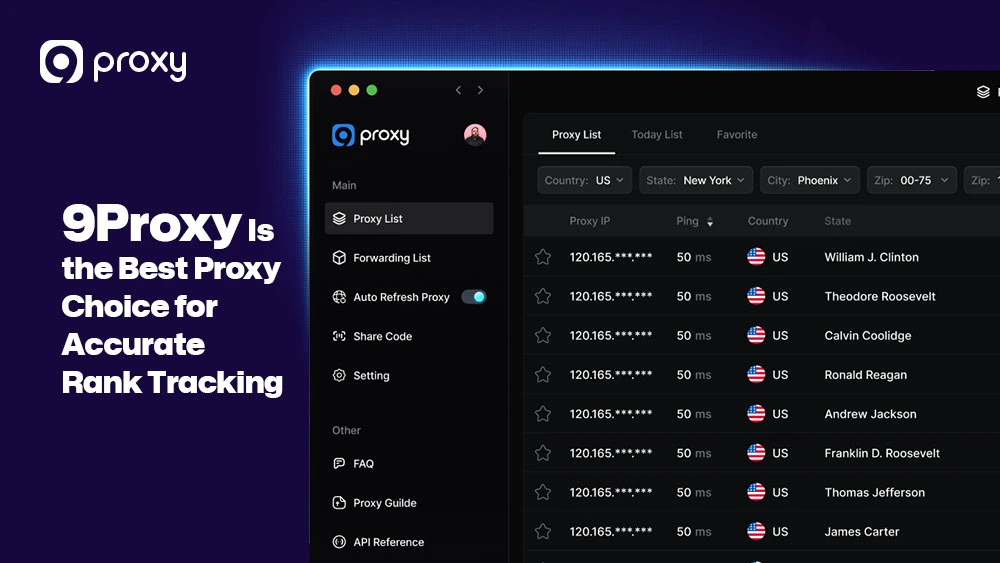
When your SEO performance depends on accurate data, you cannot rely on weak or unstable rank tracker proxies. 9Proxy delivers high-quality residential proxy solutions built to bypass strong anti-bot systems and keep your rank tracking smooth.
Key Advantages of 9Proxy for Rank Tracking Task:
- 100% Real Residential Proxies: We provide IPs from real Residential users in 90+ countries. This gives your queries the highest level of trust, making them appear just like real user traffic.
- Clean and Private Proxy Pool: Our proxy pool is clean and fully private. None of our IPs are shared with other providers, reducing the chance of using an IP that was previously blocked and helping keep your data accurate.
- Unlimited Bandwidth Per IP: Perfect for large-scale rank tracking. You can check millions of keywords without worrying about bandwidth limits or speed drops.
- Affordable Pricing: Our Residential Proxies are cost-effective (starting from just ~$0.04/IP), allowing you to buy rank tracker proxies in bulk and manage many geo-locations without overspending.
- Crypto Payment Perks: Pay with cryptocurrency and get 5% bonus IPs, giving you more value and flexibility for your budget.
FAQ
Can I perform competitor analysis without proxies? What are the limitations?
You can, but results may be inaccurate due to personalisation, location filters, and rate limits. Proxies provide clean, neutral data.
Is it legal to use proxies for scraping competitor websites or SERPs?
In most cases, scraping publicly available SERP data is allowed, but it must be done responsibly. You should respect robots.txt and avoid sending too many requests at once. Proxies themselves are legal to use because they simply provide anonymity. However, scraping private or login-protected data is not recommended.
What are the most common mistakes people make when using proxies for competitor analysis?
Common mistakes include ignoring geo-targeting, which leads to inaccurate ranking data, using one IP too often, which causes quick bans, and relying on low-quality Data Centre proxies that search engines detect easily. Many users also forget to add random delays, making their requests look robotic.
Conclusion
The Rank Tracking Proxy is a vital tool for any SEO professional who needs accurate, unbiased ranking data. In this article, we have reviewed the main proxy types, explained the full setup workflow, and shared advanced methods to keep your data stable and reliable. By combining high-quality Residential IPs with proper rotation, you ensure your ranking reports stay clean, scalable, and trustworthy.
If you want the strongest advantage in your SEO campaigns, choose the reliable proxy solution of 9Proxy today to secure the best Rank Tracking Proxy for your next high-stakes project.