

An Enterprise Proxy Server is now a key part of how modern businesses protect and manage their networks. As companies grow online, they need secure, scalable, and dependable enterprise proxy server solutions to control internet access, block threats, support compliance, and maintain fast performance.
In this article, 9Proxy will explain what an Enterprise Proxy Server does, why organizations rely on it, and how it strengthens your security while improving network efficiency. We also review the 12 best enterprise proxy server options in 2025, along with their features, pros and cons, and best use cases, so you can select and deploy the most suitable option for your business.
Why Should an Enterprise Use a Proxy Server?
An enterprise proxy server is an intermediary system that sits between your company’s internal network and the Internet. It manages all user requests to improve security, apply company policies, and boost performance. By hiding the user’s real IP address, filtering harmful content, and caching frequently visited websites, an enterprise proxy server helps create a safer and faster browsing experience.
When an employee tries to visit an external website, the request goes to the enterprise proxy server first. The proxy then sends the request to the website on their behalf. Because the website only sees the proxy’s IP address, your internal network stays protected and hidden from external servers. This type of controlled routing is also beneficial in specialized use cases such as proxies for affiliate testing, where accuracy and anonymity are essential.
How Does an Enterprise Proxy Server Work?
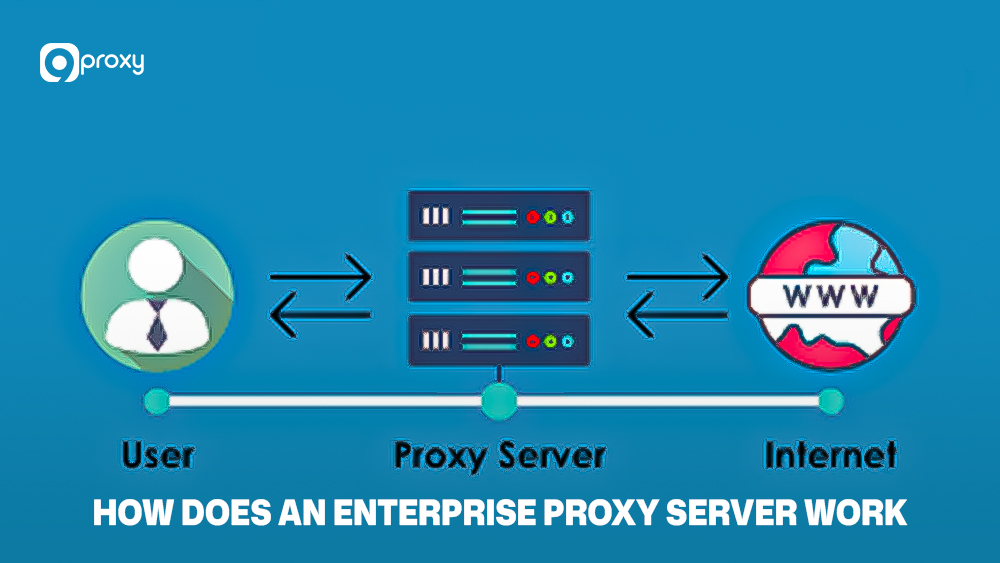
An enterprise proxy server adds a secure routing layer between your company’s devices and the internet. Instead of sending requests directly to websites, all traffic passes through the proxy first, allowing the organization to control, filter, and optimize every connection.
When an employee accesses a website, the enterprise proxy server intercepts the request and checks it against company security rules. If the site is restricted or the user isn’t authorized, the request is blocked immediately. If approved, the proxy masks the employee’s IP address and forwards the request using its own IP, keeping internal devices private and protected.
When the website responds, the enterprise proxy server scans the data for threats before delivering it back to the employee. For frequently visited pages, the proxy may return a cached version to speed up loading and reduce bandwidth usage.
Differences Between Consumer and Enterprise Proxies
Consumer proxies are mainly built for simple tasks like basic anonymity or getting around geo-based limitations. In contrast, Enterprise Proxy Server solutions are designed for business environments that require high performance, strong security, and full control over network traffic.
Many consumer-focused tools, like the whatsapp proxy server or social media proxies, prioritize accessibility, while enterprise systems focus on compliance, scaling, and deep control.
| Feature | Consumer Proxy | Enterprise Proxy Server |
| Scalability & Performance | Low to moderate capacity; shared resources often cause unstable speeds. | High capacity with dedicated systems and load balancing for large-scale, critical workloads. |
| Security & Reliability | Basic or minimal protection; no guaranteed uptime. | Advanced security features such as SSL inspection, smart filtering, dedicated support, and high-uptime SLAs. |
| Customization & Reporting | Little to no configuration options or analytics. | Granular access control, detailed logs, compliance reporting, and deep integration options. |
| Cost Model | Usually free or low-cost with simple subscription plans. | Higher cost based on IP volume or usage |
In summary, enterprise solutions are purpose-built for fast, secure, and reliable data handling at scale, making them essential for business continuity and smooth global operations.
12 Best Enterprise Proxy Servers in 2025
Choosing the right intermediary is essential for protecting your data and supporting large-scale online operations. In this section, we highlight the top 12 proxy providers that deliver enterprise-level solutions designed to meet the high security, performance, and reliability standards required in an enterprise environment.
9Proxy
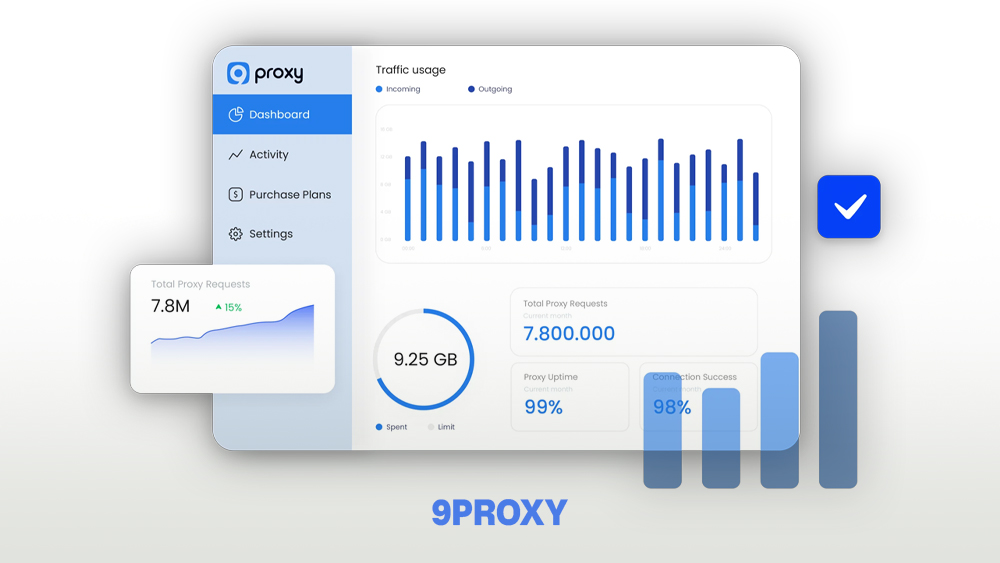
9Proxy provides a modern, enterprise-ready proxy infrastructure with real residential, mobile, and datacenter IPs across 90+ countries. With a clean, private IP pool and unlimited bandwidth, it’s ideal for scalable enterprise proxy deployments. Enterprises that need precise geo-targeting can also leverage options like Canada Residential Proxy to run localized operations, testing, or market analysis with high accuracy.
Pros: Global coverage, no bandwidth limits, clean IPs, strong uptime.
Cons: Lacks certain legacy enterprise dashboard features.
When to Use: Large data projects, distributed teams, automation workflows, web intelligence, and secure enterprise proxy server routing.
Bright Data
Bright Data delivers a powerful data-collection infrastructure, offering residential, mobile, ISP, and datacenter IPs. Known for its compliance frameworks and API tools.
Pros: Huge IP pool, strong automation tools.
Cons: Expensive for smaller teams.
When to Use: Enterprise-scale scraping, research, compliance-heavy tasks.
Oxylabs
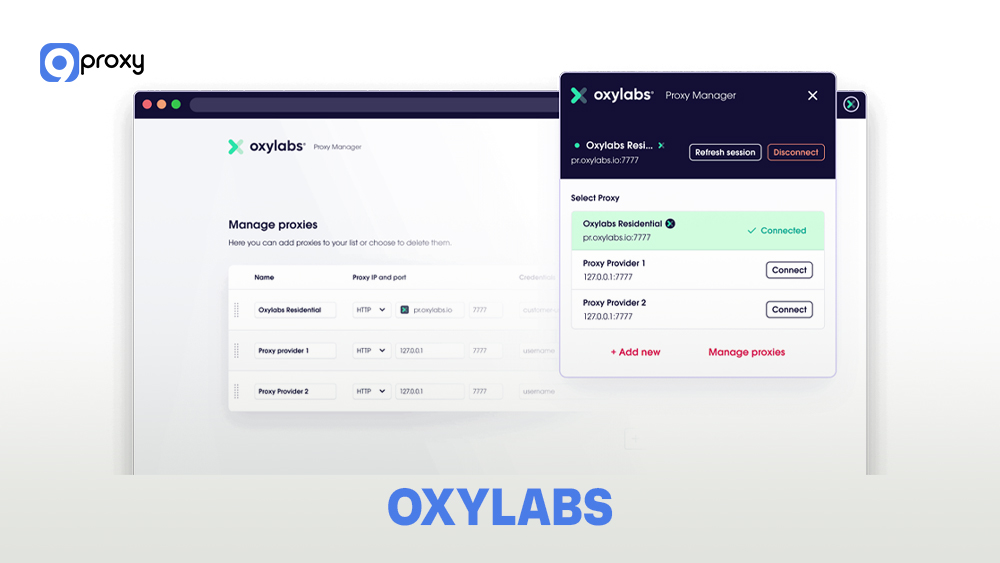
Oxylabs offers both rotating and static proxies supported by a massive global network of millions of IPs, giving enterprises exceptional flexibility and scale.
Pros: Fast performance, enterprise SLA support.
Cons: Higher learning curve for beginners.
When to Use: High-volume crawling, analytics, and uptime-critical operations.
NetNut
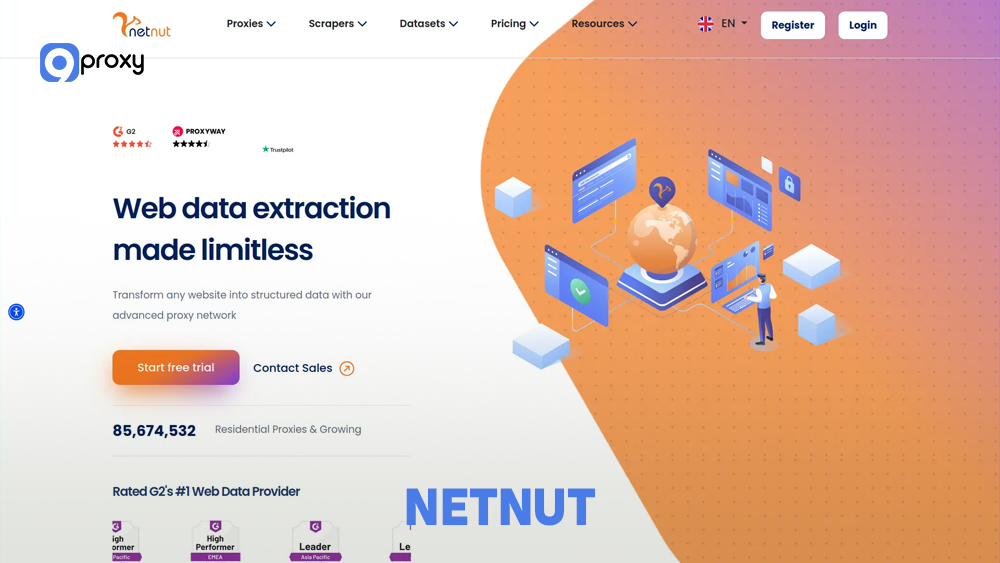
NetNut provides residential and ISP proxies built on a unique routing technology that does not rely on peer-to-peer devices. This gives enterprises a more stable, direct, and predictable connection, allowing for faster response times and higher reliability across large-scale data operations.
Pros: Stable connections, ISP-level IP quality.
Cons: Smaller network than other top providers.
When to Use: API-heavy workloads, consistent IP sessions, and corporate testing environments.
Decodo (formerly Smartproxy)
Decodo offers user-friendly enterprise proxy server solutions with easy onboarding and flexible pricing, making it simple for businesses of all sizes to deploy reliable, secure, and scalable proxy infrastructure.
Pros: Affordable, intuitive dashboard.
Cons: Fewer advanced customization features.
When to Use: Medium-sized teams needing simple but powerful tools.
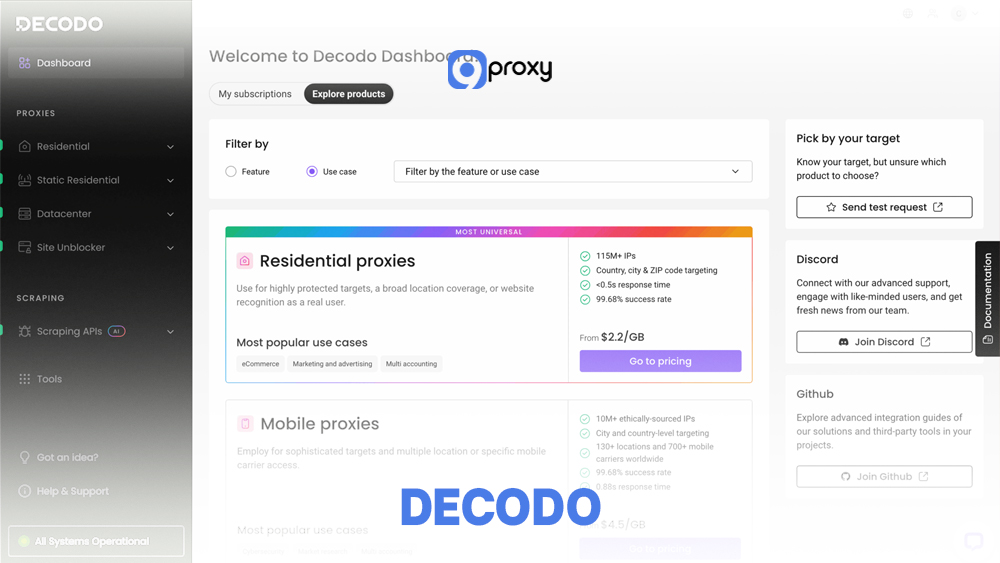
SOAX
SOAX focuses on clean, high-trust residential and mobile proxies, offering flexible geo-targeting options that allow enterprises to choose precise countries, regions, or cities for more accurate and reliable data collection.
Pros: Verified IPs, flexible rotation.
Cons: Slightly higher cost per GB.
When to Use: Social media management, regional research, and tasks similar to those using an instagram proxy server for localized account operations.
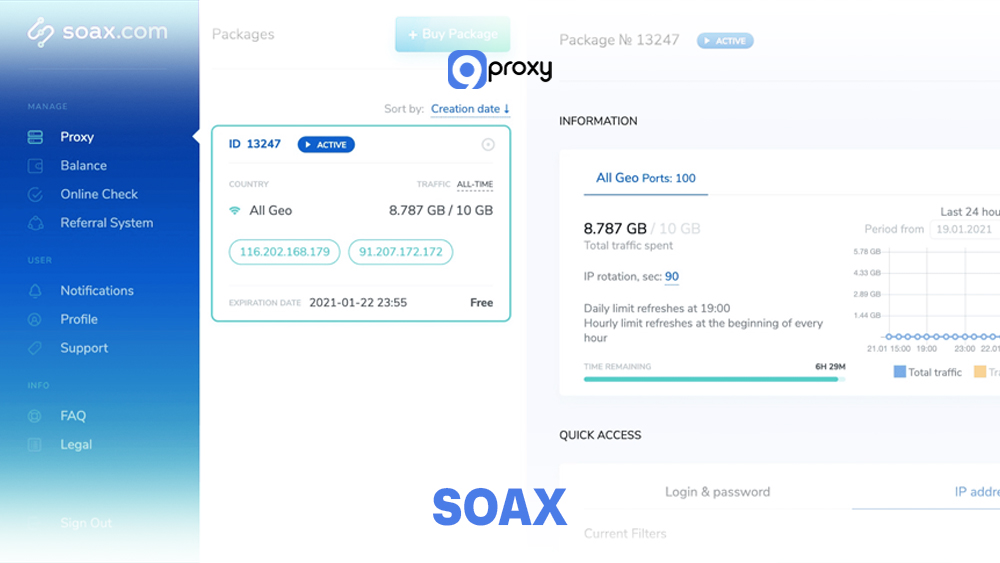
IPRoyal
IPRoyal offers residential, ISP, mobile, and datacenter proxies with strong anonymity, which is suitable for tasks like data gathering, ad verification, and accessing region-specific content with minimal detection risk.
Pros: Budget-friendly, multiple proxy types.
Cons: Smaller pool compared to Bright Data or Oxylabs.
When to Use: Small to mid-size businesses with mixed proxy needs.
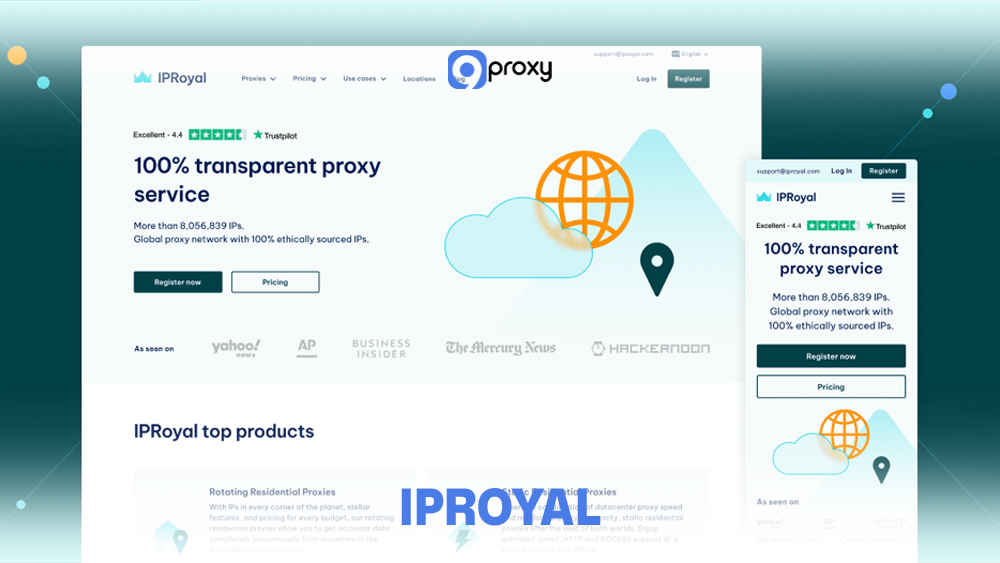
ScrapFly
ScrapFly provides a scraping infrastructure with built-in proxy management, allowing enterprises to automate complex data extraction tasks while maintaining stable, organized, and hassle-free workflows from a single unified platform.
Pros: Anti-bot bypass, developer-friendly API.
Cons: Less suited for general-purpose enterprise routing.
When to Use: Automated extraction, machine learning data pipelines.
Zyte (Crawlera)
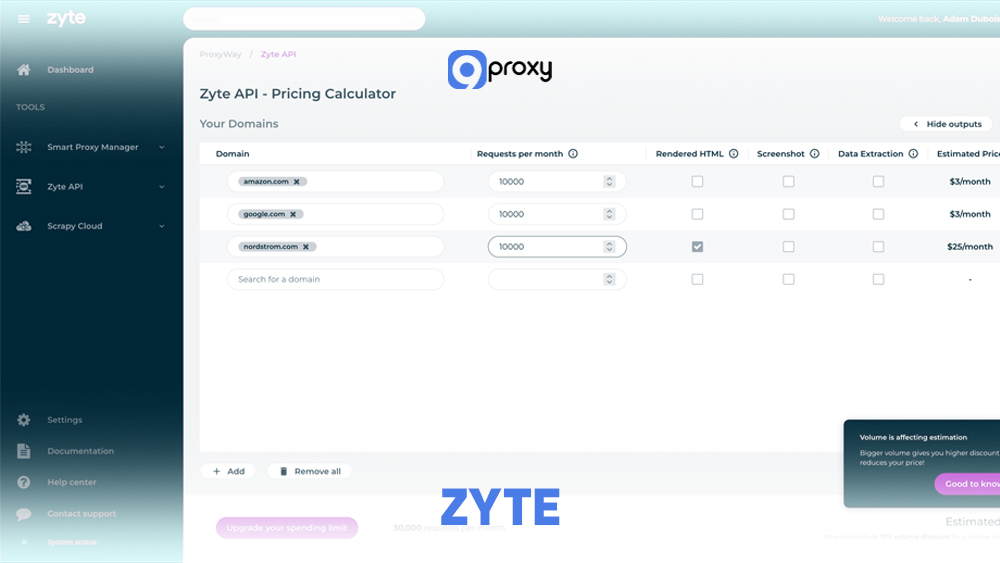
Zyte specializes in intelligent proxy routing and advanced anti-blocking systems designed to help enterprises access even the most protected websites, ensuring high success rates and reliable data collection under challenging conditions.
Pros: Exceptional success rate for complex sites.
Cons: Pricey for non-scraping scenarios.
When to Use: Data extraction, enterprise research, anti-bot challenges.
ProxyEmpire
ProxyEmpire offers residential and mobile proxies that support long sessions, making it a good choice for tasks that need a steady, uninterrupted connection, such as data gathering, ad checking, or account management.
Pros: Long uptime, precise targeting.
Cons: Smaller global coverage than top-tier competitors.
When to Use: Ad verification, eCommerce monitoring, data QA.
ProxyEmpire
Webshare
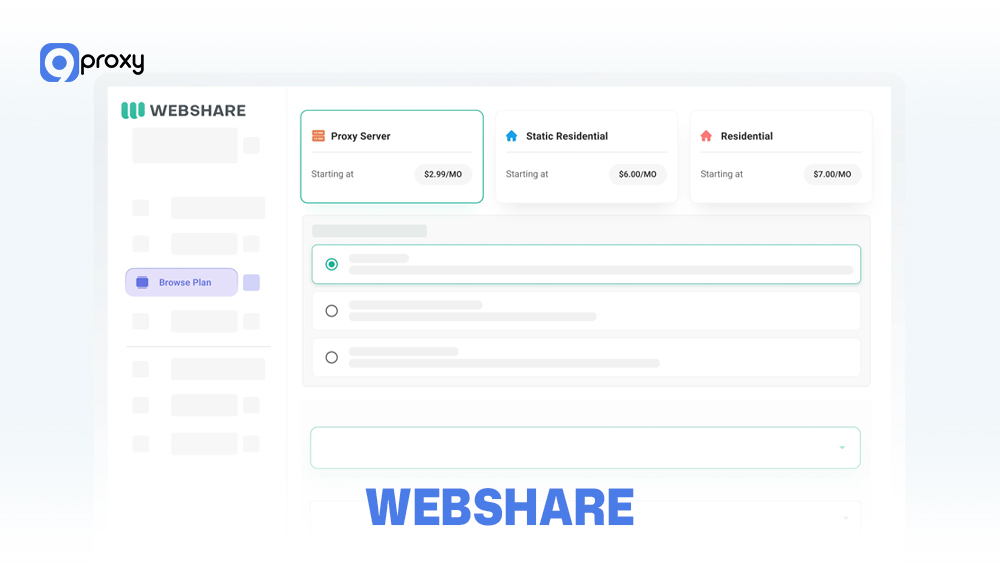
Webshare provides datacenter proxies with strong, consistent performance, making them a practical choice for enterprise development teams that need fast IPs for testing, automation, and large-scale technical workloads.
Pros: Low cost, flexible plans.
Cons: Datacenter IPs may be blocked by strict platforms.
When to Use: Bulk tasks, dev testing environments.
PYPROXY
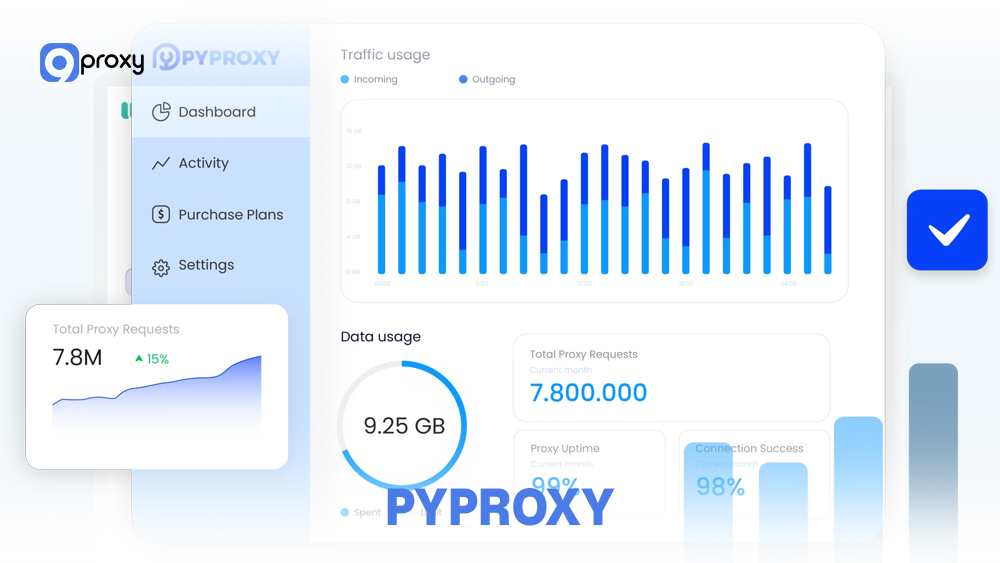
PYPROXY delivers residential, ISP, mobile, and datacenter proxies with broad country coverage, giving enterprises plenty of choices for different markets and use cases.
Pros: Great balance between price and performance.
Cons: Some regions have limited speed variations.
When to Use: Global operations, mixed-use enterprise automation, and large-scale retail workloads similar to those powered by ecommerce proxy networks.
How to Choose the Best Enterprise Proxy Server?
Selecting the right solution requires a clear understanding of your business goals, budget, and technical needs. The table below outlines the key factors that can help guide you toward the most suitable choice.
To make the best decision, you should evaluate several elements, from the technical features of the proxy network to the provider’s reliability, support quality, and overall business practices. For companies operating across multiple regions, reviewing available Residential Proxy Locations can help determine whether the provider offers sufficient geographic coverage for accurate data collection and testing.
| Factors to Consider | Importance to Enterprise | Key Questions to Ask the Provider |
| Speed & Reliability (Uptime) | Critical for business continuity and high-volume data tasks. | What is your guaranteed uptime (SLA)? What is the average response time for your residential/ISP proxies? |
| Security Features | Essential for protecting sensitive corporate data and network infrastructure. | Do you offer advanced features like SSL/TLS inspection, malware filtering, and dedicated IPs? |
| IP Pool Size & Diversity | Determines the ability to handle high-concurrency scraping without getting blocked. | How large is your global IP pool? What percentage is active? Can I target IPs down to the city/ASN level? |
| Bandwidth & Pricing Model | Directly impacts the total cost of ownership (TCO) for large-scale operations. | Is pricing per GB, per IP, or per successful request? Do unused GBs expire, or is there a data rollover? |
| Logging Policy & Compliance | Mandated by regulatory requirements (GDPR, CCPA) and internal security policies. | What data do you log, and for how long? Are you compliant with major data protection regulations? |
| Customer Support Quality | Necessary for the immediate resolution of mission-critical technical issues. | Is 24/7/365 dedicated technical support available via multiple channels (live chat, phone)? |
These factors help ensure your proxy setup meets your company’s performance, security, and compliance needs.
Tips to Help You Choose the Right Proxy
Choosing the ideal Enterprise Proxy Server is all about matching the right level of power, protection, and flexibility to your specific business goals. Below are clear, practical tips to help you make the best choice:
Choosing the right Enterprise Proxy Server means focusing on what your organization truly needs:
- Residential proxies are perfect for tasks that require high anonymity, such as competitor price tracking.
- Datacenter proxies offer very fast speeds, making them suitable for internal filtering or infrastructure testing.
- ISP proxies blend speed and trust, offering a strong middle ground for many enterprise tasks.
Verify the IP Pool’s Size: For large-scale or continuous data operations, you need a big, diverse IP pool to avoid blocks and maintain a high success rate.
Performance Test the Service: Before committing long-term, try free trials or small test packages to measure real-world speed, stability, and success rates on your target sites.
Check Out the Tools for Proxy Management: A simple, centralized dashboard makes it easier to manage thousands of IPs, monitor bandwidth, and adjust geo-targeting.
Benefits and Risks of Using Enterprise Proxy Servers
Proxy servers are essential tools for modern organizations, but they also bring specific advantages and challenges that every enterprise must fully understand before deploying them at scale.
Key Benefits
An Enterprise Proxy Server is not just a simple forwarding system. It plays a strategic role in strengthening network defenses, improving performance, and supporting the overall digital infrastructure of a business.
- Enhanced Security: It functions as a strong protective layer that shields your internal network from direct attacks. By blocking known malicious domains and hiding internal device IPs, it reduces exposure to external threats and helps maintain a safer environment for users.
- Threat Prevention: Advanced filtering and inspection features help identify and stop phishing attempts, malware, suspicious downloads, and other cyber risks before they reach your internal systems. This prevents potential breaches and minimizes downtime.
- Internal Access Control: A proxy allows you to define exactly which users or departments can access specific websites or online services. This helps improve productivity, limit unnecessary browsing, and ensure employees follow internal security and compliance policies.
- Network Intelligence: Enterprise proxies generate detailed logs and analytics that give you better visibility into your network activity. This data supports smarter decision-making, including security audits, bandwidth planning, and proactive incident response.
Key benefits of enterprise proxy server
Risks and Limitations
Even with strong advantages, enterprise proxies introduce complexities that must be carefully managed to avoid creating new problems within your network.
- SSL Inspection Risks: To analyze encrypted traffic, the proxy must temporarily decrypt HTTPS data. While this process is necessary for security scanning, it also creates a sensitive point in your network that must be highly secured to avoid vulnerabilities.
- Performance Bottlenecks: If the enterprise proxy server is not configured correctly or if it lacks sufficient hardware resources, it may become overloaded. This can slow down internet access for the entire organization and cause widespread performance issues.
- Privacy and Trust Issues: Because all unencrypted traffic passes through the provider’s infrastructure, organizations must place significant trust in the proxy provider. Concerns may arise around data logging, storage practices, and compliance with privacy guidelines.
- Legal and Compliance Constraints: Using proxy servers for activities like web scraping or global data collection requires full compliance with regulations such as GDPR, CCPA, and industry rules. Enterprises must also ensure that IP addresses, especially residential IPs, are ethically sourced and legally compliant.
FAQ
Are there different types of enterprise proxy servers?
Yes. The most common options include Forward Proxies, which manage internal traffic going out to the internet, and Reverse Proxies, which protect corporate servers from incoming external traffic. You will also find different IP types, such as Residential, Datacenter, and ISP Proxies, used in enterprise environments.
Are there free enterprise proxy servers?
Some public proxy lists exist online, often marketed as a free proxy server, but they are not suitable for enterprise use. Free solutions typically lack encryption, uptime guarantees, IP hygiene, and dedicated support. For corporate environments handling sensitive traffic or compliance-heavy workloads, only paid and dedicated enterprise solutions should be used to avoid security exposure and operational instability.
What is the difference between a regular proxy and an enterprise proxy server?
A regular proxy is designed for individual use and handles small amounts of traffic with basic security. An enterprise proxy server, on the other hand, supports large-scale operations with guaranteed uptime, advanced security features, compliance tools, and dedicated technical support.
Can I use an enterprise proxy server for global operations?
Yes. Most enterprise providers, including 9Proxy, offer large, globally distributed IP pools that allow you to run operations, testing, and market research across hundreds of regions with reliable performance and accurate geo-targeting.
Conclusion
Understanding how an Enterprise Proxy Server works is essential for any modern business. These tools help secure your network, improve performance, support compliance, and protect your organization’s identity online. Choosing the right provider is an important decision that affects your long-term security and scalability. Evaluate your needs carefully, run real-world tests, and invest in a trustworthy enterprise proxy server to strengthen your company’s digital future.
If you’re ready to build your system with an enterprise proxy server, try 9Proxy’s proxy plans today for fast, secure, and scalable performance.