

A proxy server firewall is an important tool that helps keep your network safe by checking and filtering internet traffic before it reaches your system. It works at the application layer, where it can spot more advanced threats than regular firewalls.
If you're unsure about the difference between a firewall and a proxy server, you're not alone; many IT managers, business owners, and developers have the same question. Therefore, in this article 9Proxy will explain what each one does, why a proxy server firewall is useful, and when you should use it. You'll learn how this hybrid solution adds an extra layer of protection and helps control what comes in and out of your network.
What Is a Proxy Server Firewall?
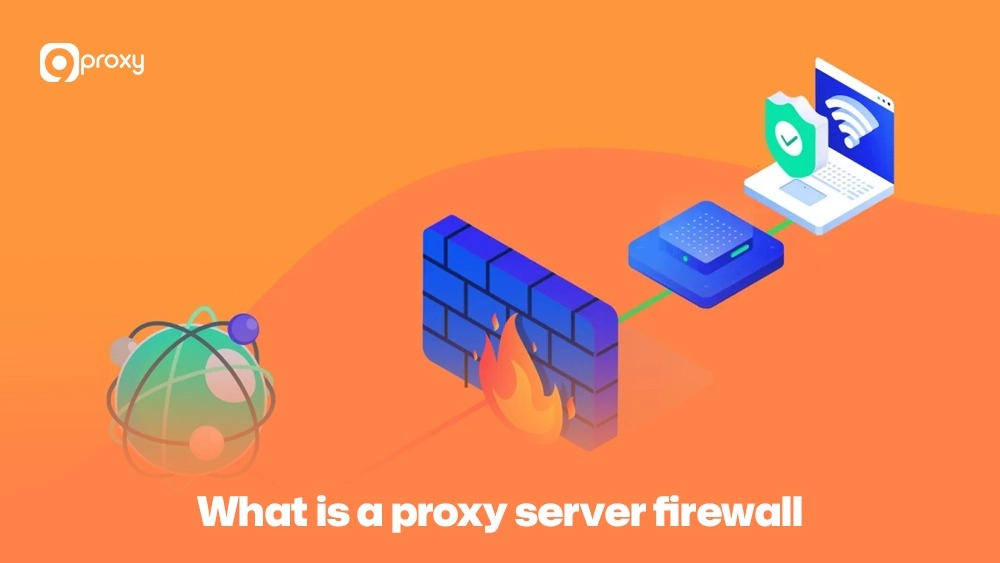
A proxy server firewall is a security tool that protects your network by standing between your devices and the internet. Instead of letting data go straight from your computer to a website, it checks the data first. If the request is safe, the firewall sends it out for you and brings back the response.
This helps block dangerous content, hides your internal IP address, and makes sure only safe traffic can enter or leave your network. Because it works at the application layer, a proxy server firewall can catch more advanced threats than a regular firewall, keeping your network safer and more private.
How Do Proxy Server Firewalls Work?
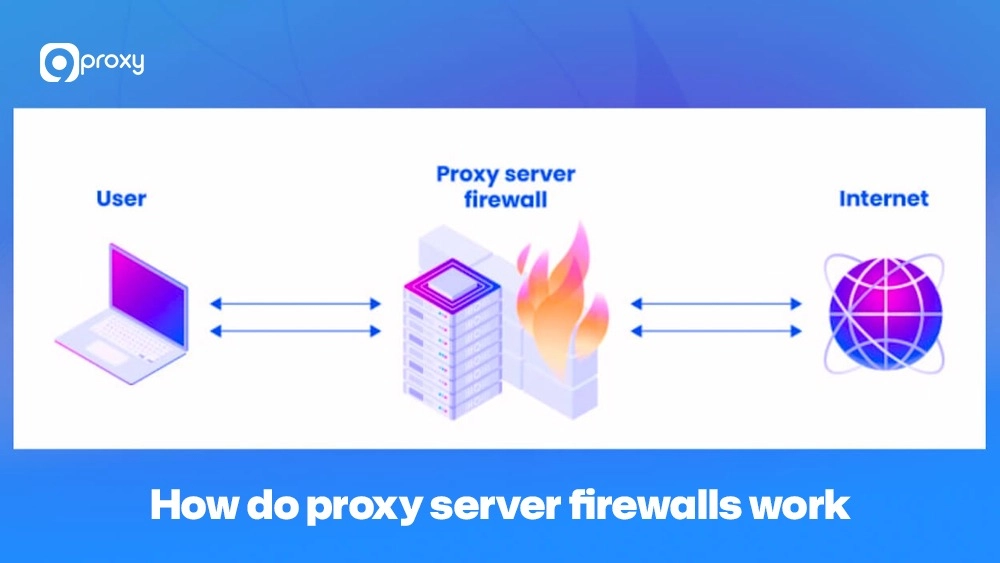
Proxy-based firewalls protect your network by checking all data between users and the internet. They intercept and inspect each request before sending it forward. This process is key to their strong security.
Architecture and Traffic Flow
The proxy server firewall sits between your devices and external websites. When a user sends a request, the firewall catches it, checks it, and then forwards it as if it came from the firewall itself. The outside server only sees the firewall, not your real network. This setup hides your internal IPs and blocks direct attacks. In inbound scenarios, teams sometimes pair this with a reverse proxy server to securely publish internal web apps without exposing origin hosts.
Protocol Inspection and Application-Layer Filtering
A proxy server firewall checks the full content of each request, not just IP or port. It looks at details based on the type of application, like HTTP or email. It can block bad attachments or reject broken requests.
This deep inspection improves security but may slightly reduce speed in busy networks. To reduce this impact, some organizations combine proxy firewalls with a cache proxy server, which stores frequently requested content locally. By serving cached responses instead of repeatedly reaching external websites, this setup helps lower latency while keeping application-layer filtering in place.
Integration with Proxies and Firewalls
Proxy firewalls often work with traditional firewalls. The proxy handles application-level checks, while the basic firewall controls IP and port access. In some environments, administrators also route name resolution through a DNS proxy to filter malicious domains early, adding another control point before traffic ever reaches the application layer.
When to Use a Proxy vs a Firewall?
Choosing between a dedicated proxy server, a traditional firewall, or a proxy server firewall depends on your network setup and what you want to protect.
In many cases, using all three together gives the best results.
| Goal | Primary Tool | Why This Choice? |
| Network Isolation & Deep Filtering | Proxy Server Firewall | Stops direct connections, hides internal IPs, and checks application data for threats |
| Basic Access Control & Traffic Rules | Traditional Firewall | Controls traffic using IP addresses and ports; tracks sessions for basic security |
| Anonymity, Geo-Unblocking & Caching | Dedicated Proxy Server | Hides source IP, gets around region limitations and speeds up browsing using cached content |
In practice, teams handling sensitive sessions or account-based workflows often rely on a private proxy to keep traffic isolated to a single user or system, while the proxy firewall enforces inspection and policy control across the network.
For stronger, layered protection, we recommend using all three:
- A traditional firewall to block unwanted access at the edge
- A proxy server firewall to check deeper into website or email traffic
- A dedicated proxy server (like 9Proxy) for private, location-based browsing and special tasks
This setup improves protection, enables better logging and tracking, and helps identify threats early. If you’re comparing perimeter choices more broadly, the trade-offs in vpn vs reverse proxy scenarios are also helpful for designing remote access and application delivery policies.
Difference: Firewall vs Proxy Server vs Proxy Firewall
It’s common to confuse the roles of a firewall, a proxy server, and a proxy server firewall. The table below highlights the key differences to help you choose the right one for your needs.
| Feature | Traditional Firewall | Dedicated Proxy Server | Proxy Server Firewall |
| Primary Purpose | Controls basic network traffic | Hides identity, get around limitations | Deep inspection and full isolation |
| OSI Layer | Network/Transport (Layers 3/4) | Application (Layer 7) | Application (Layer 7) |
| Traffic Handling | Filters by IP and port | Sends requests on the user’s behalf | Breaks and rebuilds every connection |
| IP Address | Does not hide the user’s IP | Hides IP from websites | Hides IP from websites |
| Latency | Very low (fastest) | Medium (due to relaying) | Highest (due to deep traffic checks) |
A traditional firewall provides fast performance and is suitable for basic network protection. A proxy server helps improve privacy and allows access to region-restricted content. Meanwhile, a proxy server firewall offers the highest level of security by fully inspecting traffic at the application layer, though it may slightly slow down network speed. In broader security planning, comparisons such as secure web gateway vs proxy help clarify whether cloud-based filtering or inline proxy inspection better fits a company’s access control and compliance needs.
To get the best results, it’s ideal to combine these tools based on your needs. For example, use a traditional firewall for general access control, and a proxy server firewall to protect sensitive applications like web browsing and email. For multi-account workflows, pairing dedicated proxies with tools such as dolphin anti detect browser can further isolate profiles while the firewall enforces perimeter policy.
Benefits and Drawbacks of Proxy Server Firewall
To help you decide if a Proxy Server Firewall is the right choice for your network architecture, we have summarized the key benefits and common limitations you should be aware of.
Benefits of Proxy Server Firewall
Proxy Server Firewalls are especially useful for organizations that need strong protection, detailed traffic filtering, and clear visibility into user activity.
Superior Network Isolation
These firewalls act as intermediaries, completely breaking the direct link between internal devices and external sources. By doing so, they hide your network’s IP addresses and structure, making it much harder for attackers to launch direct attacks.
Deep Application-Layer Filtering
Unlike basic firewalls, proxy server firewalls can inspect data based on the specific application protocol being used, such as HTTP or FTP. This allows them to catch threats that traditional firewalls may miss, including hidden malware, dangerous commands, or malicious scripts embedded in content.
Centralized Policy Enforcement
Because all traffic must go through a single access point, it’s easier to apply strict security policies, control what applications can do, and filter content organization-wide from one central place.
Drawbacks of Proxy Server Firewall
While proxy server firewalls offer strong protection, they also come with some limitations that businesses should evaluate before choosing to implement them.
Higher Latency
One downside is slower performance. Since the firewall must intercept, inspect, and rebuild every connection, this process takes extra time and may lead to noticeable delays, especially on busy networks.
Single Point of Failure (SPOF)
If the firewall crashes or is misconfigured, it can block all network access. Without proper backup or failover systems, this could cause major downtime and disrupt daily operations.
Protocol Limitations
Some proxy server firewall software only supports basic Internet protocols like HTTP or FTP. This could be a problem for businesses that rely on custom or less common applications, as those may not be fully protected.
Firewall Proxy Server Software: Free & Commercial Options
Selecting the right firewall proxy server software is necessary for balancing security needs with budget and operational complexity. Here, we will look at some of the best free and commercial options available, allowing you to choose the provider that aligns with your network requirements.
Top 5 Firewall Proxy Server Software Free Options
For individuals or small businesses with limited budgets, several open-source and free tools offer solid proxy server firewall capabilities, focusing on web caching and content filtering. If you’re lab-testing access controls or training staff, quick-start guides for socks5 proxy server free setups can be handy for non-production environments and proof-of-concept trials.
| Tool Name | Key Features & Use Cases |
| Squid | Highly popular, powerful caching proxy used for content acceleration and basic access control (blocking websites) in Linux/Unix environments. |
| pfSense | A widely used open-source firewall distribution that offers proxy server functionality (often via the Squid package) alongside a comprehensive routing and firewall platform. |
| OPNsense | A fork of pfSense, known for its modern interface and strong security features. It offers extensive community support and integration of proxy services. |
| TinyProxy | A light-weight HTTP/HTTPS proxy daemon designed for small networks or for environments where minimal resource consumption is necessary. |
| Endian Firewall Community | An open-source unified threat management (UTM) solution that bundles a firewall, a proxy server firewall for web/email, and other security features. |
These free options are highly scalable but often require a strong understanding of network administration and command-line interfaces for proper deployment and management.
Top 5 Firewall Proxy Server Software Commercial Options
For large organizations that need full protection, advanced features like SSL inspection, and high-speed performance, using commercial firewall proxy server software is often the best choice. These enterprise-grade tools are built for complex networks and mission-critical systems.
| Tool Name | Key Features & Use Cases |
| Fortinet FortiGate | A market leader in Next-Generation Firewall (NGFW) solutions, combining strong proxy server firewall capabilities with unified threat management (UTM). |
| Palo Alto Networks NGFW | Known for App-ID technology and effective threat prevention. Its proxy engine can decrypt SSL traffic to protect high-security networks. |
| Zscaler Internet Access | A cloud-based proxy firewall that secures internet access for users anywhere. No hardware is needed, ideal for remote teams and global workforces. |
| Cisco Firepower NGFW | Offers visibility into apps, blocks malware, and prevents intrusions. Includes strong proxy server firewall features, backed by Cisco Talos threat intelligence. |
| Check Point Quantum | Flexible and modular, this gateway includes a robust proxy server, firewall tools, and application control, built for large enterprise environments. |
These commercial tools come with advanced logging, fast performance, and professional vendor support, perfect for large networks that demand reliability and security.
Choosing the Right Firewall Proxy Server
Picking the right firewall and proxy server depends on your specific needs. If you need strong security and deep traffic inspection, a commercial proxy server firewall (like a Next-Generation Firewall with proxy features) is the best option, though it may cost more and require more setup. Larger organizations commonly pair this model with an enterprise proxy server to support high user volumes, centralized authentication, and consistent policy enforcement across departments.
For smaller setups or basic needs like filtering and caching, open-source options such as Squid might be enough. If your environment relies on mobile apps or cellular-based workloads, pairing policy controls with a mobile proxy server can improve IP cleanliness and location targeting.
Before choosing, check how well the tool integrates with your current systems, how easy it is to set up, and whether it can handle your usual network traffic smoothly.
FAQ
Can I use a proxy and a firewall together?
Yes, you can. Using both a traditional firewall and a proxy server (or a proxy server firewall) gives your network stronger protection. The firewall blocks unwanted traffic at the edge of your network, while the proxy handles things like filtering content, hiding your IP address, and improving speed with caching.
How do I know if my network is protected by a proxy or firewall?
Sometimes, it’s not obvious. If websites are blocked, content is filtered, or your public IP address looks different from your device’s internal IP, your network is probably using a proxy server or a proxy server firewall. You can also check your browser or system network settings to see if a proxy is set up.
How do I set up a proxy firewall?
To set up a proxy server firewall, you’ll need to install special software or hardware at the edge of your network. Then, you define filtering rules, choose which traffic goes through the proxy, and set your devices to use the proxy’s IP address and port for all outgoing traffic.
Can a proxy server firewall handle encrypted traffic?
Yes. Most modern proxy server firewalls can inspect encrypted traffic like HTTPS. They use SSL/TLS inspection to decrypt the data, check for threats, then re-encrypt it before sending it on. This keeps your network secure, though it may slightly slow down the connection.
Conclusion
To keep your network truly safe, a basic firewall is no longer enough, especially when it comes to protecting at the application layer. A proxy server firewall gives you stronger defense by hiding your internal network, checking every data request carefully, and blocking threats that a regular firewall might miss.
When you understand how proxy server firewalls work, you can make better decisions to protect your business, secure sensitive information, and keep your systems running smoothly. If you’re looking for a powerful and reliable proxy solution, we recommend choosing a trusted provider like 9Proxy. With years of experience in proxy technology, 9Proxy helps you build a complete and scalable security setup that fits your network’s needs.