

A Neural Network Proxy is a faster and simpler version of a heavy model that keeps the key patterns while removing the long processing time. In simulation, actuarial work, and machine learning, this kind of proxy model acts as a quick substitute for a full model, allowing teams to run complex calculations with much lower cost and delay.
Many data scientists, actuaries, and ML engineers prefer neural networks for this purpose because they handle patterns, datasets, and business rules better than traditional approaches. With this guideline, 9Proxy will help you understand how a Neural Network Proxy works, why it balances speed and accuracy so well, and how you can apply it effectively in real projects.
What is a Neural Network Proxy?
A Neural Network Proxy is a small neural model that copies the behavior of a much larger and slower system. Instead of running a full simulation or heavy calculation, the neural network gives almost the same result in a much shorter time. It learns how inputs and outputs relate to each other so it can act as a quick replacement for the original model. This helps you run tasks like financial projections or technical simulations in milliseconds instead of hours.
In machine learning and AI, this type of proxy is very different from a networking proxy. A networking proxy routes internet traffic, while a Neural Network Proxy replaces or simplifies complex models. Here, the proxy sits between your input and the full model’s output, reducing workload, protecting data, and making your processes faster and easier to scale.

How Do Neural Network Proxies Work?
A Neural Network Proxy works by taking your input data and sending it through a trained neural model instead of the full, complex system. It uses the same inputs, runs a forward pass, and produces a prediction that is very close to the original model’s output.
On the technical side, this setup also helps protect data integrity. Sensitive information does not flow through every part of the full model, reducing the chance of data exposure. Only the simplified proxy model interacts with the user, which lowers the risk of data leakage. This separation works in a similar way to how a reverse proxy shields internal systems by controlling how requests reach backend services, but here the protection applies to model logic rather than network traffic.
A Neural Network Proxy can also ease server load. When thousands of requests move from a heavy simulation to a smaller neural model, everything runs faster and costs less. You can even place proxy models in different regions to reduce latency and keep performance stable during busy periods, much like how large organizations distribute workloads using an enterprise proxy server to maintain reliability under scale.

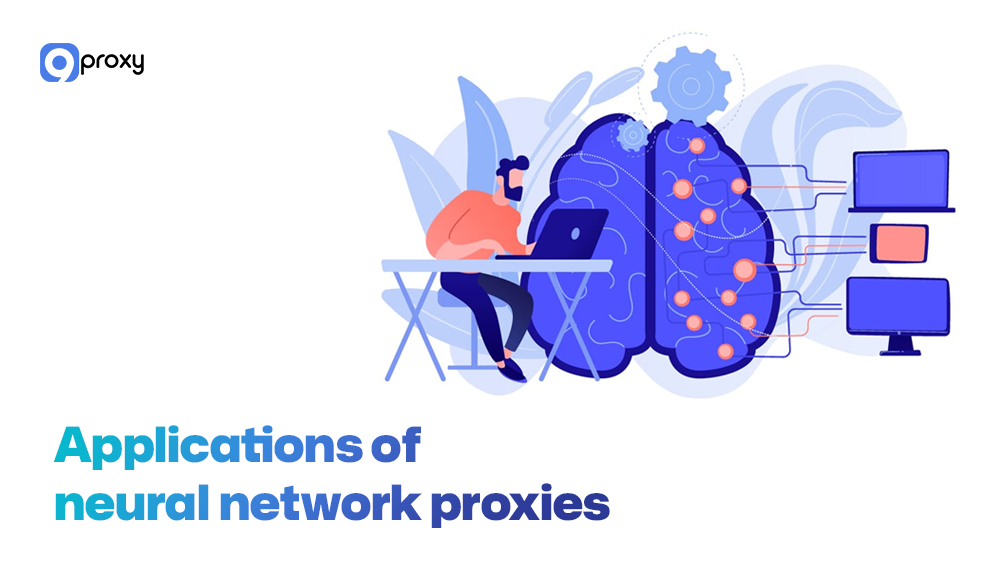
Applications of Neural Network Proxies
Because a Neural Network Proxy can handle complexity quickly, it is useful in many business and technical areas:
AI and Machine Learning
A Neural Network Proxy is useful for running complex AI models in real time. It processes data quickly through a safe, lightweight layer before involving the main model, giving users fast responses and better privacy protection.
Data Protection and Simulation
In fields like finance and insurance, companies use Neural Network Proxies to keep sensitive algorithms secure. The heavy simulation model is used only to generate training data. After that, the fast proxy model handles everyday tasks without exposing core intellectual property.
Scalability
Proxies make scaling much easier. Instead of running large, slow models for every request, a lightweight Neural Network Proxy can be duplicated and deployed across many servers, supporting more users at the same time.
Regulatory Compliance
In regulated environments such as IFRS 17 or Solvency II, the full model is needed mainly for official reporting. The Neural Network Proxy handles daily, time-sensitive work so the business meets deadlines without running heavy calculations all the time.
Advantages & Drawbacks of Using Neural Network Proxies
Adopting a Neural Network Proxy is a smart and strategic choice for teams that want faster performance, better scalability, and more efficient model workflows. Before you decide how to use it in your projects, here is a clear and balanced look at the pros and cons you should understand.
Advantages of Using Neural Network Proxies
Using neural networks as a proxy is a strong and practical way to fix the speed problems found in complex models, especially when you need fast, repeatable results without running full simulations every time.
- Enhanced Security: By deploying the fast proxy, you keep the original, proprietary algorithms of the complex model safe, protecting your core business intellectual property from being copied or exposed during deployment. In practice, this layered protection mirrors how a proxy firewall filters and controls access at the system boundary, limiting what external users can directly interact with.
- Improved Speed and Efficiency: The massive reduction in runtime is the biggest plus. Multi-hour simulations are replaced by near-instantaneous results, allowing for real-time decision-making and lowering application latency.
- Bypassing Geographical and Network Restrictions: Since the proxy is small and fast, it can be placed closer to your users (on local or regional servers), ensuring reliable, low-latency access to predictions no matter where your users are.
- Cost-Effective: Accelerating calculations reduces the need to constantly use expensive, powerful High-Performance Computing (HPC) resources. The HPC is mostly needed just for training data, leading to lower operational costs over time.
Challenges and Risks of Neural Network Proxies
Adding a proxy layer can make your system faster, but it also brings new technical challenges that you need to manage carefully.
- Data Latency (Upfront Delay): While fast during use, the first step can cause a significant upfront delay. The complex architecture also adds a new layer that needs managing.
- Proxy Server Security: If you deploy the proxy on a public cloud or use an external service, the security of that specific proxy server becomes a new risk. You must be careful to use only trusted services to avoid exposing your data.
- Complexity of Integration and Maintenance: Adding a Neural Network Proxy makes your overall IT system more complex. You now need experts not just in the original topic (like actuarial science) but also in machine learning development and continuous performance monitoring.

Neural Proxy vs Alternatives
Choosing the best proxy model depends on what matters most to you: accuracy, speed, or interpretability (how easy it is to explain the results). A Neural Network Proxy is very powerful, but in some cases, simpler models may be a better fit.
The table below compares a Neural Network Proxy with Linear/GLM proxies and Tree-based proxies, using the key factors that most teams consider.
| Proxy Type | Speed | Accuracy | Interpretability | Training Cost | Best Use Case |
| Linear / GLM | Very fast | Low | High | Low | Simple, linear relationships |
| Tree-based | Fast | Medium | Medium | Medium | Non-linear patterns, tabular data |
| Neural Network Proxy | Medium | High | Low | High | Complex, high-dimensional problems |
When to Choose Which:
Choose Linear/GLM Proxies when the problem is simple or when you must clearly explain the results to regulators or follow strict business rules.
Choose Tree-based Proxies when the problem is more complex but you still need some level of interpretability, or when your training data is limited.
Choose Neural Network Proxies when the full model is very complex, speed is critical, and the gain in accuracy is more important than having a fully explainable model. The higher setup effort is justified by the long-term performance benefits.
Case Study: Building a Neural Proxy Model
Here’s a simple real-world example that shows how a Neural Network Proxy can dramatically improve reporting speed and efficiency for an insurance company, especially when traditional models are too slow to meet business deadlines.
The Problem: The insurer used a complex simulation model for reserving, and each run took about 8 hours. They needed updated reserve numbers every week, so the full model was far too slow and expensive.
Data Preparation: They selected 15 key inputs, such as interest rates and policy details. Then they ran the full model 500,000 times to build a large training dataset containing inputs and the matching reserve value RRR.
The AI Model: They created a Feed-Forward Neural Network (FFNN) with an input layer, three hidden layers, and one output for the reserve RRR. They trained the network carefully and used validation techniques to avoid overfitting.
Results & Impact:
- Accuracy: Average error below 0.15% compared to the full model.
- Speed: Full model: 8 hours per run. Neural Network Proxy: 15 milliseconds per calculation.
- Business Impact: Weekly reporting became easy, real-time stress testing became possible, and quarterly reporting costs dropped by 75%.
Best Practices for Implementing Neural Network Proxies
Even with AI helping you handle complex tasks, you still need careful planning, proper setup, and continuous monitoring to make sure your system stays accurate, efficient, and reliable over time.
Choosing the Right Infrastructure
- Security First: When working with sensitive data, always use secure and reputable proxy solutions, such as those from 9Proxy, or deploy your Neural Network Proxy inside your own protected cloud environment (VPC). Alongside model isolation, supporting components like secure name resolution also matter, which is why teams often pair AI deployments with a DNS proxy to control and monitor how services are discovered and accessed internally.
- Speed and Location: Place your proxy model on servers close to your users. The shorter the distance, the faster the response and the lower the latency.
Optimizing Your Network for AI
- Minimal Latency: Keep your network fast and clean. Avoid slow or unstable proxy servers, because even a small delay can cancel out the speed advantage of your AI model.
- Bandwidth Requirements: If your inputs or outputs are large, ensure your network has enough bandwidth so the Neural Network Proxy does not get slowed down by data transfer limits.
Testing and Monitoring
- Continuous Performance Assessment: Monitor performance regularly. From time to time, run the full original model on a small sample of new data and compare it with the Neural Network Proxy’s predictions. This helps you detect model drift early.
- Data Integrity Checks: Always check the input data. If your proxy receives values very different from what it was trained on, its accuracy will drop quickly because it is operating outside its learned range.
FAQ
When should I choose a Neural Network Proxy over simpler models?
You should choose one when the system you are modeling is highly complex (non-linear), the original model is very slow (takes hours), and your main goal is to get the highest speed and accuracy for real-time needs.
How do I train a Neural Network Proxy model?
You train it using Supervised Learning. You first generate a large dataset of inputs and outputs from the slow, full model. You then feed this data into the neural network, using a math function (like Mean Squared Error) to teach it to mimic the full model’s output.
How can I ensure my Neural Network Proxy doesn’t overfit?
To prevent overfitting (where the model is only accurate on its training data), you must use techniques like K-fold Cross-Validation and set aside a separate Validation Dataset to test the model on data it hasn’t seen during training.
Can Neural Network Proxies be used in large-scale applications?
Yes, they are perfect for large-scale use. Because they are incredibly fast (often milliseconds), they can easily handle millions of requests a day with very few computer resources, unlike the heavy, centralized full models.
Conclusion
The Neural Network Proxy is a major upgrade for anyone working with slow or complex simulations. It lets you keep high accuracy while cutting processing time down to seconds or even milliseconds. With this approach, you get fast results that support real-time decision-making.
To use it effectively, you still need strong security and regular monitoring. A good network setup is essential to make sure your fast proxy model runs smoothly and safely in production. If you want a reliable, high-speed connection for deploying your AI systems, contact 9Proxy to learn more about our premium residential proxy solutions built for modern AI performance and security needs.