

When building API infrastructure, choosing between API proxy vs API gateway shapes your system's performance, security, and scalability. Both tools work as intermediaries between clients and backend services, but their capabilities differ in how they handle security, transform data, and coordinate multiple services.
This guide of 9Proxy will help you easily choose the right solution between API gateway vs API proxy. You'll know when to use each approach, understand its core differences, and learn how to avoid common mistakes.
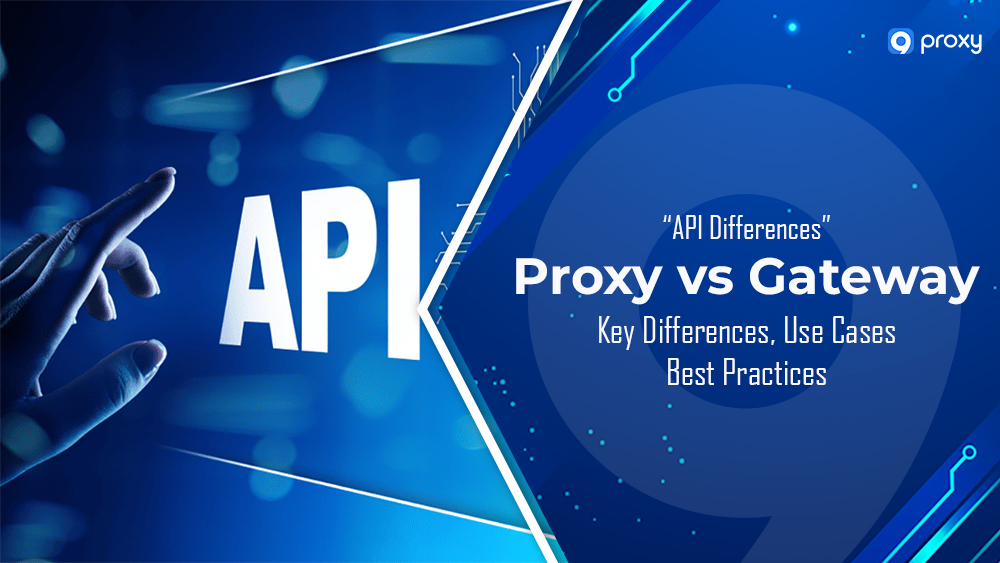
API Proxy Definition
API proxy is a lightweight middle layer between client apps and backend services. It provides a stable, controlled interface to the backend by forwarding requests, handling basic authentication, and applying minimal traffic control, usually without changing backend code.
Benefits of Using API Proxies
API proxies offer straightforward advantages for simpler setups:
- Fast, lightweight setup: Proxies use few resources and add minimal delay, so you can deploy quickly without big infrastructure changes.
- Simple traffic control: One entry point that routes requests to the right backend by path or headers.
- Basic security and caching: Central auth, API keys, and rate limits; can cache popular responses to reduce backend load and hide services from direct access.
- Cost-effective: Easy to run on a tight budget or small team when you need to expose APIs quickly.
Difference between API Proxy vs API Gateway
Below, we compare API proxy vs API gateway across ten key areas to help you pick the right solution for your needs. While both sit between clients and backend services, their responsibilities differ in scope and complexity. This distinction becomes clearer when you also look at related infrastructure patterns such as reverse proxy vs API gateway, where traffic handling, abstraction depth, and feature sets define how much control you gain over APIs at scale.
From a security perspective, API proxies focus on protecting API endpoints with basic authentication, SSL termination, and rate limiting. They are not designed to manage user browsing behavior or outbound traffic inspection, which is typically addressed in secure web gateway vs proxy discussions that focus on user-level and network-level security controls rather than API exposure.
When to Use an API Proxy or API Gateway?
API Proxy
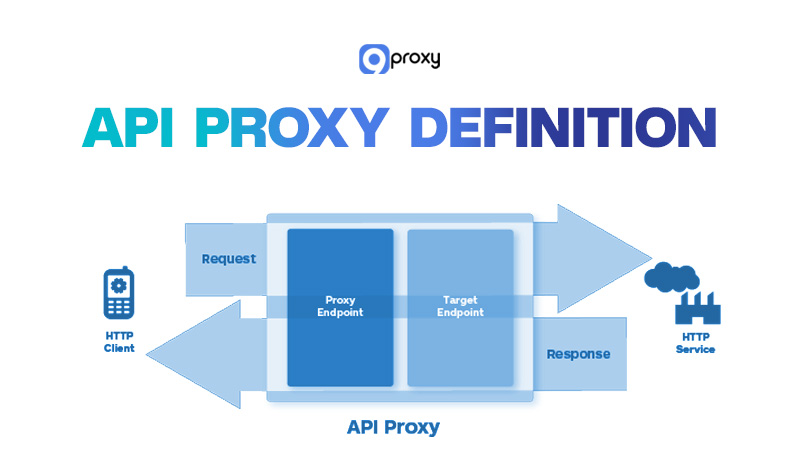
API proxy becomes the right choice when you have simple needs and limited resources. Choose a proxy when you manage just a few stable APIs that don’t need frequent changes or complex coordination between services. Proxies work best for teams with similar client applications that don’t require complex data transformations or protocol conversions. They’re also perfect for projects with tight budgets and fast deadlines because they’re quick to deploy and cost much less than gateways.
API Gateway
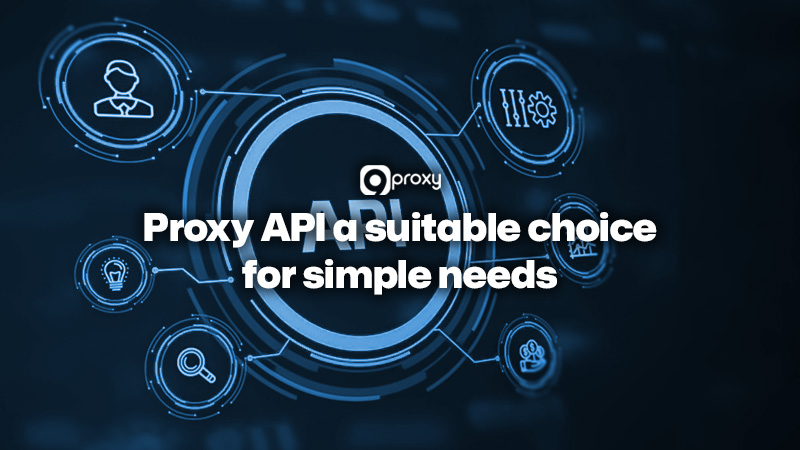
Unlike proxies, API gateways work best when you need advanced features and handle complex operations. Choose a gateway when you manage many microservices that need centralized control for load balancing and service coordination, or when you serve different client types like web apps, mobile apps, and IoT devices.
Gateways are the better choice for environments with strict security requirements, such as OAuth enforcement, token validation, and public API exposure. Unlike access models commonly compared in VPN vs reverse proxy scenarios, API gateways operate at the application layer and control how services are consumed rather than who can join a private network.
Can an API Proxy Work Like an API Gateway?
API proxy vs API gateway comparisons often show that proxies can handle some gateway-like tasks through custom logic, but they lack built-in orchestration and policy engines. This difference mirrors distinctions explained in proxy server vs reverse proxy models, where the direction of traffic flow determines how much control and visibility the intermediary can realistically provide.
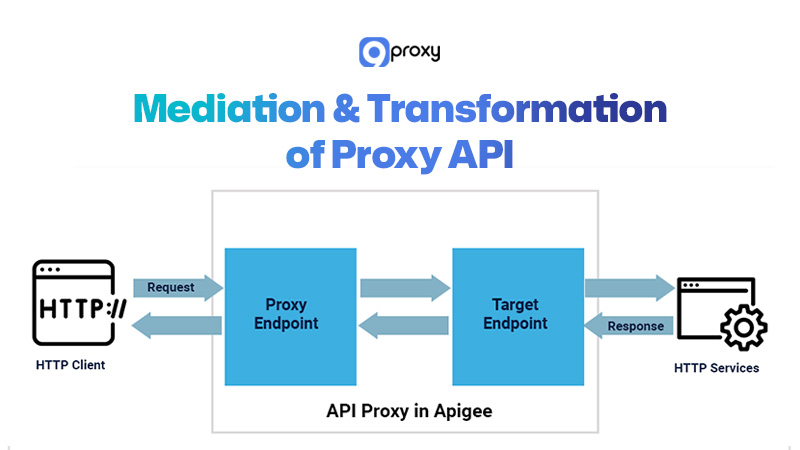
Mediation & Transformation
API proxies handle basic mediation but struggle with complex transformations. When converting protocols like SOAP to REST, proxies need custom code that you must write, maintain, and update yourself. This can take weeks or months and requires revisiting the code whenever changes occur.
API gateways, on the other hand, offer built-in transformation policies that let you convert existing services into advanced APIs in minutes. You get ready-to-use templates for payload mapping, schema validation, and version negotiation without writing custom code. Gateways provide reusable policies you can apply across multiple APIs, saving development time and reducing maintenance work.
Orchestration
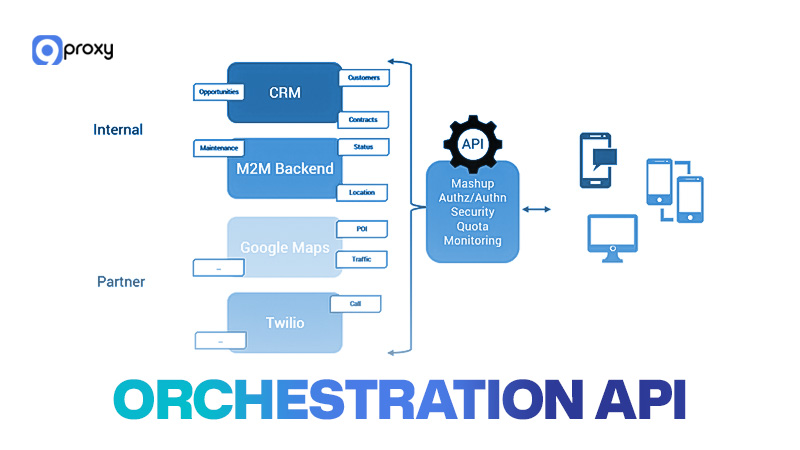
API proxy vs API gateway functionality differs most in orchestration capabilities. API proxies lack orchestration features, but gateways handle this well. Here’s what gateways can do:
- Service aggregation: Gateways make fan-out calls to multiple backend services at once, then combine responses into one unified payload. This reduces the round-trip for client applications.
- Resilience mechanisms: Circuit breakers detect repeated service failures and temporarily block requests to let systems recover. API gateway vs proxy resilience features show that gateways use automatic retry logic with exponential backoff strategies.
- Conditional workflows: You can create complex routing rules based on request content, headers, or runtime conditions. Gateways support if-then logic that directs traffic through different processing paths.
- Microservice composition: Gateways coordinate multiple services into unified API operations, hiding complexity from clients. They automatically manage the sequence of calls and data dependencies.
Integration
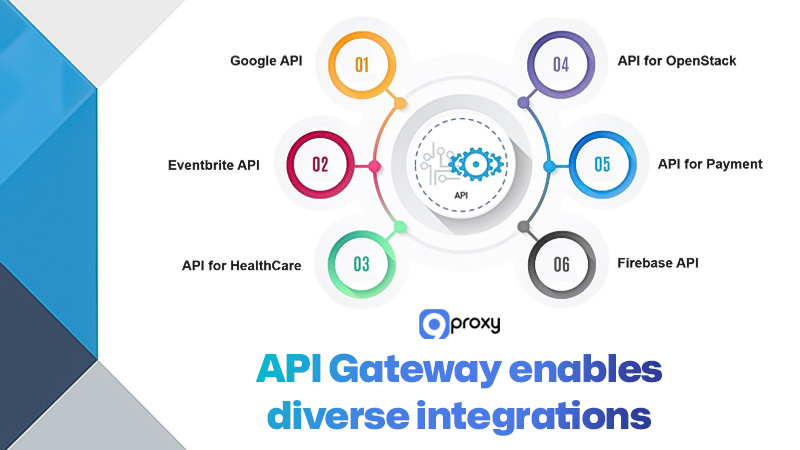
When examining API proxy vs API gateway integration capabilities, gateways handle complex integrations that would overwhelm basic proxies. You can use gateways to replace or complement Enterprise Service Bus (ESB) systems, especially in modern microservices architectures.
While ESBs focus on internal system integration with heavy transformation capabilities, API gateways specialize in external API management with lighter orchestration. Gateways let you connect diverse backend systems, legacy SOAP services, modern REST APIs, and new technologies like GraphQL without extensive custom coding.
Decision Framework: Proxy or Gateway?
Before picking between an API proxy vs API gateway, ask yourself these key questions to match your choice with actual needs rather than guesses:
- How complex is your backend? Check whether you manage a single application with a few endpoints or a distributed microservices setup needing coordination.
- Do you have multiple clients or public APIs? Think about whether you serve different client types with various protocol needs or expose APIs externally to partners and developers.
- Do you need a request transformation or orchestration? Your API proxy vs API gateway selection depends on whether you must convert data formats, combine multiple service calls, or use complex routing logic.
- Who will maintain the infrastructure? Look at whether you have dedicated DevOps resources or need a solution that your current team can handle with minimal training.
- What is your tolerance for latency and cost? Know if you focus on minimal overhead and lower costs, or can accept slight latency for full features.
When your proxy can’t handle your growing system anymore, it’s time to switch to a gateway. The API proxy vs API gateway migration path requires a step-by-step plan. First, set up the gateway alongside your existing proxy. Then, slowly move some traffic over to test it. Start with your simplest, least important APIs. Once everything works well, gradually move the rest. This keeps your service running without interruption.
Common Mistakes to Avoid
Many teams make costly mistakes when selecting between API proxy vs API gateway. Here are the most common ones to avoid:
Using a gateway when you don’t need one
Don’t set up a full API gateway for simple applications with just a few services. This wastes resources and makes things too complex. Start with a basic proxy for simple needs, then upgrade later as you grow.
Staying with a proxy for too long
When your system grows to microservices, don’t keep using a basic proxy. Making the wrong API proxy vs API gateway choice at this stage forces you to build custom features yourself that gateways already provide.
Skipping performance and security testing
Always configure caching, rate limiting, and authentication properly. Test everything under realistic conditions before launching to avoid slow performance and security holes.
Not monitoring after launch
Set up monitoring and logging right from the start to catch problems early. Your API gateway vs API proxy setup needs regular metric reviews, error pattern analysis, and policy adjustments based on real usage, not guesses.
Conclusion
Choosing between API proxy vs API gateway depends on your architecture complexity, security needs, and growth plans. Proxies work well for simple setups with few backend services and basic security. They’re quick to deploy and don’t add much overhead. Gateways become necessary when you have microservices, need strong security, must convert between protocols, or expect to scale up significantly.
For teams managing accounts globally, you could combine API infrastructure with tools like duoplus to simplify account management across different regions and platforms. Check out 9Proxy for more practical guides on APIs and proxies!