

As markets become more geo-targeted and personalized, a competitor analysis proxy is no longer optional for serious SEO and marketing teams. Content in the present is customized by location, and IP rate limits and CAPTCHA make large-scale data collection with a real IP almost impossible.
With the right competitor analysis proxies, you can see exactly what users in each region see, and base your strategy on complete, unbiased data. This guideline from 9Proxy will explain how a competitor analysis proxy solves modern tracking problems, and how to build a full workflow with advanced techniques and practical troubleshooting.
Why Competitor Analysis with Proxies is Essential in 2026
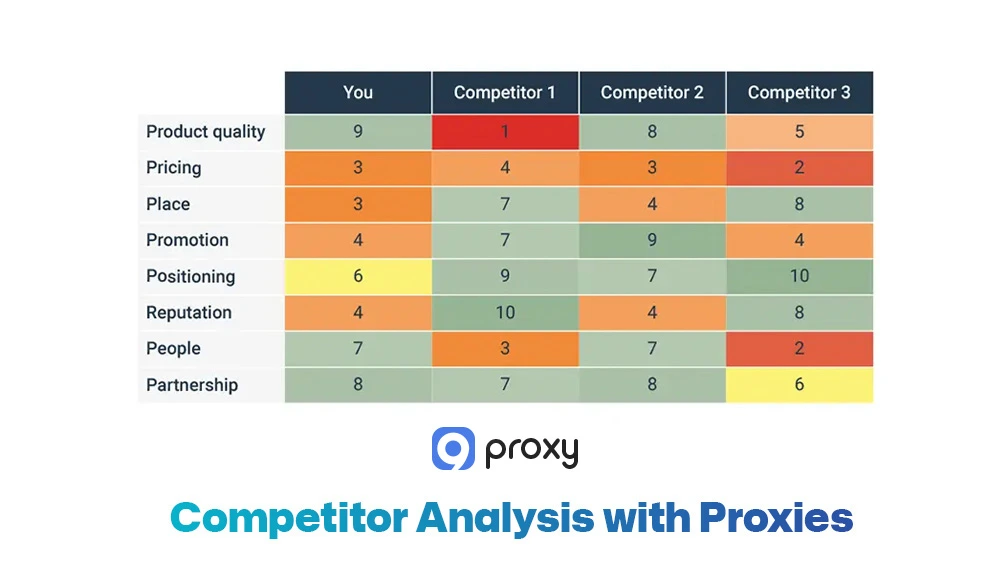
Competitor analysis is a core part of any data-driven strategy. You need to understand how your rivals price their products, run PPC campaigns, design landing pages, and rank across different regions. The challenge is that getting this data is harder than ever.
Search engines, marketplaces, and social platforms now use strict anti-bot systems and heavy personalization. If you collect data from just one device or one IP, you will face rate limits, temporary bans, or see results tailored only to you instead of your real audience. This creates misleading insights and risky decisions.
A Competitor Analysis Proxy solves these issues by routing your traffic through many trusted IPs in different countries and cities. This lets your tools gather clean, local, unbiased data quietly in the background. In 2026, as platforms increase their defenses and use more dynamic content, proxies become a central part of any serious competitor intelligence workflow.
How Proxies Help You Track Competitors Without Interruptions
Proxies work as trusted intermediaries that hide your real IP and route your requests through a large pool of clean, diverse IP addresses. This allows your automated competitor research to run smoothly without interruptions. In practice, many teams apply similar setups across different proxy use cases to handle everything from SEO tracking to ad monitoring without exposing their real identity.
Preventing IP Bans: With frequent IP rotation, proxies make sure no single IP sends an unusual number of queries. Spreading traffic across many competitor analysis proxies helps you avoid rate limits and prevents long-term IP bans from websites or search engines.
Bypassing CAPTCHA: When a website suspects bot activity, it triggers a CAPTCHA. A strong proxy setup lets your system switch instantly to a new, clean IP whenever a CAPTCHA appears, so your data collection continues without stopping.
Overcoming Geo-Restrictions: Many competitors show different prices, ads, or content depending on the user’s location. With geo-targeted proxies, you can choose IPs from the exact regions you want to study, ensuring you collect accurate, localized insights for your market research.
Types of Proxies for Competitor Analysis
Choosing the right proxy is one of the most important steps when building a strong competitive analysis system. Each proxy type has its own mix of speed, cost, and anonymity, making it better for certain kinds of data collection.
Datacenter Proxies – Fast but Easily Detected
Datacenter proxies come from cloud servers instead of real ISPs. They offer very fast speeds and low costs, making them ideal for large-volume, basic scraping tasks where high anonymity is not required.
- Pros: High speed, low cost, easy to scale
- Cons: Easy for anti-bot systems to detect, higher chance of blocks
- Best For: Non-sensitive scraping, general web content, price checks on less protected sites
Residential Proxies – Trusted, Real Household IPs
Residential proxies use IPs assigned to real households by legitimate internet service providers. Because these IPs belong to everyday users, they blend naturally into normal web traffic patterns. This makes them extremely difficult for websites, search engines, and e-commerce platforms to detect or block.
Their authenticity allows you to access geo-specific pages, view accurate SERPs, perform price checks, and monitor ads without triggering anti-bot systems. This is especially important when working with an ecommerce proxy, where pricing, stock, and product visibility often change by region.
- Pros: Very low detection rate, excellent for geo-targeting, strong reliability
- Cons: Higher cost and slightly slower than datacenter IPs
- Best For: SERP tracking, protected e-commerce price monitoring, ad verification
ISP Proxies – Hybrid Stability & Trust
ISP proxies are residential IPs that are hosted on high-speed, dedicated servers. This setup gives them the best qualities of both proxy types: the consistent performance and uptime of datacenter proxies, along with the natural trust and legitimacy of residential connections. Because they appear as real ISP-issued IPs but operate with server-level stability, ISP proxies are well-suited for long-running sessions, login-based tasks, and competitor analysis workflows that require both speed and a low risk of detection.
- Pros: Fast, stable, good for long sessions, low ban risk
- Cons: More expensive and not as widely available
- Best For: Long-term competitor monitoring that needs fast speed and consistent sessions
Mobile Proxies – Highest Trust, Best for GEO-Sensitive Data
Mobile proxies route your traffic through real 3G, 4G, or 5G carrier networks, giving you IPs that belong to actual mobile users. Since mobile networks use shared IP ranges for large groups of customers, it becomes very difficult for websites or anti-bot systems to single out and block individual users.
- Pros: Highest anonymity, excellent for geo-targeting, natural carrier-level rotation
- Cons: Most expensive type, some bandwidth limits
- Best For: Mobile SERPs, hyperlocal competitor insights, mobile ad testing
Step-by-Step: How to Build a Proxy-Powered Competitor Analysis System
A successful competitive analysis system needs a clear workflow that uses high-quality proxies at every step. Below, we walk you through the full process so you can collect, manage, and understand your data in a structured way.
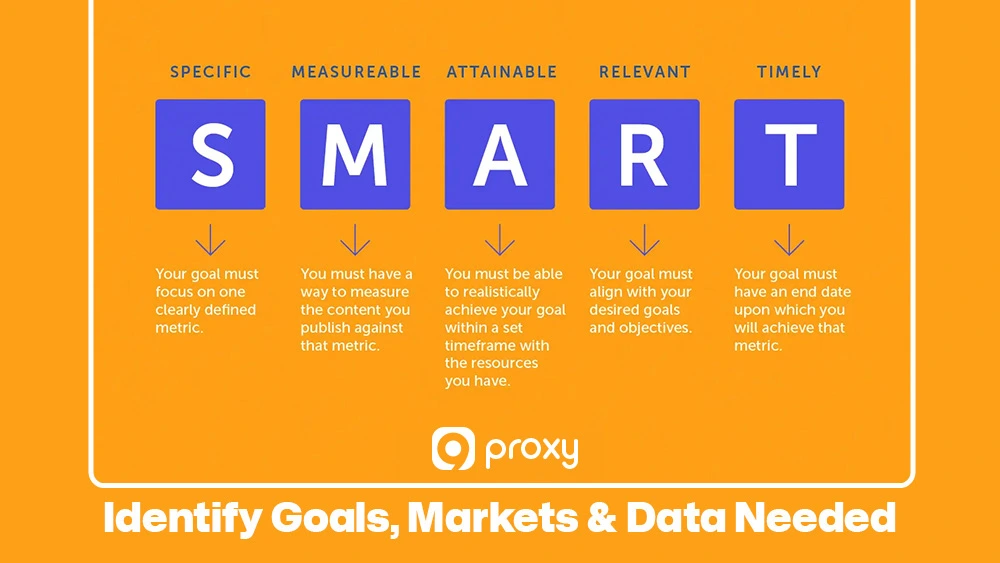
Step 1: Identify Goals, Markets & Data Needed
Before writing any code, we must be clear about what we want to learn. This makes sure the data you collect is relevant and useful.
- Define Goals: What questions should this data answer?
Examples: “Why did competitor X’s ranking improve?” or “How does their price change by country?”
- Define Data Points: SERP rankings, PPC ad copy, product prices, content blocks, social media engagement, review snippets, etc.
- Define Scope: List your target competitors, how often you need data (hourly, daily, weekly), which countries or cities you care about, and which devices (desktop or mobile).
Step 2: Choose the Right Proxy Type Based on Use Case
The kind of data you need will decide the best Competitor Analysis Proxy to use. Matching the right proxy to the right job helps you work efficiently and avoid blocks. For organizations scaling this process, using a centralized business proxy server setup can help manage multiple proxy types and ensure consistent performance across teams and tools.
- For high-volume, geo-targeted SERP tracking, Residential Proxies are usually best because they are hard to detect.
- If your main focus is checking competitor content quickly, ISP Proxies offer a good mix of speed and trust.
- For mobile-focused ads or very local prices inside a city, Mobile Proxies give you the most anonymity and realistic local IPs.
- Avoid using Datacenter proxies for very sensitive work, such as repeatedly checking Google SERPs, because they are easier to block.
Step 3: Configure Proxies in Your Tools
After picking the right proxy, you need to enter its IP, port, and login details into your scraping tools or scripts so everything runs through the proxy as intended.
- Custom Scripts: In Python (Requests, Scrapy), Node.js, or other languages, pass the proxy IP, Port, Username, and Password with each request.
- Headless Browsers: For dynamic websites that use a lot of JavaScript, set tools like Puppeteer or Selenium to run through the Competitor Analysis Proxy endpoint.
- API Tools: With third-party scraping APIs, you often just select the proxy type and geo-location. The API usually handles IP rotation for you.
Step 4: Implement Rotation, Fingerprinting & Anti-Detection Settings
With the right anti-detection settings, even a basic scraper becomes a strong and stable intelligence tool that avoids blocks and runs consistently. These techniques are also widely used when setting up a proxy for blocked sites, where maintaining access requires careful rotation, fingerprint control, and realistic traffic patterns.
- IP Rotation: Rotate IPs randomly, ideally every 1–5 requests, so traffic looks more like normal user behavior.
- User-Agent (UA) Rotation: Use a long list of real, up-to-date User-Agent strings (for example, Chrome on Windows, Safari on iOS) and rotate them together with the IP.
- Timing Randomization: Do not send requests with a fixed pause. Instead of always waiting 5 seconds, use a random delay like 3–7 seconds.
- Session Management: For tasks that need a short “sticky” session (like clicking through several pages on one site), use session features in your competitor analysis proxy to keep the same IP for a set time (for example, 5 minutes) before rotating.
Step 5: Collect & Parse Data
Once proxies and anti-detection are ready, you can start collecting data. Your scraper sends requests through the rotating proxy and receives HTML or JSON from competitor pages. Then you use parsing libraries like BeautifulSoup or XPath to pull out the exact fields you need: SERP title, organic rank, product price, ad copy, and so on.
It is a good idea to save HTML snapshots and tag each one with the Competitor Analysis Proxy geo-location and a timestamp. This makes your data trackable and easier to verify later.
Step 6: Clean, Normalize & Store the Data
Raw scraped data usually comes with duplicates, errors, or inconsistent formats. This stage converts that rough information into structured, reliable data that’s ready for analysis and reporting.
- Deduplication: Remove duplicate rows that may appear if you retry failed requests.
- Normalization: Convert all prices into a single currency, and format dates and times in one standard format.
- Database Storage: Store the cleaned data in a flexible database such as MongoDB or PostgreSQL. Tag each record with market, keyword, and the proxy IP’s geo-location.
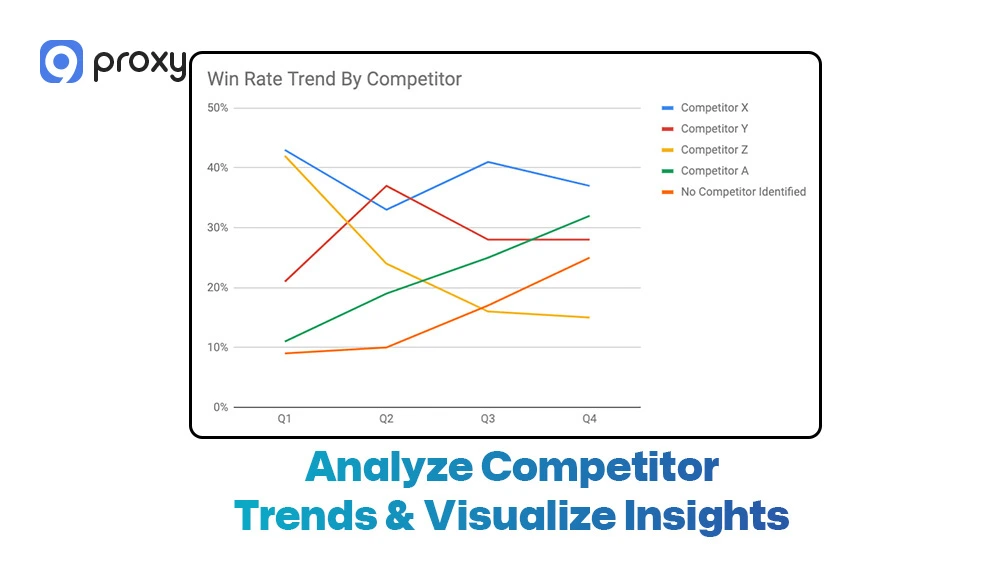
Step 7: Analyze Competitor Trends & Visualize Insights
Once the data is structured, you can start looking for patterns. Use tools like Python with Pandas or BI platforms to compare your performance with your competitors. Look for trends, such as a competitor steadily lowering prices, or sudden jumps in SERP visibility.
Visualize key metrics with dashboards in tools like Power BI or Tableau. This makes patterns and changes easier to understand for your SEO, marketing, and management teams.
Step 8: Automate Schedules, Alerts & Reporting
The final step is transitioning from manual checks to a fully automated system that operates continuously. This lets your competitor analysis run on its own, keeps your data fresh, and reduces the time you spend managing scrapers and proxies.
- Automated Scrapers: Schedule scrapers to run at set times (for example, daily for rankings, hourly for prices) using cron jobs or cloud functions.
- Proxy Health Checks: Add scripts that monitor proxy success rates and automatically remove or replace IPs that fail too often.
- Alerts & Reporting: Set up alerts for important events, such as a new competitor ad campaign, a major price change, or a ranking drop. This helps your team react quickly based on fresh data.
Common Pitfalls & How to Avoid Them
Even with a well-designed system, technical and strategic problems can still interrupt your competitor analysis proxy process. Knowing these common issues is important for keeping your data collection stable.
Below, we summarize the most frequent challenges and share simple, effective solutions to help your analysis run smoothly.
| Problem | Description | How to Avoid or Fix |
| Frequent IP blocks | Too many requests from one IP or weak IP quality | Rotate more often, lower request speed, use higher quality residential or mobile IPs |
| Slow or unstable proxies | Overloaded or low-grade networks cause timeouts | Test providers regularly, remove bad IPs, and choose premium pools for key markets |
| Inconsistent data | Different locations and sessions cause mixed results | Tag data with geo and time, group by location, standardize parsing rules |
| High proxy costs | Inefficient use of IPs and bandwidth | Match proxy type to task, reduce redundant scraping, and cache stable data |
| Detection by anti-bot tools | Repetitive patterns in timing or fingerprint | Randomize timing, rotate fingerprints, and avoid overusing the same proxy group |
In short, most issues happen because of weak IP rotation, low-quality proxy pools, or not monitoring the system closely. The good news is that all of these problems can be avoided with a careful setup that includes proper rotation rules, clean IP sources, and regular health checks.
Real Use Cases of Competitor Analysis Proxy
A high-quality Competitor Analysis Proxy helps businesses run detailed research across many digital channels without being detected.
Price Monitoring and Product Research: You can scrape product listings and checkout pages on competitor e-commerce sites safely. Proxies let you view true local prices, shipping fees, and stock levels that may only appear in certain regions.
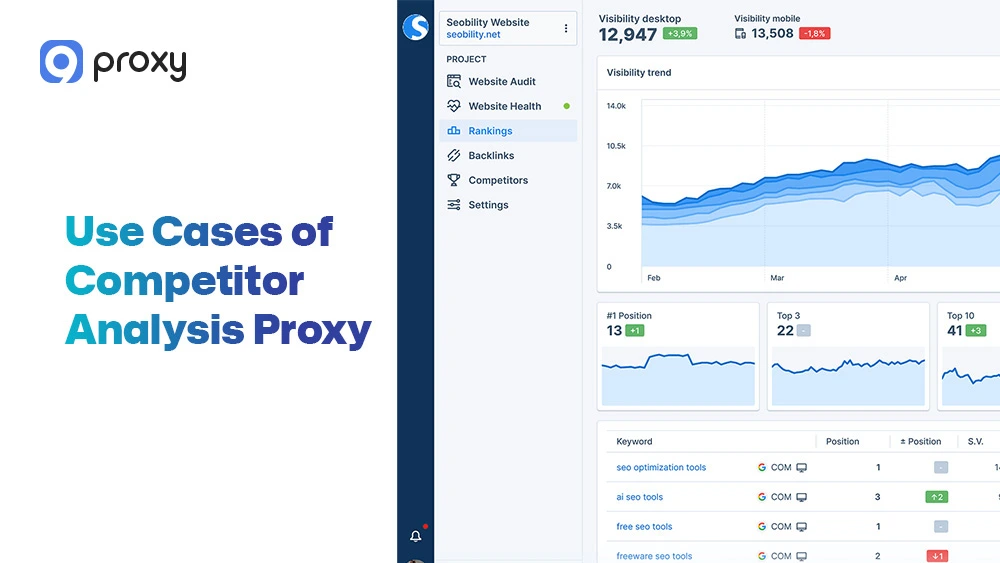
Tracking SEO Rankings: Using Residential proxies, you can check competitors’ organic rankings for important keywords across different search engines and locations. This gives you a clean, unbiased view of their real search visibility.
Social Media and Content Strategy Analysis: You can collect public data from competitors’ social media pages (such as engagement, posting activity, and comments) without hitting rate limits. This helps you compare their content strategy with your own.
Ad Monitoring and PPC Strategy Analysis: With geo-targeted proxies, you can view competitor ads, including Paid Search Ads and Display Ads, in specific regions. This shows you their targeting, ad messaging, and market focus, helping you improve your own PPC strategy. Many teams rely on a dedicated ad verification proxy setup to ensure ads appear correctly across different locations and devices.
9Proxy: Fast, Clean, and Scalable Proxy Solutions for Competitor Analysis
When you choose 9Proxy, you’re choosing a provider built for fast, reliable, and secure competitive research. Our infrastructure is designed to support every Competitor Analysis Proxy need with strong performance, high anonymity, and easy scalability. You can explore more insights and technical guides on the Blog 9Proxy to better understand how to optimize your proxy workflows.
- 100% Real Residential Proxies: We supply IPs from real users in more than 90 countries. This gives your scraping activities the highest level of trust and greatly reduces the chance of detection. If you are looking for a reliable provider, 9Proxy offers scalable solutions tailored for competitor analysis and data collection.
- Clean and Private Proxy Pool: Our competitor analysis proxies are fully private and not shared with other providers. This lowers blacklist risks and ensures the IPs you use remain clean, stable, and dependable.
- Unlimited Bandwidth Per IP: Perfect for large-scale competitor analysis, scraping, and ad monitoring. You never have to worry about bandwidth limits or surprise overage charges.
- Affordable Pricing: We offer high-quality proxy solutions at a cost that makes it easy to scale your competitive intelligence without overspending.
- Crypto Payment Perks: If you choose to pay with cryptocurrency, you receive a 5% bonus in IPs, giving you more value and flexibility for your research needs.
Conclusion
The rise of stronger anti-bot systems and highly personalized content makes a solid Competitor Analysis Proxy essential for staying competitive in 2026. By choosing the right proxy type and following a clear, step-by-step setup, you can avoid common problems and gather the accurate, dependable data you need for smarter decisions.
If you are ready to stop guessing and start working with real insights, choose 9Proxy’s fast, clean, and scalable proxy solutions to strengthen your competitive intelligence today.