

A residential proxy is a tool that routes your internet traffic through real IP addresses assigned by Internet Service Providers (ISPs), allowing you to stay anonymous and access geo-restricted content.
If you’ve ever been blocked while browsing, shopping, or collecting data online, you already know why people use residential proxies. A residential proxy works like a bridge that connects your device to the internet through a real household IP from an ISP. It helps protect your identity and lets you access content from anywhere in the world.
In this article, let's explore residential proxies with 9Proxy, answer common questions, and help you choose the most suitable option for your needs. With 9Proxy, you can easily buy residential proxy plans that fit your needs, set them up safely, and use them for ad verification, social media management, or web scraping with confidence and simplicity.
What Is a Residential Proxy?
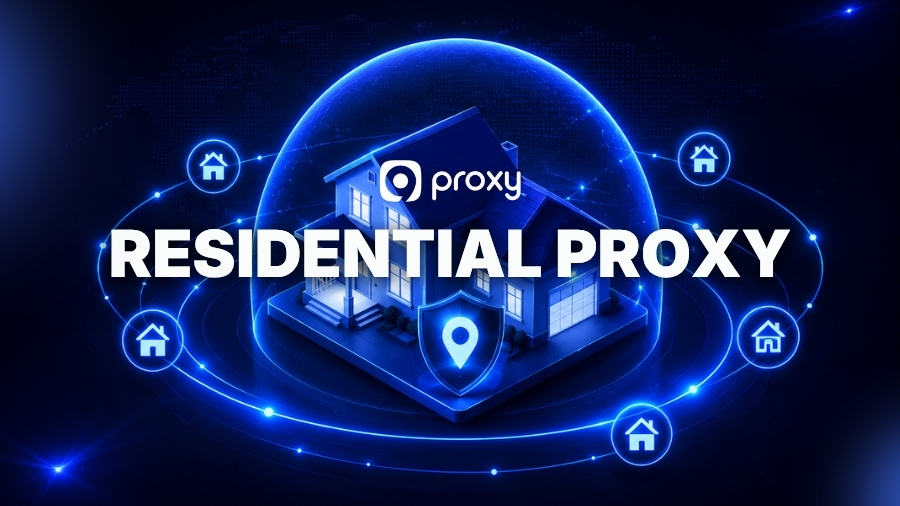
A residential proxy is an intermediary that routes your internet traffic through a real IP address provided by an Internet Service Provider (ISP) to an actual household. In simple terms, it’s like borrowing someone else’s home address for your online activity, so your real location stays hidden.
Unlike datacenter proxies that use server-generated IPs and are easier to detect, residential proxies look like genuine users from real homes. This makes them more trusted by websites, helping you avoid bans, captchas, and access restrictions while ensuring safer and smoother browsing.
When users start researching proxy infrastructure, they often begin by learning what is a proxy server and how different proxy types affect anonymity, traffic routing, and detection rates across websites.
How Residential Proxies Work
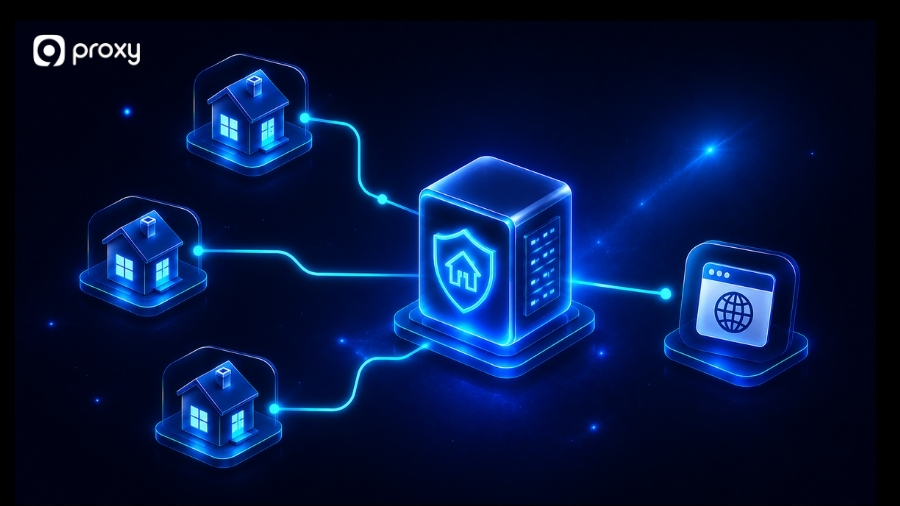
When you use a residential proxy, your online requests are sent through another real user’s internet connection instead of going directly from your device. Here’s how it works simply: you send a request to visit a website or collect data, the residential proxy passes it through a real device connected to an ISP, and the target site only sees that household IP, not your real one.
There are two main models:
- Peer-to-Peer (P2P): Uses shared user devices worldwide.
- ISP-assigned: Uses IPs leased directly from ISPs, offering stability.
You appear like a genuine user in the region you target. For example, when testing a U.S. ad from Europe, your connection looks like it’s coming from Los Angeles, not Lisbon.
Websites often evaluate traffic based on IP reputation, request patterns, and session behavior. Concepts such as IP rotation, sticky sessions, and proxy pool size play an important role in how residential proxies maintain access and avoid detection.
Different Types of Residential Proxies
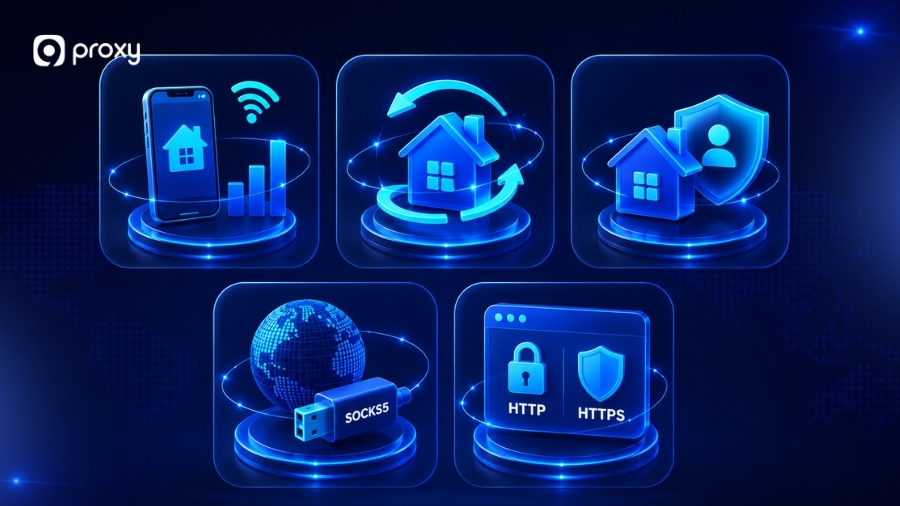
Residential proxies come in several types, each designed for different use cases. Understanding how each type works helps you choose the right option based on your specific goals, whether it’s automation, scraping, or account management.
Mobile Residential Proxies
Mobile residential proxies use IP addresses assigned by mobile carriers through 4G or 5G networks. Because these IPs are shared among many real mobile users, they have a very high trust level and are harder for websites to detect or block.
Compared to standard residential proxies, mobile proxies are often rotated at the network level, meaning multiple users can share the same IP within a carrier-grade NAT environment. This makes traffic appear even more natural and reduces the likelihood of triggering anti-bot systems.
Mobile residential proxies are commonly used for high-risk activities where detection must be minimized, such as social media automation, ad verification in strict environments, and accessing platforms with aggressive anti-bot protections. However, they are usually more expensive and less stable in speed compared to traditional residential proxies.
Rotating Residential Proxies
Rotating residential proxies automatically assign a new IP address for each request or session. This constant rotation makes it difficult for websites to detect patterns, reducing the risk of bans or blocks.
You can use rotating proxies for tasks that require large-scale data collection or repeated requests across multiple pages. For example, web scraping, proxy for SEO workflows, and price aggregation benefit from frequent IP changes because they mimic diverse real-user behavior.
Static Residential Proxies (ISP Proxies)
Static residential proxies, also known as ISP proxies, provide a fixed IP address assigned by an Internet Service Provider. Unlike rotating proxies, the IP remains stable for a long period, allowing consistent sessions.
This type is ideal for activities that require login persistence and trust, such as managing multiple accounts through a social media proxy setup, running eCommerce stores, or handling multiple user profiles without triggering security alerts.
SOCKS5 Residential Proxies
SOCKS5 residential proxies support multiple types of traffic beyond standard HTTP requests. They operate at a lower level, allowing them to handle applications like gaming, streaming, or file transfers more efficiently.
You should choose SOCKS5 proxies when flexibility and performance across different protocols are important. They are commonly used for gaming automation, torrenting (where allowed), and high-bandwidth activities.
HTTP and HTTPS Residential Proxies
HTTP and HTTPS residential proxies are optimized for web-based traffic. They are the most common proxy type and are compatible with browsers, scraping tools, and automation software.
These proxies work well for everyday tasks such as browsing, residential proxy ad verification, and accessing geo-restricted websites.
Top Use Cases for Residential Proxies
Both businesses and individuals use residential proxy services for many important online tasks. Because these IPs look like real home users, websites trust them more. This makes them ideal for activities where accuracy and access matter.
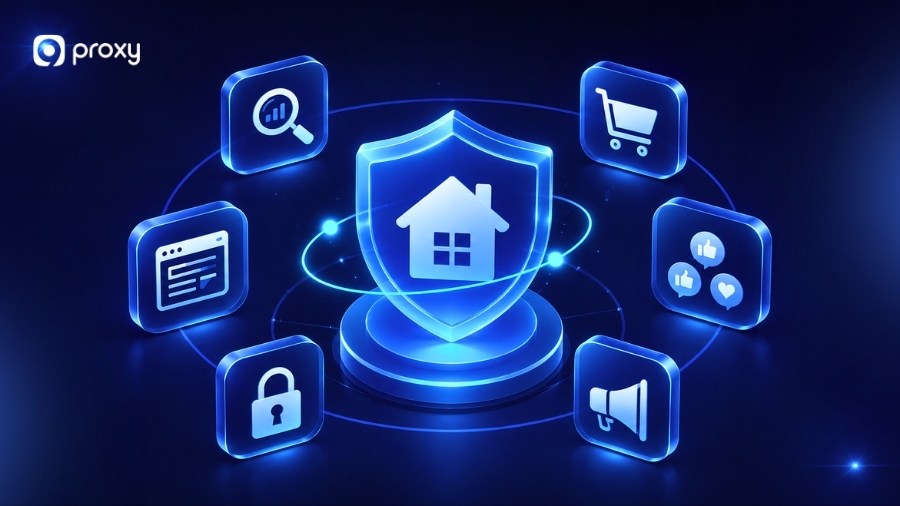
Here are some common ways customers use residential proxies. Before choosing a use case, it helps to understand how each one supports your goal:
- Web scraping: Collect competitor data or public information without getting your main company IP blocked.
- Price comparison: Many businesses use a residential proxy for ecommerce strategy to monitor localized product pricing, competitor inventory, and regional promotions without triggering rate limits.
- Ad verification: See ads exactly as local users see them to confirm correct placement and display.
- Sneaker bots: Use cheap residential proxies to improve your chances of purchasing limited-edition items during high-demand drops.
- Social media automation: Manage multiple brand accounts safely without triggering security warnings or account bans.
Some users also compare different privacy tools before deciding which solution to deploy. Understanding the differences between proxy vs VPN setups can help you determine which option better supports automation, scraping, or geo-targeted campaigns.
By using a proxy residential network, you can appear as a local user almost anywhere in the world. This helps your business stay competitive while keeping your data accurate and secure.
Residential Proxy vs Datacenter Proxy: Which One Should You Choose?
Residential proxies and datacenter proxies are two of the most widely used proxy types, but they serve different purposes depending on your goals, budget, and required level of anonymity. Many users compare residential IPs with datacenter proxies before deciding which solution better fits scraping, automation, or geo-targeted workflows.
Below is a direct comparison to help you understand how they differ and when to use each.
| Feature | Residential Proxy | Datacenter Proxy |
| IP Source | Real IP from ISP and household devices | Generated from cloud servers or data centers |
| Trust Level | High (appears as real user traffic) | Low to medium (easier to detect) |
| Speed | Moderate | Very fast |
| Cost | Higher (charged per GB or premium IP) | Lower (cheap and scalable) |
| Detection Risk | Very low | High (often blocked or flagged) |
| Stability | Depends on IP rotation or ISP | Very stable and consistent |
| Best For | Scraping, ad verification, social media, geo-targeting | Bulk tasks, automation, low-risk scraping |
In many cases, users compare different proxy types before deciding which solution fits their workflow. Understanding the differences between residential and datacenter options helps you choose the right balance between speed, cost, and anonymity. For a deeper breakdown, you can explore Residential proxy vs Datacenter proxy to see how each type performs across real-world use cases such as scraping, automation, and geo-targeting.
Key Differences Explained
IP Authenticity and Trust
Residential proxies use real IP addresses assigned by ISPs, which makes them appear as genuine users. Datacenter proxies rely on artificial IPs, so websites can detect them more easily.
Speed and Performance
Datacenter proxies are faster because they are hosted on powerful servers. Residential proxies may be slightly slower due to routing through real devices, but they provide better access reliability.
Cost Efficiency
Datacenter proxies are more affordable and suitable for large-scale operations. Residential proxies cost more due to IP quality and scarcity.
Use Case Suitability
- Residential proxies are ideal for tasks requiring stealth and accuracy, such as ad verification or accessing geo-restricted content.
- Datacenter proxies work better for high-volume automation, where speed matters more than anonymity.
In general, residential proxies are better for anonymity and accuracy, while datacenter proxies are better for speed and cost efficiency.
What Impacts the Price of Residential Proxies?
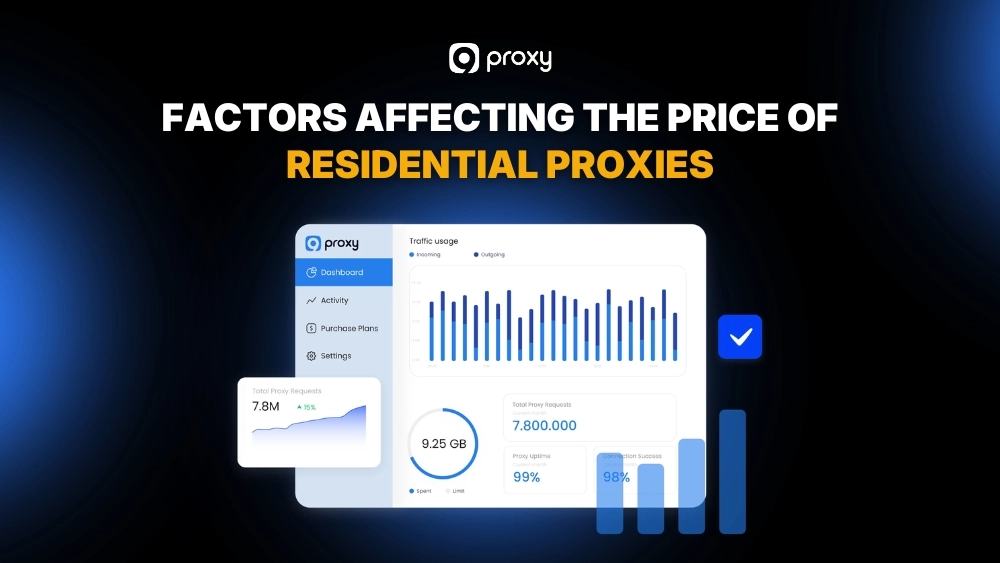
The price of residential proxies depends on several key factors related to usage, IP quality, and targeting flexibility.
Bandwidth Usage
Bandwidth is the main pricing factor, usually charged per GB. The more data your tasks consume-such as scraping or loading pages-the higher your total cost.
IP Pool Size
A larger IP pool provides more unique addresses, reducing detection risk. Bigger pools improve performance but typically come with higher pricing.
Geo-Targeting Precision
Targeting specific countries, cities, or ISPs increases cost because it requires access to more limited and premium IP resources.
Session Type (Static vs Rotating)
Static residential proxies cost more per IP due to stability, while rotating proxies are often cheaper and priced based on bandwidth usage.
IP Quality and Location
IPs from high-demand regions and clean IP sources are more expensive because they offer better reliability and lower block rates.
Static residential proxies, rotating residential proxies, and ISP proxies each offer different advantages depending on your workload. If you want a deeper comparison between sticky ISP connections and rotating household IPs, reviewing isp vs residential proxies can help clarify which setup fits your traffic patterns and detection tolerance.
Limitations of Residential Proxies
Residential proxies offer high anonymity and trust, but they are not always the most efficient option due to cost, speed, and availability constraints.
The most noticeable limitation is pricing. Because these proxies rely on real IP addresses assigned by Internet Service Providers (ISPs), maintaining and distributing them requires more resources. This results in higher costs, especially for bandwidth-heavy activities such as large-scale scraping or automation.
Performance is another trade-off. Residential proxies route traffic through real user networks, which introduces latency compared to datacenter proxies. While this difference is acceptable for most use cases, it can affect workflows that depend on high-speed execution or real-time processing.
Availability also plays a role. Access to specific locations or ISPs depends on the size and distribution of the provider’s IP pool. In cases where highly targeted regions are required, IP scarcity can impact consistency and limit scalability.
When Should You Not Use Residential Proxies?
Residential proxies are not necessary for every use case, particularly when anonymity is not a primary concern.
- High-speed or large-scale automation: Datacenter proxies deliver faster response times and lower costs, making them more suitable for bulk tasks where detection risk is minimal.
- Cost-sensitive projects: Residential proxies are usually billed per data usage, so expenses can increase quickly when handling large volumes of requests.
- Low-risk tasks: If your activity does not trigger strict anti-bot systems, using residential proxies may be unnecessary.
- Simple use cases: For general browsing, basic data collection, or accessing non-restricted content, lighter proxy solutions can achieve similar results with better efficiency.
How to Choose the Right Residential Proxy Provider
Choosing the best static residential proxy or a reliable rotating provider means checking a few important factors. Price matters, but stability and service quality matter more. Before making a decision, review these key points:
- IP pool size: Make sure the provider offers millions of IPs. A large pool reduces the chance of receiving the same IP repeatedly and lowers block risks.
- Global coverage: You should be able to target specific countries, cities, or even ISPs without difficulty. Flexible targeting improves accuracy for local testing and research.
- Uptime and speed: Look for at least 99% uptime. Stable and fast connections are essential for scraping, automation, or account management.
- Support: Choose a provider with a responsive support team that can assist with setup issues or technical questions.
Also, always review the refund policy. A reliable company will provide a residential proxy free trial or a clear money-back guarantee. This allows you to test performance and ensure the service meets your expectations before committing long-term. You can also explore additional proxy resources and setup guides on Blog9Proxy before choosing a provider.
If you are looking for a provider that combines stable connections, flexible targeting, and easy setup, you can explore 9Proxy residential proxy services to match your specific requirements.
Why Choose 9Proxy for Residential Proxies?
If you are evaluating residential proxy providers, choosing a service with stable performance and reliable IP quality makes a noticeable difference in your results.
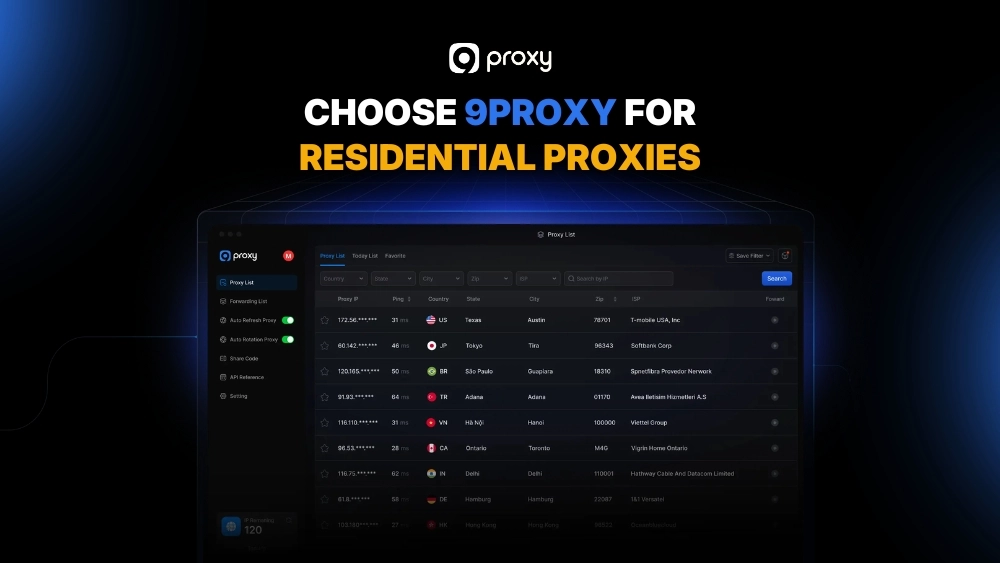
9Proxy residential proxy services offer access to a large pool of real ISP-assigned IPs, allowing you to maintain high success rates across tasks such as web scraping, ad verification, and account management. With flexible geo-targeting options, you can select locations at the country, city, or ISP level depending on your needs.
In addition to IP diversity, connection stability and ease of use are important factors. 9Proxy provides a streamlined setup process, helping you connect quickly without complex configuration. This makes it suitable for both beginners and advanced users who need consistent performance.
For projects that require reliable residential IPs with scalable usage, 9Proxy can support a wide range of use cases while keeping operations efficient.
FAQs
Are residential proxies legal?
Yes. Using a residential proxy is legal in most countries if you use it for normal business activities like market research, checking ads, or collecting public data. However, you must still follow the rules of the websites you visit. Breaking a site’s terms of service can cause account bans or other issues.
If you want a deeper explanation about compliance and regulations, you can review detailed guidance on are proxies legal and how responsible usage protects your business from risk.
What’s the difference between a proxy and a VPN?
A VPN protects all internet traffic on your device and hides your IP completely. A residential proxy server usually works only for a specific app or browser. Proxies are often faster for tasks like scraping or managing accounts, and they allow more precise location targeting.
Will I be 100% anonymous?
No tool can promise 100% anonymity. Residential proxies hide your real IP address, which increases privacy. But your safety also depends on your browser settings, cookies, and how you handle your personal information.
Can I use them on mobile or smart TV?
Yes. You can set up a socks5 residential proxy on many devices that allow manual network settings, including smartphones and some smart TVs. The steps may differ by device, but the setup is usually simple.
Why are residential proxies expensive?
Residential proxies are more expensive because they rely on real ISP-assigned IPs, which are harder to source and maintain compared to datacenter IPs.
Final Thoughts
To get the best results, use your residential proxies carefully and responsibly. Do not send too many requests to one website in a short time, as this can cause temporary blocks. It is also important to update your proxy app regularly so you can use the latest security improvements and access new IP pools.
You do not need to be a technical expert to benefit from a high-quality residential proxy. By choosing a trusted provider like 9Proxy, you can grow your projects safely and efficiently. If you are ready to improve your workflow, explore our plans today and choose the right Residential Proxy for your needs.