

携手您的得力助手——代理服务器,踏入高阶学术研究的世界。本文将揭示代理服务器在学术研究中的关键作用,重点阐述其如何助力研究人员无障碍获取全球学术资源,同时确保严密的安全保障。让我们一同探索代理服务器如何提升您的研究体验,打破学术界的重重壁垒。

- Be cautious about sharing personal information : When conducting research through an agent, avoid sharing sensitive personal information such as login credentials or private data. This helps prevent the risk of data breaches and identity theft.
- Regularly check your proxy connections : Regularly checking your proxy is crucial to ensure its stable operation and the protection of your data. This practice helps to identify and resolve potential security issues early.
Limitations and challenges of using proxy servers in academic research
Using proxy servers in academic research also has its own limitations and challenges. Understanding these factors is crucial for conducting research responsibly and efficiently. Here are some key points to consider:
- Risk of reduced speed: Proxy servers can sometimes slow down your internet connection. This latency can affect research efficiency, especially when you are accessing large amounts of data or using services that consume high bandwidth.
- Security Risks: While proxies can help enhance privacy, they can also introduce potential security risks. Because all network traffic flows through a proxy, sensitive data can be intercepted or exposed to cyber threats, especially if the proxy itself is not secure enough.
- Reliability issues: Proxy servers may experience connection failures or outages, causing research interruptions and inconvenience to users.
- Data integrity risk: Using a proxy may lead to data distortion or affect the accuracy of research results, especially when the proxy is misconfigured or comes from an untrusted source.
- Ethical Issues: The use of proxies in research also raises significant ethical concerns. For example, collecting data from websites that are prohibited from being crawled (data scraping) or bypassing geographic access restrictions can be controversial. Therefore, users need to carefully consider the legal and ethical aspects before taking any action.
Legal and ethical considerations for using proxy servers in academic research
When conducting academic research through a proxy server, legal and ethical considerations are crucial. These considerations help ensure that research activities not only comply with the law but also adhere to ethical standards.
Legal aspects
- Copyright infringement: Unauthorized access to copyrighted material through a proxy may lead to legal disputes. Copyright law protects the rights of authors, and infringement may be punished according to law.
- Violation of data privacy rights: Some proxy servers may collect and store user data. If this is done without the user’s consent, it may violate personal data protection regulations. Therefore, it is essential to ensure that the use of a proxy fully complies with data privacy protection regulations.
Moral level
- Internet censorship: Proxies can be used to circumvent access restrictions imposed by internet censorship. However, this raises questions about freedom of expression and the right to access information, especially where content is restricted by the government. Researchers need to carefully weigh the ethical implications of accessing restricted information.
- Privacy concerns: Proxy storage of user data may pose a risk of privacy violations. Therefore, it is recommended to use proxies that respect privacy and handle data in a transparent and responsible manner.
- Respect for others: In academic research, respect for the privacy and safety of others is paramount. This includes avoiding any illegal activities or actions that could harm others. Ethical research practices require a high degree of honesty, responsibility, and integrity when using agents.
Frequently Asked Questions (FAQ)
Can a proxy server access all restricted academic content?
Proxy servers can help access many restricted contents, but some resources with higher security levels may not be accessible through a proxy.
Is it ethical to use a proxy to access academic materials that are restricted in my country / region?
This depends on the reason for the content restrictions. You should consult your academic institution’s policies and national laws to make the appropriate decision.
Are there any free proxies suitable for academic research? Are they reliable?
While free proxies exist, they often lack stability and security. For academic research, it is recommended to use paid proxies or proxies provided by institutions to ensure reliability and security.
in conclusion
In summary, proxy servers offer numerous significant advantages for academic research, including access to restricted resources, privacy protection, and improved research efficiency. However, users must pay particular attention to legal and ethical factors and choose secure and reliable proxy services. While proxies are powerful tools in the learning and research process, a clear understanding of their limitations and responsible use are key to achieving sustainable efficiency. For more detailed guides and in-depth articles on how to apply technology in research, you can refer to other articles on 9Proxy , which share useful knowledge to help you optimize your research journey with the right tools and accurate understanding.
- Install antivirus software : Protect your computer from malware and cyber threats by installing reliable antivirus software. This is a crucial step in protecting your data and privacy throughout the research process.
- Be cautious about sharing personal information : When conducting research through an agent, avoid sharing sensitive personal information such as login credentials or private data. This helps prevent the risk of data breaches and identity theft.
- Regularly check your proxy connections : Regularly checking your proxy is crucial to ensure its stable operation and the protection of your data. This practice helps to identify and resolve potential security issues early.
Limitations and challenges of using proxy servers in academic research
Using proxy servers in academic research also has its own limitations and challenges. Understanding these factors is crucial for conducting research responsibly and efficiently. Here are some key points to consider:
- Risk of reduced speed: Proxy servers can sometimes slow down your internet connection. This latency can affect research efficiency, especially when you are accessing large amounts of data or using services that consume high bandwidth.
- Security Risks: While proxies can help enhance privacy, they can also introduce potential security risks. Because all network traffic flows through a proxy, sensitive data can be intercepted or exposed to cyber threats, especially if the proxy itself is not secure enough.
- Reliability issues: Proxy servers may experience connection failures or outages, causing research interruptions and inconvenience to users.
- Data integrity risk: Using a proxy may lead to data distortion or affect the accuracy of research results, especially when the proxy is misconfigured or comes from an untrusted source.
- Ethical Issues: The use of proxies in research also raises significant ethical concerns. For example, collecting data from websites that are prohibited from being crawled (data scraping) or bypassing geographic access restrictions can be controversial. Therefore, users need to carefully consider the legal and ethical aspects before taking any action.
Legal and ethical considerations for using proxy servers in academic research
When conducting academic research through a proxy server, legal and ethical considerations are crucial. These considerations help ensure that research activities not only comply with the law but also adhere to ethical standards.
Legal aspects
- Copyright infringement: Unauthorized access to copyrighted material through a proxy may lead to legal disputes. Copyright law protects the rights of authors, and infringement may be punished according to law.
- Violation of data privacy rights: Some proxy servers may collect and store user data. If this is done without the user’s consent, it may violate personal data protection regulations. Therefore, it is essential to ensure that the use of a proxy fully complies with data privacy protection regulations.
Moral level
- Internet censorship: Proxies can be used to circumvent access restrictions imposed by internet censorship. However, this raises questions about freedom of expression and the right to access information, especially where content is restricted by the government. Researchers need to carefully weigh the ethical implications of accessing restricted information.
- Privacy concerns: Proxy storage of user data may pose a risk of privacy violations. Therefore, it is recommended to use proxies that respect privacy and handle data in a transparent and responsible manner.
- Respect for others: In academic research, respect for the privacy and safety of others is paramount. This includes avoiding any illegal activities or actions that could harm others. Ethical research practices require a high degree of honesty, responsibility, and integrity when using agents.
Frequently Asked Questions (FAQ)
Can a proxy server access all restricted academic content?
Proxy servers can help access many restricted contents, but some resources with higher security levels may not be accessible through a proxy.
Is it ethical to use a proxy to access academic materials that are restricted in my country / region?
This depends on the reason for the content restrictions. You should consult your academic institution’s policies and national laws to make the appropriate decision.
Are there any free proxies suitable for academic research? Are they reliable?
While free proxies exist, they often lack stability and security. For academic research, it is recommended to use paid proxies or proxies provided by institutions to ensure reliability and security.
in conclusion
In summary, proxy servers offer numerous significant advantages for academic research, including access to restricted resources, privacy protection, and improved research efficiency. However, users must pay particular attention to legal and ethical factors and choose secure and reliable proxy services. While proxies are powerful tools in the learning and research process, a clear understanding of their limitations and responsible use are key to achieving sustainable efficiency. For more detailed guides and in-depth articles on how to apply technology in research, you can refer to other articles on 9Proxy , which share useful knowledge to help you optimize your research journey with the right tools and accurate understanding.
- Avoid performing sensitive operations on public Wi-Fi networks : Public Wi-Fi networks are generally less secure and could lead to data breaches or attacks. For academic research, you should use more private, secure, and reliable internet connections.
- Install antivirus software : Protect your computer from malware and cyber threats by installing reliable antivirus software. This is a crucial step in protecting your data and privacy throughout the research process.
- Be cautious about sharing personal information : When conducting research through an agent, avoid sharing sensitive personal information such as login credentials or private data. This helps prevent the risk of data breaches and identity theft.
- Regularly check your proxy connections : Regularly checking your proxy is crucial to ensure its stable operation and the protection of your data. This practice helps to identify and resolve potential security issues early.
Limitations and challenges of using proxy servers in academic research
Using proxy servers in academic research also has its own limitations and challenges. Understanding these factors is crucial for conducting research responsibly and efficiently. Here are some key points to consider:
- Risk of reduced speed: Proxy servers can sometimes slow down your internet connection. This latency can affect research efficiency, especially when you are accessing large amounts of data or using services that consume high bandwidth.
- Security Risks: While proxies can help enhance privacy, they can also introduce potential security risks. Because all network traffic flows through a proxy, sensitive data can be intercepted or exposed to cyber threats, especially if the proxy itself is not secure enough.
- Reliability issues: Proxy servers may experience connection failures or outages, causing research interruptions and inconvenience to users.
- Data integrity risk: Using a proxy may lead to data distortion or affect the accuracy of research results, especially when the proxy is misconfigured or comes from an untrusted source.
- Ethical Issues: The use of proxies in research also raises significant ethical concerns. For example, collecting data from websites that are prohibited from being crawled (data scraping) or bypassing geographic access restrictions can be controversial. Therefore, users need to carefully consider the legal and ethical aspects before taking any action.
Legal and ethical considerations for using proxy servers in academic research
When conducting academic research through a proxy server, legal and ethical considerations are crucial. These considerations help ensure that research activities not only comply with the law but also adhere to ethical standards.
Legal aspects
- Copyright infringement: Unauthorized access to copyrighted material through a proxy may lead to legal disputes. Copyright law protects the rights of authors, and infringement may be punished according to law.
- Violation of data privacy rights: Some proxy servers may collect and store user data. If this is done without the user’s consent, it may violate personal data protection regulations. Therefore, it is essential to ensure that the use of a proxy fully complies with data privacy protection regulations.
Moral level
- Internet censorship: Proxies can be used to circumvent access restrictions imposed by internet censorship. However, this raises questions about freedom of expression and the right to access information, especially where content is restricted by the government. Researchers need to carefully weigh the ethical implications of accessing restricted information.
- Privacy concerns: Proxy storage of user data may pose a risk of privacy violations. Therefore, it is recommended to use proxies that respect privacy and handle data in a transparent and responsible manner.
- Respect for others: In academic research, respect for the privacy and safety of others is paramount. This includes avoiding any illegal activities or actions that could harm others. Ethical research practices require a high degree of honesty, responsibility, and integrity when using agents.
Frequently Asked Questions (FAQ)
Can a proxy server access all restricted academic content?
Proxy servers can help access many restricted contents, but some resources with higher security levels may not be accessible through a proxy.
Is it ethical to use a proxy to access academic materials that are restricted in my country / region?
This depends on the reason for the content restrictions. You should consult your academic institution’s policies and national laws to make the appropriate decision.
Are there any free proxies suitable for academic research? Are they reliable?
While free proxies exist, they often lack stability and security. For academic research, it is recommended to use paid proxies or proxies provided by institutions to ensure reliability and security.
in conclusion
In summary, proxy servers offer numerous significant advantages for academic research, including access to restricted resources, privacy protection, and improved research efficiency. However, users must pay particular attention to legal and ethical factors and choose secure and reliable proxy services. While proxies are powerful tools in the learning and research process, a clear understanding of their limitations and responsible use are key to achieving sustainable efficiency. For more detailed guides and in-depth articles on how to apply technology in research, you can refer to other articles on 9Proxy , which share useful knowledge to help you optimize your research journey with the right tools and accurate understanding.
- Enhance your security with an HTTPS proxy : An HTTPS proxy provides an extra layer of protection by encrypting your network traffic. This encryption helps protect data from cyber threats and prevents unauthorized access.
- Avoid performing sensitive operations on public Wi-Fi networks : Public Wi-Fi networks are generally less secure and could lead to data breaches or attacks. For academic research, you should use more private, secure, and reliable internet connections.
- Install antivirus software : Protect your computer from malware and cyber threats by installing reliable antivirus software. This is a crucial step in protecting your data and privacy throughout the research process.
- Be cautious about sharing personal information : When conducting research through an agent, avoid sharing sensitive personal information such as login credentials or private data. This helps prevent the risk of data breaches and identity theft.
- Regularly check your proxy connections : Regularly checking your proxy is crucial to ensure its stable operation and the protection of your data. This practice helps to identify and resolve potential security issues early.
Limitations and challenges of using proxy servers in academic research
Using proxy servers in academic research also has its own limitations and challenges. Understanding these factors is crucial for conducting research responsibly and efficiently. Here are some key points to consider:
- Risk of reduced speed: Proxy servers can sometimes slow down your internet connection. This latency can affect research efficiency, especially when you are accessing large amounts of data or using services that consume high bandwidth.
- Security Risks: While proxies can help enhance privacy, they can also introduce potential security risks. Because all network traffic flows through a proxy, sensitive data can be intercepted or exposed to cyber threats, especially if the proxy itself is not secure enough.
- Reliability issues: Proxy servers may experience connection failures or outages, causing research interruptions and inconvenience to users.
- Data integrity risk: Using a proxy may lead to data distortion or affect the accuracy of research results, especially when the proxy is misconfigured or comes from an untrusted source.
- Ethical Issues: The use of proxies in research also raises significant ethical concerns. For example, collecting data from websites that are prohibited from being crawled (data scraping) or bypassing geographic access restrictions can be controversial. Therefore, users need to carefully consider the legal and ethical aspects before taking any action.
Legal and ethical considerations for using proxy servers in academic research
When conducting academic research through a proxy server, legal and ethical considerations are crucial. These considerations help ensure that research activities not only comply with the law but also adhere to ethical standards.
Legal aspects
- Copyright infringement: Unauthorized access to copyrighted material through a proxy may lead to legal disputes. Copyright law protects the rights of authors, and infringement may be punished according to law.
- Violation of data privacy rights: Some proxy servers may collect and store user data. If this is done without the user’s consent, it may violate personal data protection regulations. Therefore, it is essential to ensure that the use of a proxy fully complies with data privacy protection regulations.
Moral level
- Internet censorship: Proxies can be used to circumvent access restrictions imposed by internet censorship. However, this raises questions about freedom of expression and the right to access information, especially where content is restricted by the government. Researchers need to carefully weigh the ethical implications of accessing restricted information.
- Privacy concerns: Proxy storage of user data may pose a risk of privacy violations. Therefore, it is recommended to use proxies that respect privacy and handle data in a transparent and responsible manner.
- Respect for others: In academic research, respect for the privacy and safety of others is paramount. This includes avoiding any illegal activities or actions that could harm others. Ethical research practices require a high degree of honesty, responsibility, and integrity when using agents.
Frequently Asked Questions (FAQ)
Can a proxy server access all restricted academic content?
Proxy servers can help access many restricted contents, but some resources with higher security levels may not be accessible through a proxy.
Is it ethical to use a proxy to access academic materials that are restricted in my country / region?
This depends on the reason for the content restrictions. You should consult your academic institution’s policies and national laws to make the appropriate decision.
Are there any free proxies suitable for academic research? Are they reliable?
While free proxies exist, they often lack stability and security. For academic research, it is recommended to use paid proxies or proxies provided by institutions to ensure reliability and security.
in conclusion
In summary, proxy servers offer numerous significant advantages for academic research, including access to restricted resources, privacy protection, and improved research efficiency. However, users must pay particular attention to legal and ethical factors and choose secure and reliable proxy services. While proxies are powerful tools in the learning and research process, a clear understanding of their limitations and responsible use are key to achieving sustainable efficiency. For more detailed guides and in-depth articles on how to apply technology in research, you can refer to other articles on 9Proxy , which share useful knowledge to help you optimize your research journey with the right tools and accurate understanding.
- Choose a trustworthy proxy provider : Select a high-quality proxy provider known for its high-speed connections, stable uptime, and excellent customer support. Avoid free proxies, as they typically lack stability and pose higher potential security risks.
- Enhance your security with an HTTPS proxy : An HTTPS proxy provides an extra layer of protection by encrypting your network traffic. This encryption helps protect data from cyber threats and prevents unauthorized access.
- Avoid performing sensitive operations on public Wi-Fi networks : Public Wi-Fi networks are generally less secure and could lead to data breaches or attacks. For academic research, you should use more private, secure, and reliable internet connections.
- Install antivirus software : Protect your computer from malware and cyber threats by installing reliable antivirus software. This is a crucial step in protecting your data and privacy throughout the research process.
- Be cautious about sharing personal information : When conducting research through an agent, avoid sharing sensitive personal information such as login credentials or private data. This helps prevent the risk of data breaches and identity theft.
- Regularly check your proxy connections : Regularly checking your proxy is crucial to ensure its stable operation and the protection of your data. This practice helps to identify and resolve potential security issues early.
Limitations and challenges of using proxy servers in academic research
Using proxy servers in academic research also has its own limitations and challenges. Understanding these factors is crucial for conducting research responsibly and efficiently. Here are some key points to consider:
- Risk of reduced speed: Proxy servers can sometimes slow down your internet connection. This latency can affect research efficiency, especially when you are accessing large amounts of data or using services that consume high bandwidth.
- Security Risks: While proxies can help enhance privacy, they can also introduce potential security risks. Because all network traffic flows through a proxy, sensitive data can be intercepted or exposed to cyber threats, especially if the proxy itself is not secure enough.
- Reliability issues: Proxy servers may experience connection failures or outages, causing research interruptions and inconvenience to users.
- Data integrity risk: Using a proxy may lead to data distortion or affect the accuracy of research results, especially when the proxy is misconfigured or comes from an untrusted source.
- Ethical Issues: The use of proxies in research also raises significant ethical concerns. For example, collecting data from websites that are prohibited from being crawled (data scraping) or bypassing geographic access restrictions can be controversial. Therefore, users need to carefully consider the legal and ethical aspects before taking any action.
Legal and ethical considerations for using proxy servers in academic research
When conducting academic research through a proxy server, legal and ethical considerations are crucial. These considerations help ensure that research activities not only comply with the law but also adhere to ethical standards.
Legal aspects
- Copyright infringement: Unauthorized access to copyrighted material through a proxy may lead to legal disputes. Copyright law protects the rights of authors, and infringement may be punished according to law.
- Violation of data privacy rights: Some proxy servers may collect and store user data. If this is done without the user’s consent, it may violate personal data protection regulations. Therefore, it is essential to ensure that the use of a proxy fully complies with data privacy protection regulations.
Moral level
- Internet censorship: Proxies can be used to circumvent access restrictions imposed by internet censorship. However, this raises questions about freedom of expression and the right to access information, especially where content is restricted by the government. Researchers need to carefully weigh the ethical implications of accessing restricted information.
- Privacy concerns: Proxy storage of user data may pose a risk of privacy violations. Therefore, it is recommended to use proxies that respect privacy and handle data in a transparent and responsible manner.
- Respect for others: In academic research, respect for the privacy and safety of others is paramount. This includes avoiding any illegal activities or actions that could harm others. Ethical research practices require a high degree of honesty, responsibility, and integrity when using agents.
Frequently Asked Questions (FAQ)
Can a proxy server access all restricted academic content?
Proxy servers can help access many restricted contents, but some resources with higher security levels may not be accessible through a proxy.
Is it ethical to use a proxy to access academic materials that are restricted in my country / region?
This depends on the reason for the content restrictions. You should consult your academic institution’s policies and national laws to make the appropriate decision.
Are there any free proxies suitable for academic research? Are they reliable?
While free proxies exist, they often lack stability and security. For academic research, it is recommended to use paid proxies or proxies provided by institutions to ensure reliability and security.
in conclusion
In summary, proxy servers offer numerous significant advantages for academic research, including access to restricted resources, privacy protection, and improved research efficiency. However, users must pay particular attention to legal and ethical factors and choose secure and reliable proxy services. While proxies are powerful tools in the learning and research process, a clear understanding of their limitations and responsible use are key to achieving sustainable efficiency. For more detailed guides and in-depth articles on how to apply technology in research, you can refer to other articles on 9Proxy , which share useful knowledge to help you optimize your research journey with the right tools and accurate understanding.
What are proxy servers, and how do they work?
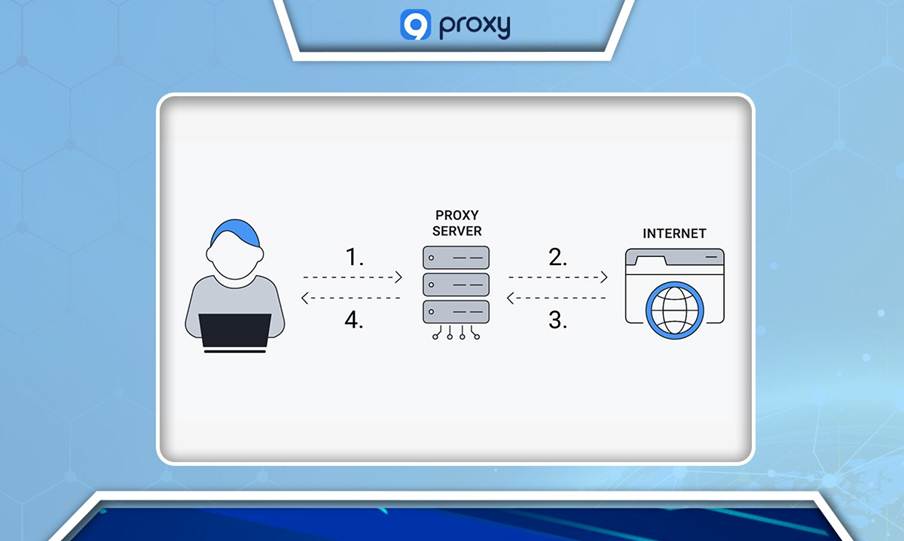
A proxy server is a computer server that acts as an intermediary between a user’s device and the internet. This architecture helps to isolate users from the websites they visit.
Here’s how it works: When you request access to a website, the request is first sent to a proxy server. The proxy server then sends the request to the target website on your behalf, receives the information, and forwards it to your browser.
Proxy servers offer varying levels of functionality, security, and privacy protection, and can be customized to meet the needs of individuals or organizations. A key function of them is to act as firewalls or network filters, adding an extra layer of network security protection, helping to block cyberattacks, and protecting computers from malware and other online threats.
The Importance of Proxy Servers in Academic Research
Proxy servers are an indispensable tool in academic research, offering numerous advantages that make the learning and research process more efficient. These advantages include:
- Enhanced privacy protection: Proxy servers help hide IP addresses, which are unique identifiers for each internet connection, thus protecting researchers’ identities. This is especially important in academic settings, where privacy and security are critical factors in the research process.
- Overcoming geographical restrictions: Certain academic materials or websites may be restricted in access by specific countries or organizations due to censorship or copyright issues. Proxy servers help researchers overcome these barriers by changing their virtual location, thus enabling them to access a wider range of information resources without geographical limitations.
- Access to diverse datasets: By changing the IP address and displayed geographic location, proxy servers can help researchers access a rich variety of databases, which is especially useful in fields that require comprehensive research with global information.
- Improved speed and efficiency: Proxy servers help reduce network latency, speed up connection speeds, and manage network traffic more effectively, resulting in a smoother and faster research process, saving valuable time and resources.
How to use a proxy server in academic research
Using a proxy server in academic research is a wise strategy, as it helps to access content without restrictions, overcome geographical limitations, enhance privacy, and increase research speed. Here are some basic guidelines:
- Choose the appropriate proxy type
- Choose a reliable supplier
Please choose a provider that offers stable service, high-speed connectivity, and good customer support. In the academic field, some well-known providers include: ProxyEmpire , ProxyScrape , QuickProxy , Infatica , and Geonode .
- Configure your browser: After selecting a provider, configure your browser to connect through a proxy server. This configuration varies by browser and can usually be found in the network or connection settings section.
- Check the proxy connection: Before you begin your investigation, use tools such as WhatIsMyIPAddress or ProxyCheck to verify that the proxy is working properly.
- Start your research: Once the agent is configured, you can begin your research, gaining the ability to overcome geographical limitations, access diverse data, and simultaneously maintain privacy and security.
Security tips and precautions for using proxy servers for academic research
Maintaining security and confidentiality is crucial when using proxies in academic research. Here are some basic guidelines to help you ensure a secure research experience:
- Choose a trustworthy proxy provider : Select a high-quality proxy provider known for its high-speed connections, stable uptime, and excellent customer support. Avoid free proxies, as they typically lack stability and pose higher potential security risks.
- Enhance your security with an HTTPS proxy : An HTTPS proxy provides an extra layer of protection by encrypting your network traffic. This encryption helps protect data from cyber threats and prevents unauthorized access.
- Avoid performing sensitive operations on public Wi-Fi networks : Public Wi-Fi networks are generally less secure and could lead to data breaches or attacks. For academic research, you should use more private, secure, and reliable internet connections.
- Install antivirus software : Protect your computer from malware and cyber threats by installing reliable antivirus software. This is a crucial step in protecting your data and privacy throughout the research process.
- Be cautious about sharing personal information : When conducting research through an agent, avoid sharing sensitive personal information such as login credentials or private data. This helps prevent the risk of data breaches and identity theft.
- Regularly check your proxy connections : Regularly checking your proxy is crucial to ensure its stable operation and the protection of your data. This practice helps to identify and resolve potential security issues early.
Limitations and challenges of using proxy servers in academic research
Using proxy servers in academic research also has its own limitations and challenges. Understanding these factors is crucial for conducting research responsibly and efficiently. Here are some key points to consider:
- Risk of reduced speed: Proxy servers can sometimes slow down your internet connection. This latency can affect research efficiency, especially when you are accessing large amounts of data or using services that consume high bandwidth.
- Security Risks: While proxies can help enhance privacy, they can also introduce potential security risks. Because all network traffic flows through a proxy, sensitive data can be intercepted or exposed to cyber threats, especially if the proxy itself is not secure enough.
- Reliability issues: Proxy servers may experience connection failures or outages, causing research interruptions and inconvenience to users.
- Data integrity risk: Using a proxy may lead to data distortion or affect the accuracy of research results, especially when the proxy is misconfigured or comes from an untrusted source.
- Ethical Issues: The use of proxies in research also raises significant ethical concerns. For example, collecting data from websites that are prohibited from being crawled (data scraping) or bypassing geographic access restrictions can be controversial. Therefore, users need to carefully consider the legal and ethical aspects before taking any action.
Legal and ethical considerations for using proxy servers in academic research
When conducting academic research through a proxy server, legal and ethical considerations are crucial. These considerations help ensure that research activities not only comply with the law but also adhere to ethical standards.
Legal aspects
- Copyright infringement: Unauthorized access to copyrighted material through a proxy may lead to legal disputes. Copyright law protects the rights of authors, and infringement may be punished according to law.
- Violation of data privacy rights: Some proxy servers may collect and store user data. If this is done without the user’s consent, it may violate personal data protection regulations. Therefore, it is essential to ensure that the use of a proxy fully complies with data privacy protection regulations.
Moral level
- Internet censorship: Proxies can be used to circumvent access restrictions imposed by internet censorship. However, this raises questions about freedom of expression and the right to access information, especially where content is restricted by the government. Researchers need to carefully weigh the ethical implications of accessing restricted information.
- Privacy concerns: Proxy storage of user data may pose a risk of privacy violations. Therefore, it is recommended to use proxies that respect privacy and handle data in a transparent and responsible manner.
- Respect for others: In academic research, respect for the privacy and safety of others is paramount. This includes avoiding any illegal activities or actions that could harm others. Ethical research practices require a high degree of honesty, responsibility, and integrity when using agents.
Frequently Asked Questions (FAQ)
Can a proxy server access all restricted academic content?
Proxy servers can help access many restricted contents, but some resources with higher security levels may not be accessible through a proxy.
Is it ethical to use a proxy to access academic materials that are restricted in my country / region?
This depends on the reason for the content restrictions. You should consult your academic institution’s policies and national laws to make the appropriate decision.
Are there any free proxies suitable for academic research? Are they reliable?
While free proxies exist, they often lack stability and security. For academic research, it is recommended to use paid proxies or proxies provided by institutions to ensure reliability and security.
in conclusion
In summary, proxy servers offer numerous significant advantages for academic research, including access to restricted resources, privacy protection, and improved research efficiency. However, users must pay particular attention to legal and ethical factors and choose secure and reliable proxy services. While proxies are powerful tools in the learning and research process, a clear understanding of their limitations and responsible use are key to achieving sustainable efficiency. For more detailed guides and in-depth articles on how to apply technology in research, you can refer to other articles on 9Proxy , which share useful knowledge to help you optimize your research journey with the right tools and accurate understanding.