

Understanding Static vs Rotating Proxies is essential for achieving stable, secure, and efficient online performance in 2026. Whether you’re managing multiple social media accounts, conducting large-scale data collection, or protecting your online identity, choosing between these two proxy types directly affects your speed, reliability, and detection resistance.
Many businesses struggle to balance stability with anonymity, staying undetected while maintaining consistent connections. In this blog of 9Proxy, we’ll clearly explain what Static and Rotating Proxies are, how they work, their benefits and drawbacks, and which setup best suits your goals. By the end, you’ll know exactly how to choose the right proxy type to optimize performance, security, and legality for your projects.
What Are Static Proxies?
A Static Proxy is a proxy server that gives you a fixed IP address for all your online activities. Unlike rotating proxies that change IPs, static proxies keep the same identity, making your traffic appear from one consistent location. This stability is perfect for tasks that need a steady connection, such as managing social media accounts, maintaining sessions, or accessing region-specific platforms.
Businesses use static proxies for their reliability and lower risk of being flagged. They can come from datacenter, ISP, or residential sources, with ISP and residential IPs offering better authenticity and security.
How Does Static Proxies Work?
Technically, a static proxy assigns a fixed IP address to your connection request. When you connect through 9Proxy, we route your traffic through a dedicated gateway that keeps your session tied to one specific residential or data center address.
This setup supports dedicated sessions where you can stay logged into an account without being forced to re-verify your identity. Because there is no switching of addresses, the connection remains swift and steady, mimicking the behavior of a standard household internet user perfectly. Static proxies also work well behind a proxy server firewall to provide better control, privacy, and protection from unauthorized access.
What Are Rotating Proxies?
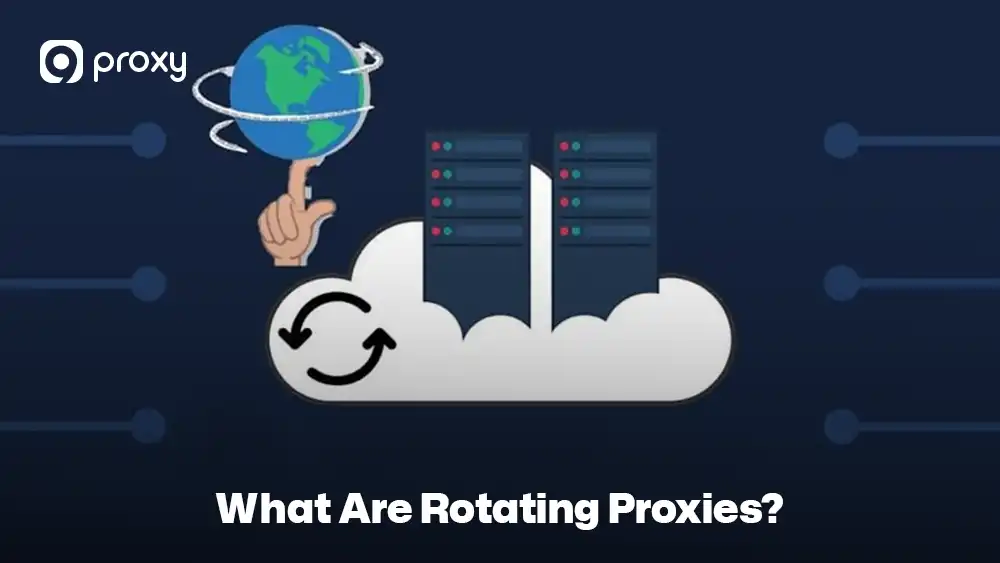
Rotating proxies are proxy servers that automatically change your IP address at set intervals or after each request. A rotating proxy uses a large pool of IP addresses to make your online activity appear to come from different users or locations instead of relying on a single static identity.
This constant rotation improves anonymity, helps bypass anti-bot systems, and reduces the risk of being blocked or rate-limited. Rotating proxies are ideal for web scraping, ad verification, SEO monitoring, and proxies for brand protection, helping companies safeguard their reputation while maintaining privacy during large-scale automated tasks.
How Does Rotating Proxies Work?
Rotating proxies use a backconnect server that controls a large pool of IP addresses. You can choose how often your IP changes. With “per request” rotation, you get a new IP every time you make a connection or click a link.
Another option is timed rotation or “sticky sessions,” where one IP stays active for a short period, such as 10 or 30 minutes, before switching to another. This flexibility allows you to appear as multiple users from different locations at the same time, making it ideal for web scraping, data collection, and other distributed network tasks.
Static vs Rotating Proxies: Benefits, Drawbacks & Use Cases
The table below compares the main advantages, disadvantages, and best use cases of static vs rotating proxies. Resources from Blog9Proxy also explain how each proxy type performs in real-world automation and browsing environments. This comparison helps you quickly see the strengths of each type, understand their limitations, and choose which one fits your specific goals or workflow best.
| Benefit | Drawback | Typical Use Cases |
| Static Proxies: Stable, predictable IP | Easy to detect by anti-bot systems | Account management, profile logins |
| Consistent sessions | Higher detection risk for repeated requests | Monitoring dashboards |
| Often faster and cost-effective | Shared IPs can cause issues | Regional access with fixed identity |
| Rotating Proxies: High anonymity | Slightly slower due to IP switching | Large-scale scraping programs |
| Low detection and blocking risk | Higher cost per IP | Competitive intelligence, data mining |
| Access to a large IP pool | Less consistent identity | Ad verification, price monitoring |
| Scales easily | Harder to trace specific sessions | Multi-location testing |
Static proxies are best for predictable tasks needing stability, while rotating proxies provide strong anonymity and scalability. Your choice depends on whether your priority is consistency or anti-detection across many requests.
Static vs Rotating Proxies: Detailed Comparison
To help you make a well-informed decision before investing in proxy services, we’ve carefully compared the core performance metrics of both static and rotating proxies. This detailed breakdown reveals how each type performs under different workloads, from stability and speed to anonymity and scalability.
By understanding these differences, you can easily identify which proxy type best aligns with your business goals, technical requirements, and budget priorities.
| Metric | Static Proxies | Rotating Proxies |
| IP Type | Dedicated, fixed | Pooled, dynamic |
| Stability | Very stable | Variable |
| Anonymity | Lower | High |
| Speed | Generally faster | Slightly slower |
| Scalability | Limited | Very scalable |
| Detection Risk | Higher over time | Lower through rotation |
| Cost | Usually lower | Generally higher |
| Best For | Account logins, steady access | High-volume scraping, anti-block needs |
Static proxies perform best in situations that require stable, predictable connections, such as managing user accounts or maintaining continuous access to a specific platform. They offer consistent speed and reliability, which is ideal for long-term or session-based tasks.
In contrast, rotating proxies are better suited for large-scale operations where avoiding detection, handling high volumes of data, and maintaining anonymity are essential. While they may add a bit of delay during IP changes, their flexibility and resistance to blocks make them the smarter choice for dynamic, data-intensive workloads.
Sticky Rotating Proxies vs True Static Proxies
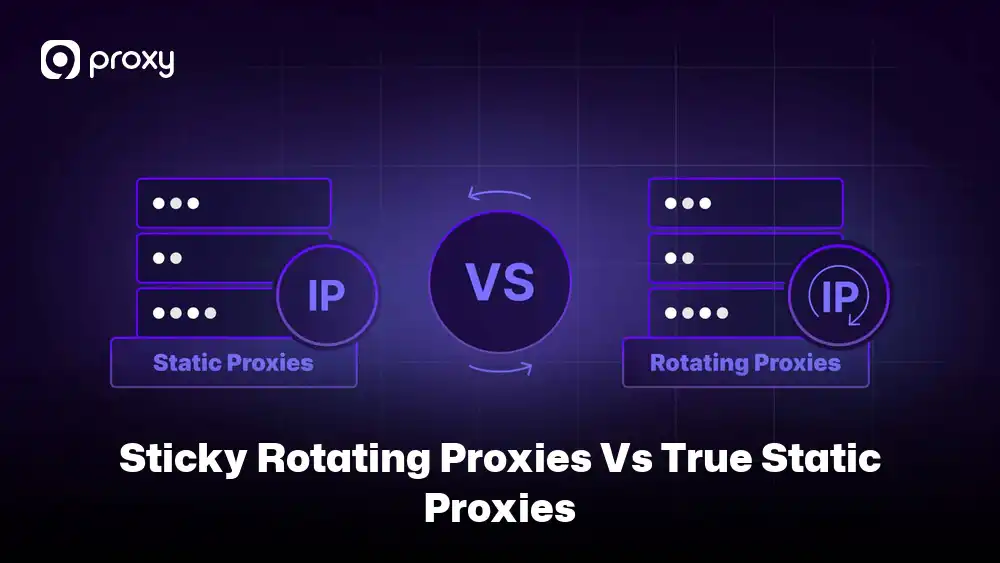
Some proxy systems use a hybrid method called sticky rotating proxies, which work like static proxies for a short time before automatically switching to a new IP. This setup gives you a mix of temporary stability and strong anonymity. Here’s how they compare:
- Sticky sessions keep the same IP for a few minutes before changing to another one.
- True static proxies never rotate and always use the same IP.
- Sticky rotation helps spread activity across multiple IPs, reducing the risk of detection.
- Static IPs provide a consistent, long-term identity, perfect for logins or ongoing sessions.
Limitations of sticky rotations:
- They still change IPs after a certain time, which can interrupt cookie-based logins or long sessions.
- They don’t offer full stability like dedicated static proxies.
Sticky rotating proxies share some concepts with a reverse proxy server, as both manage network traffic intelligently to optimize anonymity and performance. However, for users who need a permanent, unchanged IP identity, true static proxies remain the best option.
Hybrid Strategies: Combining Static & Rotating Proxies
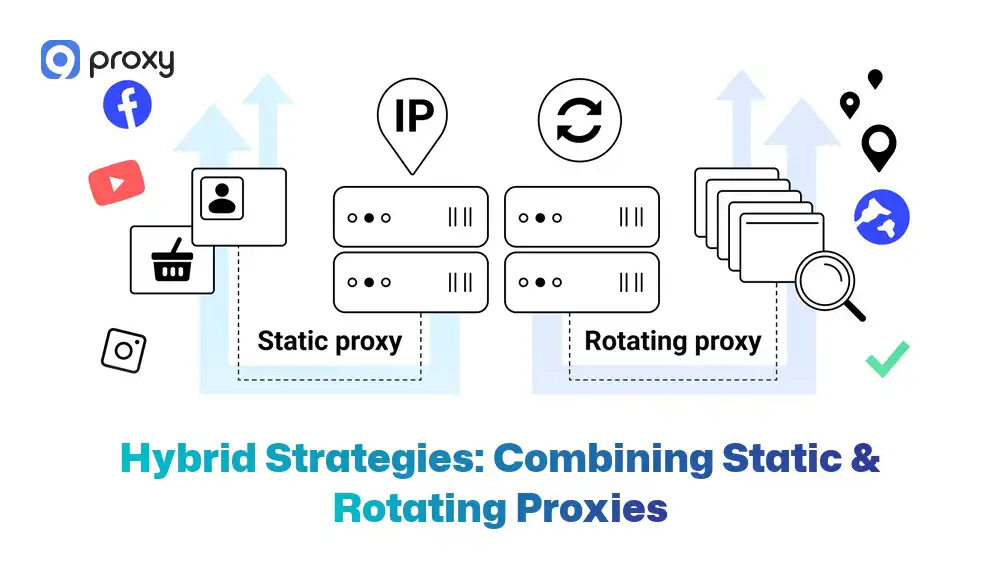
Many companies prefer a hybrid proxy strategy instead of relying on just one type. This approach combines the stability of static proxies with the flexibility and anonymity of rotating proxies, helping businesses achieve better performance and security across different tasks. Here’s how this strategy works effectively:
- Use static proxies for account management, login sessions, and secure tools that need consistent connections.
- Use rotating proxies for large-scale data collection, such as market research, price tracking, or competitor monitoring.
Common hybrid strategies include:
- Assign static IPs to essential systems while using rotating IPs for automation bots or data crawlers.
- Use static proxies for trusted or verified accounts and rotating proxies for public-facing or high-frequency requests.
- Adjust proxy types based on traffic, for example, static during working hours for business stability and rotating overnight for bulk tasks.
This combined setup helps maintain data accuracy, keeps costs balanced, and reduces detection risks, all while ensuring smooth and efficient performance.
Choosing the Right Proxy Type for Your Needs
Choosing the winner in the Static vs Rotating Proxies comparison really depends on your specific project goals and technical needs. Each type has its own strengths; static proxies are better for stable, long-term connections, while rotating proxies are ideal for anonymity and large-scale automation. The best option is the one that aligns with your workflow, security level, and performance expectations.
When to Use a Static Proxy?
Static proxies are the right choice when your work requires consistent connections and a stable online identity. They provide reliability and predictability, which are essential for tasks that rely on a single, trusted IP address. Here are the most common situations where static proxies perform best:
- Account Management: A fixed IP keeps you logged in smoothly and prevents account interruptions.
- Regional Access: When websites expect you to connect from one specific area, a static IP avoids suspicious location changes.
- Dashboard Monitoring: Analytics tools and business dashboards work more accurately with a stable, unchanging IP.
- Lower Budget Tasks: Static proxies are usually more affordable and ideal for smaller projects that don’t need frequent IP rotation.
- Ad Verification: Perfect for checking ad placements or campaigns consistently in the same online environment.
They can also be used with an email proxy server to enhance security when managing multiple business or marketing accounts.
When to Use a Rotating Proxy?
Rotating proxies are perfect for large-scale, high-volume, or anonymity-focused tasks where using a single IP would quickly lead to detection or blocking. Many businesses also rely on a dedicated web scraping proxy setup to collect public data efficiently while reducing IP bans and rate limits. They automatically change IPs at set intervals or per request, keeping your activities distributed and harder to trace. Here are the best situations to use rotating proxies:
- Web Scraping: Collect large amounts of data safely since every request appears to come from a different IP.
- Price Monitoring: Check competitors’ prices across multiple sites without triggering anti-bot systems.
- Market Research: Analyze trends, reviews, and customer sentiment at scale without interruptions.
- Ad Testing: Test ads across various regions or devices while avoiding repetitive access detection.
- Public Data Mining: Access many online endpoints or APIs efficiently without facing IP bans.

How to Choose a Reliable Proxy Provider
Finding a trustworthy partner is just as important as choosing the proxy type. We suggest looking for providers that offer full transparency regarding their IP sources and network health.
- Check the Pool Size: A larger pool means less chance of using a “burnt” or slow IP.
- Uptime Guarantees: Ensure the provider offers at least 99% uptime to keep your business running.
- Ethical Sourcing: Only use IPs that are gathered ethically to ensure long-term reliability and compliance.
- Support: Look for 24/7 technical assistance to help you resolve connection issues quickly.
- Perform a proxy test regularly to confirm IP quality, speed, and anonymity before integrating them into your system.
Avoid using providers that advertise “free” proxy lists, as these often include blacklisted or reused IPs that can easily get your accounts flagged or banned. Such services usually lack data transparency, security, and proper maintenance, making them unreliable for serious projects.
Relying on low-quality proxies can expose your data, reduce success rates, and even compromise the integrity of your entire network operation. Always choose trusted, verified providers to ensure safety and consistent performance.

9Proxy – Reliable Residential Proxies to Power Your Business
9Proxy provides high-quality and fully compatible proxy solutions designed to meet your digital performance and privacy needs.. Our residential proxies ensure guaranteed uptime, fast connection speeds, and complete anonymity, making them ideal for both business and individual use.
Whether you need reliable access for automation, data collection, or secure browsing, 9Proxy delivers consistent performance, strong security, and seamless integration across all major platforms.
Key Advantages of 9Proxy for Your Business:
- 100% Real Residential Proxies: True IPs from real devices across 90+ countries that reduce detection risk.
- Clean & Private Pools: IPs not shared with other providers, lowering blacklist chances.
- Unlimited Bandwidth: Handle large scraping tasks, streaming, or automation without extra fees.
- Affordable Pricing: Proxy plans start at competitive rates with no bandwidth caps.
- Crypto Payment Perks: Get bonus IPs when paying with cryptocurrency.
9Proxy gives you the flexibility to choose static vs rotating proxies based on your project needs while ensuring speed, reliability, and scalable performance.

Conclusion
When comparing Static vs Rotating Proxies, there’s no single “best” choice; it depends on your goals. Static proxies provide a stable and consistent identity, perfect for managing accounts or accessing region-specific platforms. Rotating proxies focus on anonymity and scalability, ideal for large-scale scraping or tasks that must avoid detection.
By understanding their key differences, you can choose the right type for your needs. If you need speed and consistency, go for static proxies. If you need privacy and flexibility, rotating proxies are the better option.
Try 9Proxy’s proxy solutions to get the perfect balance of performance, security, and reliability for your business in 2026 and beyond.